
 Search Articles


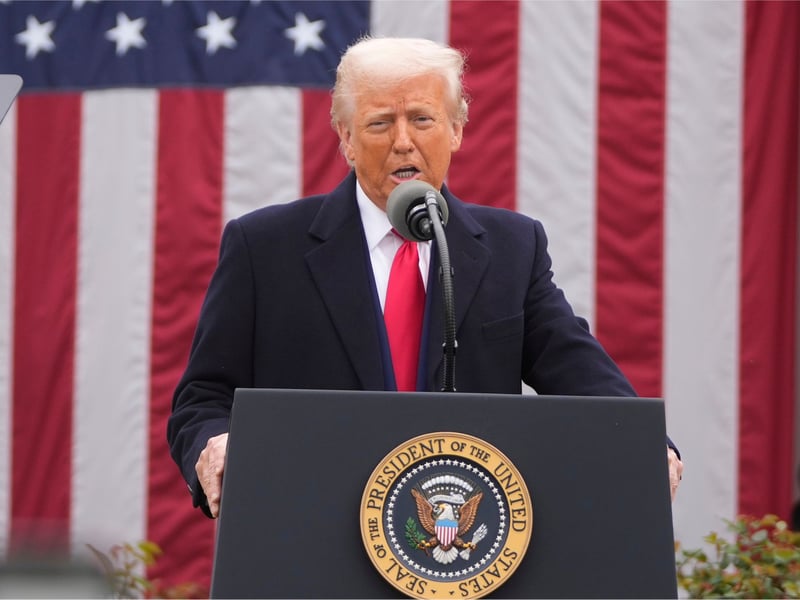
WASHINGTON (CN) — A federal judge on Tuesday temporarily blocked President Donald Trump’s executive order retaliating against major law firm Susman Godfrey, ruling that the president’s order is a clear example of viewpoint discrimination under the First Amendment.
U.S. District Judge Loren AliKhan, ruling from the bench, said that the temporary restraining order was necessary to halt the “immensely oppressive” effort to freeze the firm out of work in retaliation for its representation in several 2020 election-related lawsuits.
“The executive order is based on a personal vendetta against a particular firm, and frankly, I think the framers of our Constitution would see this as a shocking abuse of power,” the Joe Biden appointee said.
Trump targeted the firm in an executive order last Wednesday, accusing it of “undermining American interests” by weaponizing the legal system and degrading “the quality of American elections.”
While Trump did not explain the claims, Susman argued in its lawsuit last Friday that they are clear allusions to the firm’s representation of Dominion Voting Systems in a defamation case against Fox News — where the firm secured a $787 million settlement over false claims of election fraud.
The firm also represented clients in similar defamation cases against Trump allies, like Rudy Giuliani, Sidney Powell, Mike Lindell, Patrick Byrne and One America News Network.
Trump’s order would require agency heads to review any security clearances granted to members of the firm, review government contracts with Susman or those doing business with it and limit attorneys’ access to federal buildings, including federal courthouses like the E. Barrett Prettyman Courthouse where Tuesday’s hearing was held.
“The government cannot hold lawyers hostage to force them to agree with it, allowing the government to coerce private business, law firms and lawyers solely on the basis of their view is antithetical to our constitutional republic and hampers this court, and every court’s, ability to adjudicate these cases,” AliKhan said.
Donald Verilli, of Munger Tolles and representing Susman, compared Trump’s retaliatory efforts to those taken by officials in the South during segregation to separate civil rights lawyers from their clients.
“This is an assault on all Article III courts and the judicial branch,” Verilli said. “An independent judiciary relies on an independent bar.”
He cited the Supreme Court’s decision last summer in NRA v. Vullo, where the high court found that the New York Department of Financial Services wrongfully coerced businesses in the state to distance themselves from the gun rights group as punishment for its views.
The government’s actions against Susman are clearly a similarly illegal punishment under that Supreme Court precedent, Verilli said.
Justice Department attorney Richard Lawson urged AliKhan to delay her ruling until agency heads could issue guidance that would enforce Trump’s order, arguing that Susman’s suit was not yet ripe as they had yet to suffer any tangible harm.
Lawson said he did not have enough information to further explain Trump’s basis for the order — a similar refrain among Justice Department attorneys representing the administration — but argued that Trump was using his authority as the sovereign, a contractor and a landlord in different challenged sections of the order.
Specifically, the first section asserting Susman has undermined “American interests” should be protected as government speech; while the third section, ordering the review of contracts, and the fifth, barring attorneys from government buildings, were recognized presidential authorities in his role as a contractor and landlord, respectively.
He further suggested that NRA v. Vullo should not apply as the executive order was not a similar punishment because there was no threat of fines or jail time.
The order is the fourth ruling by federal judges in Washington that Trump’s orders against major law firms are clearly retaliatory and cannot withstand further scrutiny. U.S. District Judges Beryl Howell, Richard Leon and John Bates blocked orders targeting Perkins Coie, WilmerHale and Jenner Block, respectively.
While firms have found success in the courts, others — like Paul Weiss, Wilkie Farr, Latham Watkins and Cadwalader Wickersham, among others — have granted concessions to the Trump administration to reverse similar orders, which the White House has referred to as “bending the knee.”
Collectively, the firms have agreed to provide nearly $1 billion in pro bono (free) legal services to advance causes Trump supports.
AliKhan expressed concern regarding the wave of concessions.
“While I wish other firms were not capitulating as readily, I admire firms like Susman for standing up and challenging it when it does threaten the very existence of their business,” AliKhan said.
 Follow @Ryan_Knappy
Subscribe to our free newsletters
Our weekly newsletter Closing Arguments offers the latest about ongoing trials, major litigation and rulings in courthouses around the U.S. and the world, while the monthly Under the Lights dishes the legal dirt from Hollywood, sports, Big Tech and the arts.