
 Search Articles


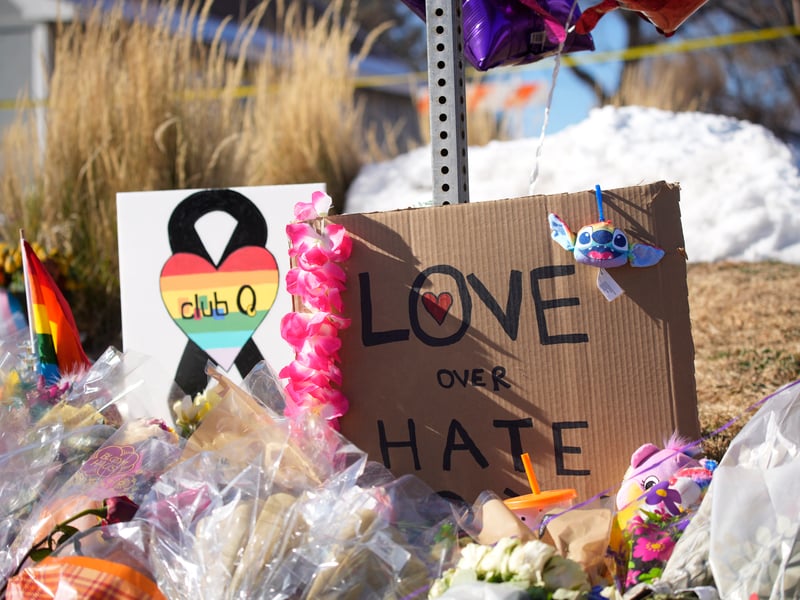
DENVER (CN) — Finding the government’s actions immoral but not illegal, a federal judge on Monday dismissed families’ claims against the El Paso County Sheriff’s Office and the county board of commissioners over policies that shirked the state’s red flag law that might have prevented a mass shooter from obtaining the firearms used to attack Club Q in 2022.
“Plaintiffs can take some slim solace in the fact that, while the individual county commissioners and Sheriff Elder are via this order escaping legal liability for their inaction and omissions, their collective role in refusing to at least try to thwart what most likely was a horrific but preventable tragedy should weigh heavily on their individual consciences, and most certainly will not be forgotten by the people of Colorado,” wrote Senior U.S. District Judge William Martinez in an 18-page order.
When people gathered at the LGBTQ nightclub Club Q in Colorado Springs to celebrate Transgender Day of Remembrance in November 2022, Anderson Lee Aldrich attacked, killing five people and injuring 25 others.
An October 2022 receipt indicated Aldrich was served at the club by bartender Derrick Rump, 38, who became one of the five killed that November. Kelly Loving, 40; Daniel Aston, 28; Ashley Paugh, 35; and Raymond Green Vance, 22, also died during the attack.
The victims surviving families sued Aldrich, the club and the county last year for failing to prevent the attack.
After pleading guilty, Aldrich was sentenced to five concurrent life sentences in June 2023. Aldrich received 55 subsequent life sentences in federal court.
The attack, however, was not Aldrich’s first brush with the law. In 2021, they told their mother they aspired to be a mass shooter while stockpiling body armor and ammo.
Local law enforcement arrested and charged Aldrich with felony menacing and kidnapping following an incident at their grandparents’ apartment but dropped the charges when the relatives moved to Florida.
A local judge dismissed a protection order along with the case in July 2022, which was sealed until after the November 2022 attack. Although the sheriff’s office declined to return confiscated firearms, Aldrich was then able to obtain new firearms without restriction.
Law enforcement had an additional tool at their disposal: a red flag law, which would have allowed the court to ban Aldrich from obtaining new weapons.
When Colorado lawmakers signed the Colorado Violence Prevention Act in 2019 enabling law enforcement to remove firearms from individuals deemed likely to carry out “future dangerous acts,” then-Sheriff Bill Elder vowed to restrict his office’s use of the legal tool citing Second Amendment concerns. The county commission passed a supporting resolution pledging to resist implementation of the law.
In their 2024 lawsuit against the sheriff and county commission, families who lost loved ones in the Club Q attack condemned the county’s refusal to pursue an extreme risk protection order against Aldrich.
In his order, Martinez called the law “the tool that might have prevented the monstrous and bloody act which cost the lives of and seriously wounded so many innocent Coloradans.”
Despite seeing the utility of law left unused, Martinez said the government actors could not be sued for inaction, even if their policies created broad ongoing harm.
“The resolution and the statement allegedly left all of government defendants’ constituents in harm’s way,” the Barack Obama appointee wrote. “Indeed, these policy pronouncements were not directed at any discrete plaintiff; rather, they were generally applicable to the public at large.”
Because the policy did not create a specific and immediate threat of harm, Martinez found, the government could not be held liable for the string of resulting consequences.
While Martinez dismissed the lawsuit against the government parties, he suggested the public take notice of the elected officials’ “conscious and intentional disregard of a known and unjustifiable risk, something which in the court’s view amounts to an abdication of local officials’ moral responsibility to protect the public.”
Earlier this year, Martinez granted default judgment to the families against Aldrich and maintained wrongful death claims against the club and landlord.
The families of Club Q victims are represented by Chicago attorney Patrick Huber at Romanucci & Blandin. Huber did not immediately return an inquiry for comment.
Representatives for the El Paso County Sheriff’s Office and the Office of the County Attorney declined to comment.
 Follow @bright_lamp
Subscribe to our free newsletters
Our weekly newsletter Closing Arguments offers the latest about ongoing trials, major litigation and rulings in courthouses around the U.S. and the world, while the monthly Under the Lights dishes the legal dirt from Hollywood, sports, Big Tech and the arts.