
 Search Articles


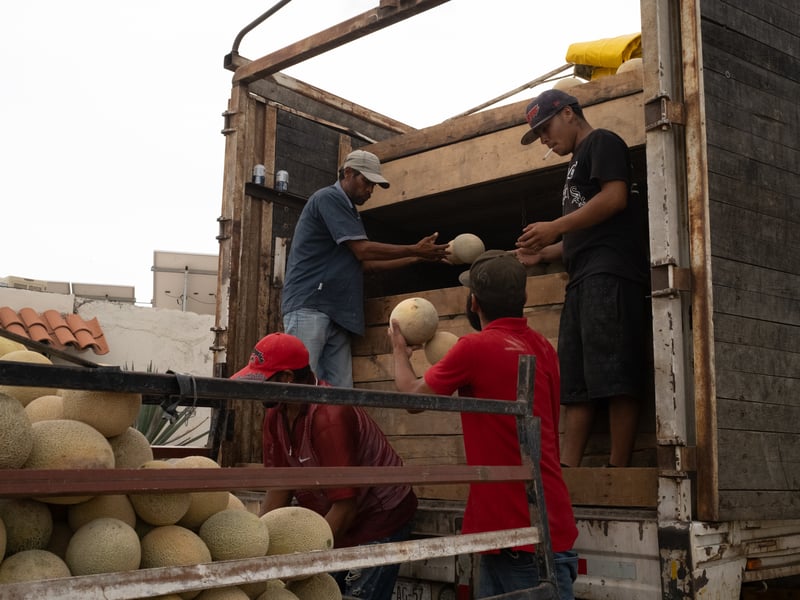
MEXICO CITY (CN) — In her press conference on Wednesday, Mexican President Claudia Sheinbaum announced a bill to decrease Mexico’s long-standing 48 hour workweek to 40 hours and, as a result of National Minimum Wage Commission negotiations — the tripartite council comprised of members of the federal government, labor unions and private sector —announced an increase in Mexico’s minimum wage that will begin on Jan. 1, 2026.
The minimum wage will increase from 278.80 pesos to 315.04 pesos per day, or around $15.30 to $17.25, and the minimum wage of the six border states that comprise the Free Zone of the Northern Border, where travel laws for U.S. citizens are more relaxed than the country’s interior and wages are higher due to its proximity with the U.S., will increase from 419.88 to 440.87 pesos per day, or about $23 to $24.14.
The workweek bill outlines a gradual plan to decrease the workweek by two hours in 2027 and two hours after that each following year, resulting in a 40-hour workweek by 2030.
As Sheinbaum’s Morena party holds the majority in both chambers of the legislative branch, the reform to decrease workweek hours is expected to pass in February following congressional debate.
Sheinbaum pointed out that the change will be gradual and will not put stress on the business sector.
“It does not imply higher costs for the business sector and is a consensus agreement. In 2026, companies will make the necessary adjustments to ensure that the working day can be reduced to 46 hours,” said Sheinbaum.
Marath Bolaños López, Mexico’s secretary of labor and social welfare, also echoed this statement during the press conference.
“The reduction in working hours not only brings benefits for workers, but also for economic units and for the economy. The reduction in working hours produces increases in productivity, strengthens social cohesion, as well as produces multiple benefits,” he said.
He added that the minimum wage will be enough to afford two “basic baskets” without resulting in inflation. On Nov. 18, the Sheinbaum administration and members of the private sector renewed the Package Against Inflation and Shortage plan, which ensures that the 24 products that make up the basic basket, such as eggs, milk, vegetable oil, tortillas, chicken and beef, are fixed at 910 pesos, around $50, for the first six months of 2026.
Gabriela Siller Pagaza, director of economic and financial analysis at Banco BASE, is not so sure.
“Unfortunately, yes, there will be inflationary pressures. Above all, this is because the number and percentage of people earning minimum wage have increased. And this is going to cause two things. One is inflationary pressures and two, an incentive for informal work, especially if we’re at a time of economic downturn,” she said.
Siller Pagaza said that even though companies have time to adjust to the gradual workweek change starting in 2027, the positions will increase, but with them, as a result of higher labor costs, the informal sector could also increase.
“If there’s stagnation, there’s no growth, formal employment will go down, consumption will be low, then this increases labor costs, and it can have a greater impact on the economy and will also increase the informal sector,” said Siller Pagaza.
The latest report from Mexico’s National Institute of Statistics and Geography shows that of those formally employed in Mexico — which accounts for less than half of the working population — 34.4% are in “critical working conditions.”
These are the percentages of the employed population who face inadequate working conditions, such as working less than 35 hours a week for reasons out of their control or working more than 35 hours while making minimum wage or less, or those who work more than 48 hours a week without social security.
According to the report, 55.7% of Mexico’s working population works in the informal economy.
Subscribe to our free newsletters
Our weekly newsletter Closing Arguments offers the latest about ongoing trials, major litigation and rulings in courthouses around the U.S. and the world, while the monthly Under the Lights dishes the legal dirt from Hollywood, sports, Big Tech and the arts.