
 Search Articles


NEW GLOUCESTER, Maine (CN) — At its peak nearly 200 years ago, the Shaker sect of Christianity had about 5,000 believers living in nearly 20 communities from Maine to Indiana.
Today, there are but three members — all living, working and praying in the world’s only Shaker community still around, in a small town in Maine.
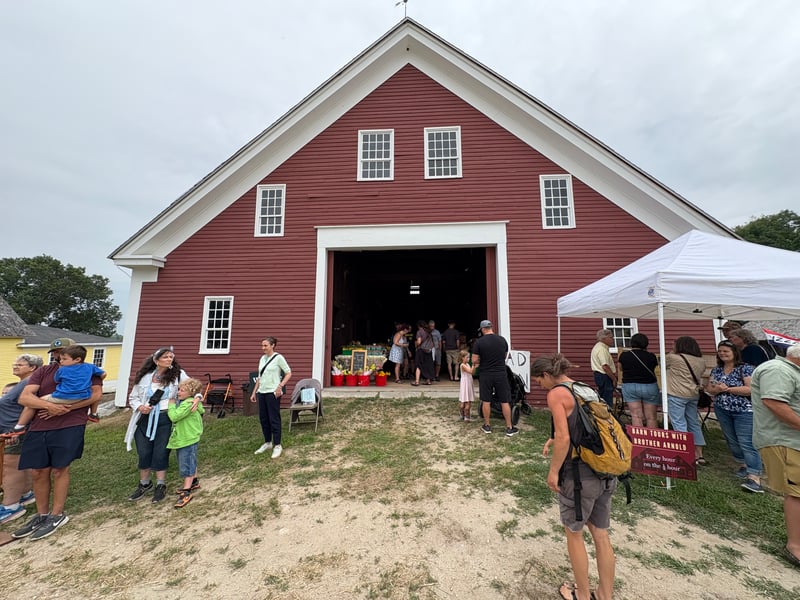
The Shaker Village at Sabbathday Lake is both an active religious community and a museum of sorts. Members of the public are welcome at this historic site, where they can see the Shaker’s small farm, attend Sunday services or buy herbs and teas harvested from their garden.
Arnold Hadd joined the Shakers 47 years ago, when he was 21.
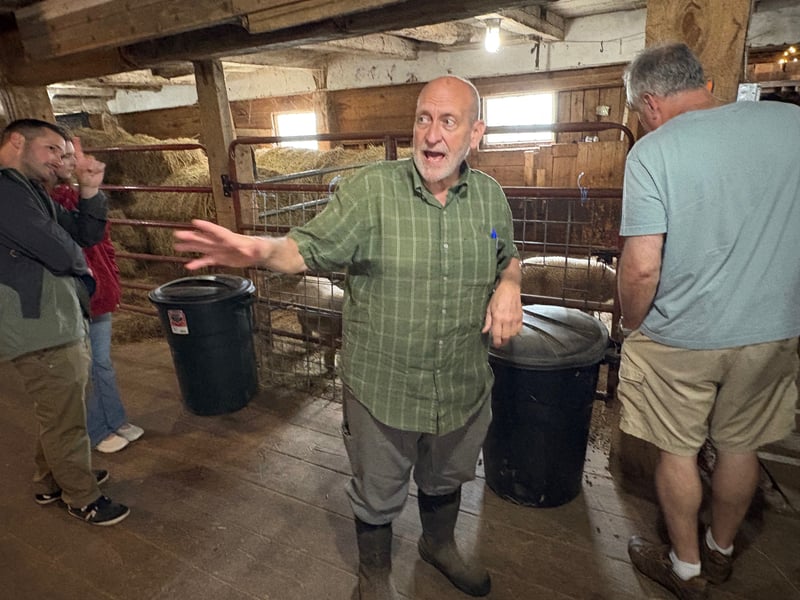
Last Sunday, he was giving tours of the Shakers’ historic barn to hundreds of visitors. The occasion was Open Farm Day, a statewide event in which 90 farms across the Pine Tree State open their doors to the public.
Asked to explain the Shakers’ longevity, or how the community can survive into the future, or why he joined the Shakers in the first place all those years ago, he gave the same answer.
“Faith!” Hadd, who goes by Brother Arnold, exclaimed without hesitation. “That’s it, plain and simple.”
Membership in the sect is now perilously low — but community support has never been stronger. The Friends of the Shakers, a nonprofit organization founded in 1974, has more than 500 members who help the Shaker community through donations, fundraising and near-daily volunteer work.
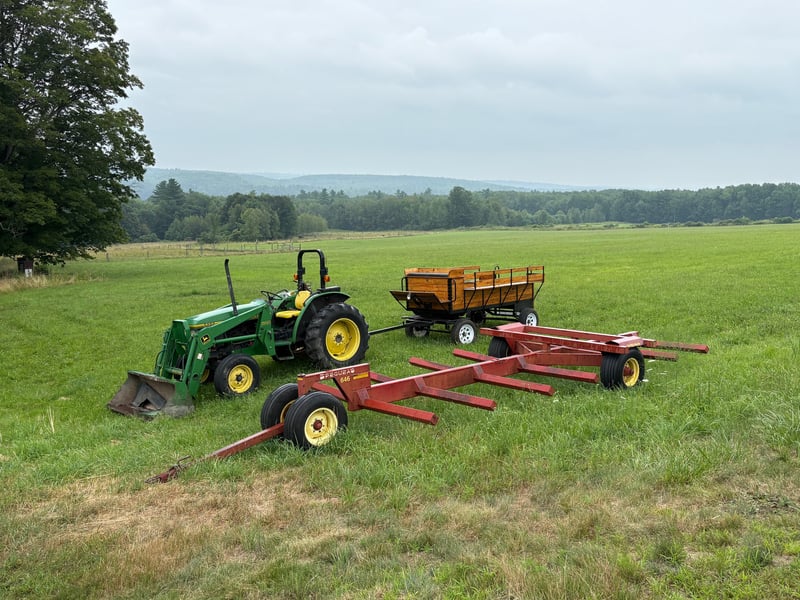
After all, it takes a lot of helping hands to maintain Shaker Village, founded in 1783 in New Gloucester, a town of about 5,700 people located 40 minutes north of Portland. Located on Sabbathday Lake, the village has 18 buildings on 1,800 acres. Besides the Shakers, it’s home to nearly 70 sheep, four cattle, several hay fields and the group’s renowned herb garden.
Jennifer Curran, president of the Friends of the Shakers, said the nonprofit’s members come not only from Maine and New England, but from across the country and even as far away as Canada and the United Kingdom.
“They’re a part of the Shaker family,” Curran explained as she tended the Friends of the Shakers’ table at Open Farm Day. “They just don’t live here.”
The Shaker Village at Sabbathday Lake became the last remaining Shaker community in 1992, after a similar community in Canterbury, New Hampshire, lost its last member.
The last one before that — in Hancock, Massachusetts — closed in 1960. It now serves as a Shaker history museum.
There were never many Shakers. Even at the sect’s peak in the 1800s, just a few thousand identified as part of the group. Shakers take a vow of lifelong celibacy, foreclosing one major route through which more Shakers could be created.
Despite their small numbers, Shakers had an outsized influence. The group is credited with being the first to sell individual packets of seeds. They developed their own styles of music and furniture, still in use today. They’re credited with creating the flat-bottomed broom (replacing the old witch-style brooms of the past) and the agitating clothes washer. Perhaps most significantly, the group helped advance the fields of botany and medicine with its hallmark dried herbs and herbal extracts.
Other Shaker inventions have not aged as well, like the group’s once-famous opera cloaks. They became especially popular after Frances Folsom Cleveland, wife of President Grover Cleveland, wore one to her husband’s inauguration in 1893.
“That caused a high-society craze for these cloaks,” said Christian Goodwillie, who is the director and curator of Special Collections and Archives at the Burke Library at Hamilton College and who has studied and written about the Shakers for decades. But good luck spotting one at an opera today — by World War II, the Shakers had basically stopped making them.
Officially known as the United Society of Believers, the Shaker movement began in England in the mid-1700s. It established itself in the Americas in 1774, under the spiritual leadership of a woman named Ann Lee.
Mother Ann, as she was known, called on her followers to confess their sins, give up their worldly goods and become celibate in their quest for spiritual purity. The group gets its nickname from the way members shook and spoke in tongues as they danced. Initially active primarily in New England, Shaker colonies popped up as far away as Indiana and Kentucky as the church grew. Membership numbers peaked in the mid-1800s but began dropping after the Civil War, as Shaker colonies closed.
It remains to be seen what the future holds for the Shakers.
At one point, around 200 people lived in this Maine community. The community had been down to just two members, Brother Arnold and the 87-year-old Sister June. Then, in April, a New England woman in her 50s joined, becoming the third living Shaker.
Others may follow. Mark Lapping, a retired professor and provost at University of Southern Maine, has visited Shaker Village numerous times and written about the group. Amid general bad vibes in the world, he predicts that more people will find themselves drawn to the simple and ascetic life of the Shakers, just as Americans of previous generations have turned to Buddhism and other Eastern religions.
“The times are pretty ugly. The times are very black,” Lapping said. “I think a lot of people reach out in such times for some clarity in their lives and ways to stay on. So, I think for some people Shakerism may be attractive.”
As far back as the 1780s, newspaper articles were predicting that the Shaker religion would be short-lived, Goodwillie said.
“People are still saying that today, and it still hasn’t come to pass,” he said. “The key to their longevity — and it’s the same key to most currently successful intentional communities — is that strong religious core. It’s a faith commitment to live this life of consecration to this faith. It’s basically like being a monk.”
Becoming a Shaker takes complete devotion. To join, people must agree with the principles of the Shaker faith, be single and have no dependents, be free of debt, be willing to live a celibate life and otherwise “free from anything that would prohibit you from giving yourself wholly to God and to this community,” according to a list of membership requirements on the Shaker Village website.
Once a Shaker, people lead structured lives revolving around lots of praying and lots of work. Far from recluses, they interface with the public frequently at events like Open Farm Day, a fall harvest festival and an annual Friends of the Shakers gathering.
There are volunteer work days each spring and fall. Shaker Village also hosts multiple workshops each year, where the group teaches everything from woodworking and basket-making to beekeeping and home canning. “It’s pretty amazing the community they have,” said Carolyn Thomas, a member of Friends of the Shakers and a regular at the village. “They’re part of the community.”
Subscribe to our free newsletters
Our weekly newsletter Closing Arguments offers the latest about ongoing trials, major litigation and rulings in courthouses around the U.S. and the world, while the monthly Under the Lights dishes the legal dirt from Hollywood, sports, Big Tech and the arts.