
 Search Articles


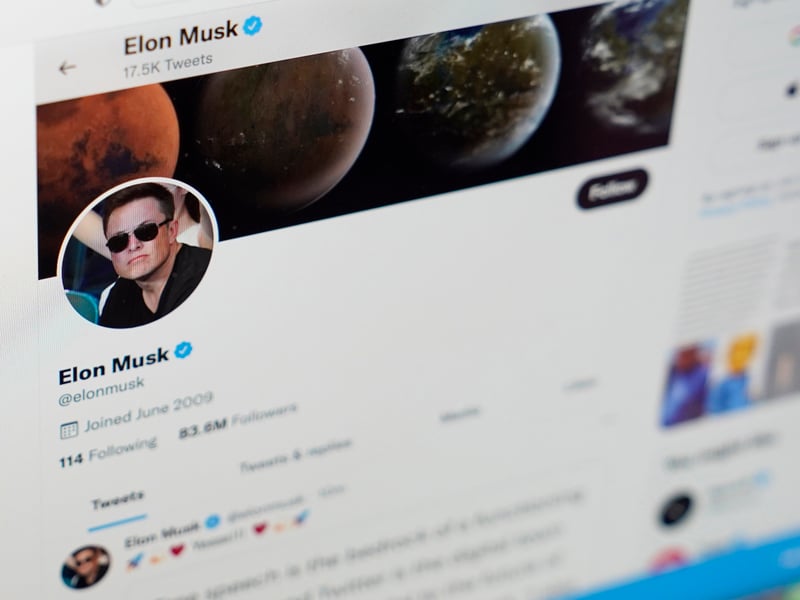
SAN FRANCISCO (CN) — A federal judge declined to put the brakes on sex discrimination claims against Twitter by a class of former employees who claim that Elon Musk’s mass layoffs after he bought the company affected women significantly more than men.
In October 2022, after Musk acquired the company, he began a massive reduction in force, laying off more than half of Twitter’s workforce.
The plaintiffs claim Twitter laid off approximately 57% of its female employees, compared to 47% of its male employees, in November 2022 — a disparity they say cannot be based on chance. They pointed to sexist comments made by Musk which they argued should be imputed to Twitter, including Musk publicly joking about naming a school using the acronym “TITS”; as well as Musk’s repeated jokes about women’s breasts on Twitter and his belief that it’s more important for women to have multiple babies than to pursue their careers.
In addition to sex discrimination, the plaintiffs also claimed that Musk’s takeover unfairly targeted minorities and those that took leave under the Family and Medical Leave Act.
Twitter argued Musk’s comments are insufficient to demonstrate animus and that some nexus between the remark showing animus and the decision to take adverse action against the employees is required.
U.S. District Judge Araceli Martinez-Olguin, a Joe Biden appointee, on Wednesday found Twitter’s argument flawed and allowed the sex discrimination, FMLA and age discrimination claims to proceed.
“Twitter’s attack focuses too heavily on a portion of the assessment and ignores the totality of plaintiffs’ complaint. Musk’s disparaging comments about members of each protected class evince discriminatory intent when considered ‘together with’ the allegations that Twitter conducted the RIF in a discriminatory manner, including statistical evidence of discrimination,” Martinez-Olguin wrote, using the acronym for “reduction in force.”
The Ninth Circuit has found “offhand” comments evincing racial animus may support an inference of discrimination when considered alongside additional adverse conduct, Martinez-Olguin ruled.
“The court finds that Musk’s comments evinced a discriminatory intent to force out those members of protected classes. Further, the court finds that the combination of the statistical evidence of differential treatment in the RIF and Musk’s antagonistic comments about women and older workers, combined with the allegations regarding the lack of consideration given by managers in the course of making RIF decisions, collectively support an inference of discriminatory intent against women and older workers in the RIF process,” she wrote.
Plaintiff Omolade Ogunsanya saw race discrimination claims tossed with leave to amend, however, because Ogunsanya did not sufficiently describe differential treatment on the basis of race, according to Martinez-Olguin. Ogunsanya only claimed in conclusory fashion that Black employees were statistically more likely to be chosen for layoff than other employees.
“This contention is not bolstered by additional factual support, such as statistical charts showing a comparison of Black employees laid off compared to others,” Martinez-Olguin wrote.
Shannon Liss-Riordan, counsel for the plaintiffs, praised the ruling in a statement to Courthouse News.
“We are very pleased with this decision. The court allowed our claims alleging sex, age, and FMLA discrimination against Twitter (in connection with Elon Musk’s layoffs following his purchase of the company) to proceed, and we were granted leave to amend the race discrimination claims brought on behalf of Black employees, which we will do,” she said.
In a separate ruling in a different lawsuit Wednesday, Martinez-Olguin ruled that Musk’s remote work policies did not amount to disability discrimination.
Dmitry Borodaenko, a former engineering manager at Twitter, sued Twitter in 2022. He claims he was fired after Musk acquired Twitter because he refused to report to the office during the Covid-19 pandemic. Borodaenko claimed Twitter violated federal law that requires it to accommodate workers’ disabilities.
Martinez-Olguin found Borodaenko had failed to show how Musk’s mandate to return to the office specifically impacted employees with disabilities.
“Borodaenko’s theory improperly relies on the assumption that all employees with disabilities necessarily required remote work as a reasonable accommodation," she wrote.
Martinez-Olguin gave Borodaenko four weeks to amend his complaint to include more details.
Liss-Riordan, who also represents Borodaenko, said “We are reviewing the Borodaenko decision and will decide the next steps for this case.”
Twitter did not respond to requests for comment.
Subscribe to our free newsletters
Our weekly newsletter Closing Arguments offers the latest about ongoing trials, major litigation and rulings in courthouses around the U.S. and the world, while the monthly Under the Lights dishes the legal dirt from Hollywood, sports, Big Tech and the arts.