
 Search Articles


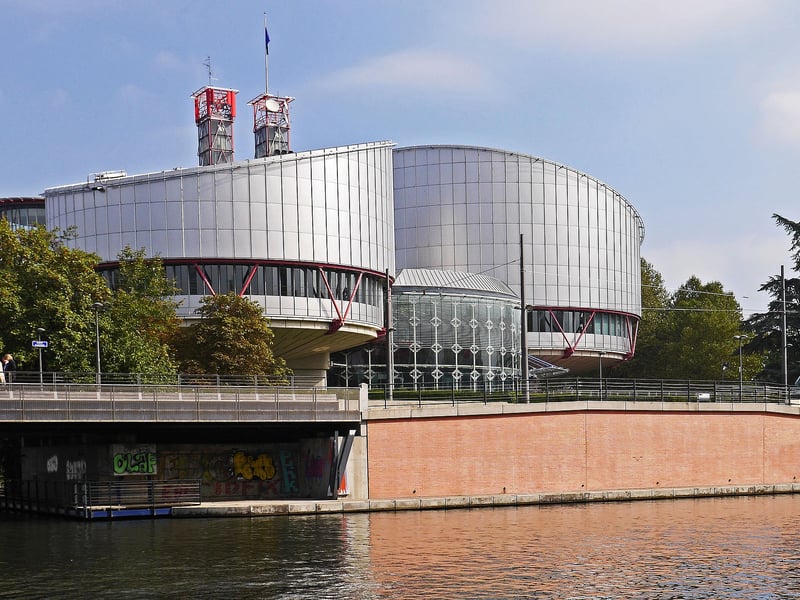
(CN) — A Serbian lawyer who was fined for calling a judge’s conduct “truly outrageous” won his case Tuesday before Europe’s top human rights court, which found the penalty went too far and violated his freedom of expression.
In a 6-1 ruling, the European Court of Human Rights came down on Marco Tešić’s side, saying that even blunt or sarcastic remarks can fall under a lawyer’s right to free expression when they’re part of defending a client. The judges also noted his statements weren’t made in public but filed as part of the normal courtroom process.
The case stemmed from a murder trial in Belgrade. Tešić, a defense lawyer, was representing a man accused of attempted murder when tensions in the courtroom began to rise. He clashed repeatedly with the presiding judge over how his objections were entered into the record. Later, in a written complaint, he accused her of mishandling the transcript and used sharp language to drive his point home, saying the judge had been “swept up in the heat of passion” and needed to “cool down.”
The Belgrade court responded by fining him 80,000 dinars (about $780) for contempt, saying his remarks insulted the panel and broke professional decorum. Higher courts upheld the sanction, and Serbia’s Constitutional Court later dismissed his appeal.
Tešić took his case to the Strasbourg court. He argued he’d been punished simply for doing his job — defending his client — and that his criticism focused on courtroom procedure, not on the judge personally. The Serbian government countered that his comments were sexist and disrespectful to judicial authority.
Ultimately siding with Tešić, the European judges concluded, “Applicant’s submissions, even if caustic in tone, constituted genuine procedural grievances with a view to adversarial argument.” They found he didn’t attack the judge’s personal integrity and that Serbian courts hadn’t provided sufficient reasoning to justify the fine.
Kanstantsin Dzehtsiarou, a professor of human rights law at the University of Liverpool, said the ruling draws “an important boundary between the legitimate sanctioning of disruptive or inappropriate behavior by legal professionals and a disproportionate interference with their freedom of expression.”
He noted that while the court upheld Tešić’s right to point out procedural errors, “had the fine been less severe, the outcome might well have been different.” The takeaway, he said, is that judges should be ready to tolerate strong criticism grounded in legal argument, while lawyers still need “to exercise restraint and maintain appropriate language” in court.
Under the ruling, Serbia must reimburse Tešić about $780 for the fine itself and another €1,150 (about $1,320) to cover his legal expenses.
Not everyone on the bench agreed. In a lone dissent, Judge Vasilka Sancin said the Serbian courts were within their rights to defend the dignity of the judiciary. She argued that maintaining public trust in the courts sometimes requires firm responses to personal or insulting remarks aimed at judges.
Sancin agreed that lawyers should be free to question judges’ decisions but said freedom ends where personal attacks begin. She said Tešić’s comment about a female judge needing to “cool down” was a gendered remark that specifically targeted and belittled the judge rather than addressing the court as a whole.
Since the words came from a male lawyer directed at a female judge, the imbalance was more pointed — for that reason, she wrote, “there is a pressing social need for adequate responses to gendered personal attacks on judges.”
She also pushed back on the majority’s view that Tešić’s remarks were made in a private setting. Sancin argued that once the case reached Strasbourg, those words effectively became public through the court’s published judgment. The majority, by contrast, said the comments were submitted only to the trial court and never meant for public circulation, which they saw as a key reason the fine was excessive.
Alkmene Fotiadou, a research associate at the Centre for European Constitutional Law, said the ruling “strengthens the position of lawyers within judicial proceedings,” while still drawing a clear boundary, protecting what lawyers say in the courtroom while stopping short of covering speech made outside it. She noted that while the court dismissed claims of sexism, it left unanswered how freedom of expression would apply if such bias were proven in a future case.
True confidence in the judiciary, she added, is shown “through demonstrating confidence rather than fines or prohibitions chilling free expression.”
Neither Tešić nor the Serbian government immediately responded to requests for comment.
The judgment will become final in three months unless Serbia seeks a review by the Grand Chamber.
Courthouse News reporter Eunseo Hong is based in the Netherlands.
Subscribe to our free newsletters
Our weekly newsletter Closing Arguments offers the latest about ongoing trials, major litigation and rulings in courthouses around the U.S. and the world, while the monthly Under the Lights dishes the legal dirt from Hollywood, sports, Big Tech and the arts.