
 Search Articles


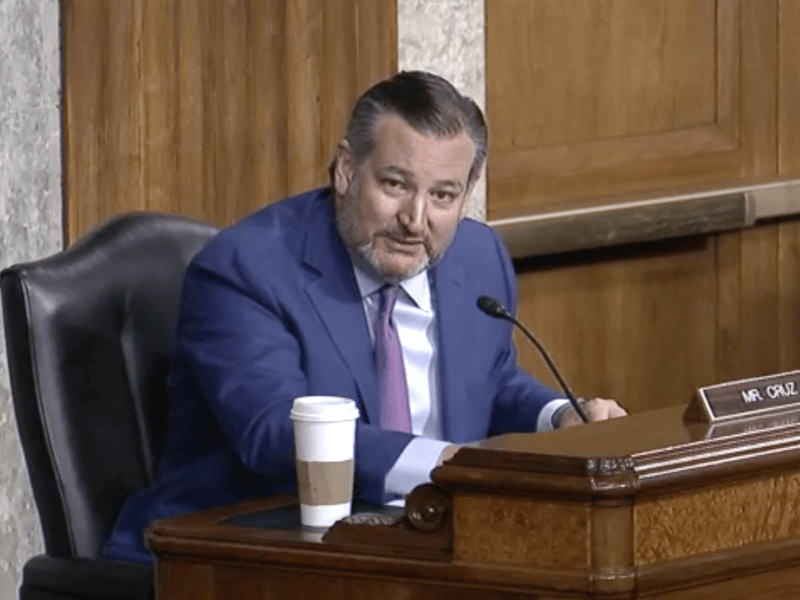
WASHINGTON (CN) — It was a tense scene in the Senate Judiciary Committee on Tuesday as lawmakers sparred over Republican efforts to take the federal judiciary to task over a spate of recent rulings hamstringing the Donald Trump administration’s executive agenda.
It was an unusually fiery display for a normally austere panel, as GOP lawmakers accused Democrats of hypocritically cosigning what they’ve framed as political activism on the federal bench — and Democrats warned that their colleagues’ rhetoric could put judges and their families at risk.
Republicans in Congress have, for months, vowed retribution against federal district judges who, on several occasions, have slapped limits on the Trump White House as it attempts to implement sweeping executive orders, some of which critics have framed as illegal or unconstitutional. Lawmakers have already advanced legislation aimed at barring the judiciary from issuing nationally binding injunctions, and others have even called for the removal of some jurists who have made such rulings.
And on Tuesday, Republicans again seized the opportunity to slam what they’ve called “judicial tyranny” on the federal bench.
“Our country is facing a constitutional crisis — a full-blown judicial assault on the separation of powers that strikes at the very foundation of the republic,” said Texas Senator Ted Cruz at the opening of a hearing that heard testimony from a panel of academic witnesses. “What we are witnessing is the rise of judicial lawfare from the bench.”
Republicans contended that courts have issued markedly more injunctions against the Trump administration than they did against previous Democratic presidents and pointed out that the majority of those mandates have come down from a handful of judicial districts. Such a trend, they argued, was indicative of political bias among judges.
“There can be no democratic accountability, no republican government, with an overly activist judiciary that allows over 600 judges to wield limitless power,” said Missouri Senator Eric Schmitt.
Some of the witnesses who testified Thursday echoed those sentiments.
Josh Blackman, a law professor at the South Texas College of Law, invoked Fifth Circuit Judge James Ho as he explained to lawmakers that it was not the judiciary’s job to “check the excesses” of the other branches of government any more than it would the average American citizen. He contended that it was Congress’ role to serve as a check on the White House rather than lower courts.
“The constitution refers to the federal district courts as inferior courts, yet far too many lower court judges seem to have a superiority complex,” said Blackman. “We’re witnessing a never-ending onslaught of universal injunctions that make it nearly impossible for the executive branch to function.”
J. Joel Alicea, professor at the Catholic University of America’s Columbus School of Law, said that while the use of national injunctions has historically been nonpartisan, they’ve been employed an “astonishing” number of times against the Trump administration so far.
“The American people never gave judges the power to issue universal injunctions,” he contended, adding that their use was a development of the 20th century. “Judges have seized that power for themselves, and only quite recently in history.”
The exact genesis of national injunctions is a subject of debate, with some legal scholars arguing that they only became a judicial tool as recently as the 1960s. Others, such as University of Pennsylvania law professor Kate Shaw, who testified Thursday, have said there is evidence of their use as early as 1913.
Democrats, meanwhile, were skeptical of the Republican scrutiny of so-called political activism on the judicial bench.
Rhode Island Senator Sheldon Whitehouse, who, for years, led the charge against what Democrats saw as a conservative influence campaign over the Supreme Court, said his GOP colleagues weren’t interesting in addressing that issue — and that they supported the use of nationwide injunctions when the high court blocked the Joe Biden administration’s student loan forgiveness plan.
“Some colleagues filed lawsuits asking for nationwide injunctions against the Biden administration, but now they’re shocked that there are nationwide injunctions,” said Whitehouse.
And the Rhode Island lawmaker repeated what has become a common Democratic refrain: that the Republican attacks on judges threaten their safety. He pointed to conservative figures such as Elon Musk, who he said used his social media platform X to “fire up the right-wing flying monkeys” against the judiciary. Whitehouse also cited efforts by Republican lawmakers to impeach federal judges, alluding to a “wanted” poster Tennessee Representative Andy Ogles displayed outside his Capitol Hill office featuring photos of judges who ruled against the Trump administration.
The judiciary’s seemingly disproportionate moves to halt the Trump administration, Democrats contended, were not the result of a political conspiracy but were merely because the White House is violating the law.
Vermont Senator Peter Welch said that injunctions against the president so far are indicative of the courts “doing their job.”
“They disagreed, and when they disagreed, it was asserted by the president and by the attorney general that they were monsters, they were renegades, they were out of control,” said Welch. “It was an ad hominem attack, because judges were doing their jobs.”
Things took a tense partisan turn, though, when Cruz accused Democrats of hypocritically raising threats to judges as a defense against the use of national injunctions. He claimed that his colleagues across the aisle were “perfectly happy” under the Biden administration when Supreme Court justices such as Justice Brett Kavanaugh were threatened by protesters demonstrating against the high court’s 2022 abortion ruling.
That comment drew a sharp rebuke from New Jersey Senator Cory Booker, who said such assertions were “dangerous” and pointed out that lawmakers passed bipartisan legislation hiking protections for judges amid those demonstrations.
“To say things like that feeds the partisanship of this institution and feeds the fiery rhetoric, and it’s just plain not true,” said Booker.
Thursday’s hearing was just the latest installment in Republicans’ efforts to clamp down on the judiciary as it hamstrings the Trump agenda. The House in April passed a measure that would drastically restrict the scope of national injunctions, and Senate Republicans have announced their intention to include the bill’s language in the forthcoming budget reconciliation package.
And despite attempts by some Republicans to impeach judges who’ve ruled against the president, such efforts have yet to go mainstream. House GOP leadership, which would be primarily responsible for starting impeachment proceedings, has so far rejected the idea.
 Follow @BenjaminSWeiss
Subscribe to our free newsletters
Our weekly newsletter Closing Arguments offers the latest about ongoing trials, major litigation and rulings in courthouses around the U.S. and the world, while the monthly Under the Lights dishes the legal dirt from Hollywood, sports, Big Tech and the arts.