
 Search Articles


WASHINGTON (CN) — The Senate Committee on Homeland Security on Tuesday hammered a group of consulting firm executives who lawmakers say have been cagey about their work with Saudi Arabia’s sovereign wealth fund.
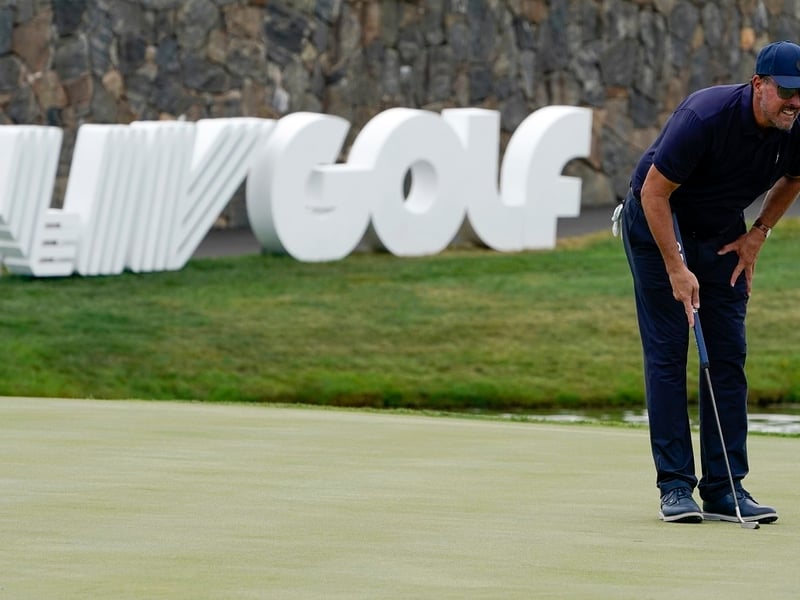
The panel has for months drilled down on the Saudi Public Investment Fund’s ventures in the U.S., such as its backing of the LIV Golf tournament’s controversial merger with the PGA Tour. Lawmakers have worried about the optics and national security implications of allowing Riyadh and its abysmal human rights record to be associated with American businesses.
The Public Investment Fund, or PIF, has rebuffed congressional oversight at every turn. The organization’s U.S. lead Yasir Al-Rumayyan last year declined to testify before the Homeland Security Committee, citing his status as a minister of a foreign government.
Looking to sidestep the Saudi fund’s objections, the Senate in November issued subpoenas to a group of consulting firms for details on their work with the PIF. In response to that order, however, Riyadh issued a legal injunction against the companies, which include the Boston Consulting Group and McKinsey and Co., blocking them from divulging the requested information.
The kingdom justified the order by arguing that details of the PIF’s business dealings are confidential and that sharing them with Congress would threaten Saudi Arabia’s national sovereignty.
During a Tuesday hearing in the Homeland Security Committee, lawmakers were apoplectic about Riyadh’s obstruction.
“How is it that consulting work performed by our companies, including records about investment in United States golf, harm Saudi Arabia’s national security?” said Connecticut Senator Richard Blumenthal, who chairs the homeland security panel’s investigations subcommittee. “How can allegedly commercial investment directed at the United States be out of the reach of subpoenas issued by the United States government?”
Blumenthal argued that allowing a foreign government and companies that work with them to avoid congressional oversight would set a precedent under which firms could “cloa[k] themselves in scrutiny whenever they work for a foreign government or even a foreign state-owned enterprise.”
“We are not about to sell our legal system to the highest bidder, or the biggest bully,” he added.
Meanwhile, consulting executives invited to testify Tuesday framed themselves as stuck between a rock and a hard place.
Rich Lesser, global chair of the Boston Consulting Group said his firm was “caught between two sovereigns,” pointing out that Congress has requested information that the PIF considers to be government secrets.
Saudi Arabia has laws against disclosing that kind of information, Lesser explained, telling lawmakers his company is willing to comply while protecting itself and its employees.
“We risk criminal and financial penalties for the firm and individuals working or living in Saudi Arabia,” he said. “We are committed to finding a solution to this challenging situation that satisfies all parties involved and does not put our firm or our people at risk of serious criminal prosecution.”
Echoing those sentiments was Bob Sternfels, global managing partner at McKinsey and Co.
“This has put us in a difficult position,” he told the committee, adding that the firm was “focused on complying with this subpoena and ensuring the well-being” of its more than 400 Saudi Arabia-based employees.
Sternfels said that McKinsey was looking for a way to provide Congress with more information on its relationship with PIF “in a manner that’s respectful of our client’s concerns about competitively sensitive information.”
Michael Klein, founder of M. Klein and Co., told lawmakers that given the legal threat posed by Riyadh, fully complying with the committee’s subpoena was “simply not a risk I can take for myself or for my employees.”
“Our ability to respond today in full does not reflect any lack of willingness,” Klein said, “not does it reflect any concern regarding the work we’ve done.”
Lesser, Sternfels and Paul Keary, CEO of consulting firm Teneo, distanced themselves from the PIF-backed golf merger. Klein addressed the PGA-LIV deal more directly, saying that he believed investment markets “should be fair and transparent to all participants.”
“The United States has the most advanced market in the world,” he added, “and has robust regulatory processes to ensure justice.”
Lawmakers were less than impressed with the witnesses’ explanations for their noncompliance.
“The position that I’ve heard expressed today is essentially that you will comply with the subpoena, but only so far as Saudi Arabia allows you to do so,” Blumenthal said. “You say that you’re behind a rock and a hard place, but you’ve chosen sides. You’ve chosen the Saudi side, not the American side.”
Wisconsin Senator Ron Johnson, the investigations subcommittee’s Republican ranking member, said that he sympathized with the legal jeopardy the consulting firms found themselves in, but not with the Saudi government’s claim of sovereign immunity to a congressional investigation.
“Any foreign entity wishing to do business in the U.S. must comply with U.S. law and be responsive to congressional subpoenas,” Johnson said.
Speaking to Courthouse News on the sidelines of Tuesday’s hearing, Blumenthal said he understood that firms were grappling with potential legal consequences for their employees “at the hands of a government that apparently has no respect for the rule of law or the rights of individuals.”
“But they made choices that put themselves in this position,” he said, “and they can make choices to get out of it.”
In an emailed statement, a spokesperson for the PIF said that the fund is willing to work with lawmakers in a manner consistent with its “status and obligations as an instrumentality of Saudi Arabia.”
“The subcommittee’s requests are sweeping and unprecedented in seeking to compel the production of confidential and classified information of a foreign sovereign instrumentality,” the spokesperson said, “but we hope to work with the subcommittee to resolve these issues.”
The PGA Tour, the U.S.’s preeminent golfing tournament, announced in July that it would merge with LIV Golf. The agreement shut down a yearslong lawsuit against LIV by PGA, which accused the PIF-backed tournament of working to supplant its position as the dominant American golf organization.
The Riyadh-based PIF bankrolled the establishment of LIV Golf in 2021. Before its proposed merger with PGA, the new tournament was growing rapidly and had attracted some of the biggest names in the sport, such as two-time PGA champion Phil Mickelson.
 Follow @BenjaminSWeiss
Subscribe to our free newsletters
Our weekly newsletter Closing Arguments offers the latest about ongoing trials, major litigation and rulings in courthouses around the U.S. and the world, while the monthly Under the Lights dishes the legal dirt from Hollywood, sports, Big Tech and the arts.