
 Search Articles


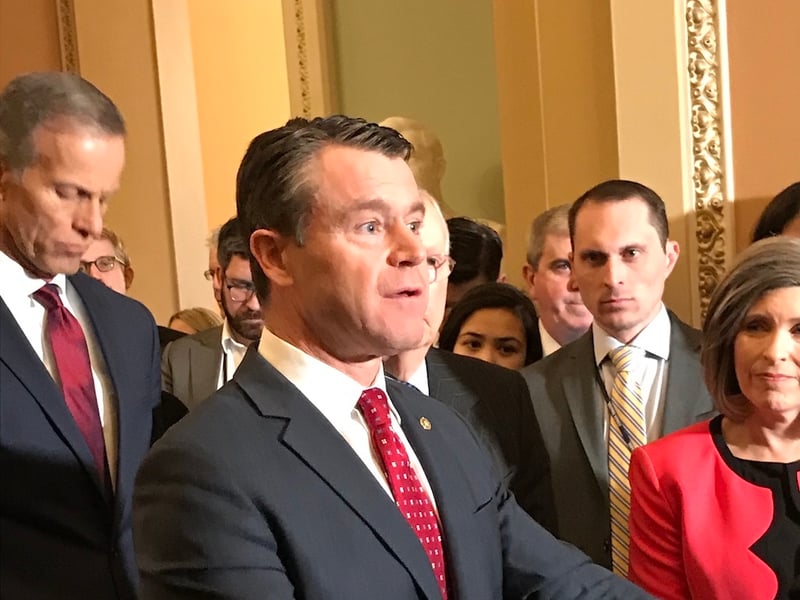
WASHINGTON (CN) — In a rare unanimous move, the Senate on Thursday passed a bipartisan bill aimed at expanding the federal judiciary and easing the caseloads currently faced by federal courts and judges.
That bill, known as the Judicial Understaffing Delays Getting Emergencies Solved or JUDGES Act, was sponsored by Indiana Senator Todd Young, a Republican, and Delaware Senator Chris Coons, a Democrat. All 100 senators agreed to advance it on Thursday via a process known as unanimous consent.
The passage comes just days before lawmakers were set to begin their August recess. It was an unusual show of bipartisanship for the often-divided chamber, but not an entirely unexpected one: The Senate Judiciary Committee advanced the measure to the floor in June on a similarly unanimous margin.
Speaking on the Senate floor Thursday, Democratic Senate Majority Leader Chuck Schumer said the judgeships bill would provide extra capacity that the judiciary desperately needs.
“There’s broad consensus we need more judges on the federal bench,” Schumer said. “It’s not a Democratic or Republican issue. This is a very responsible, bipartisan and prudent bill.”
If passed by the House and signed into law, the JUDGES Act would follow the 2023 recommendations of the U.S. Judicial Conference by adding 63 new judgeships to district courts in more than a dozen states, including in Texas, Florida and Iowa, as well as the sponsors’ home states of Indiana and Delaware.
The measure would direct the president to appoint new judges in six increments over the span of 12 years. It would also create a mechanism for evaluating caseloads in district courts to determine whether more judges are needed, using a public online database of judges among other resources.
As federal courts struggle amid crushing caseloads, lawmakers and legal experts both say that more judges are a sorely needed lifeline.
Congress, tasked with overseeing the judiciary, has not created a new district court judgeship since 2003. The last comprehensive expansion was more than 30 years ago, in 1990.
In a statement Thursday, Young and Coons celebrated the bill’s passage.
“Too many Hoosiers and Americans are being denied access to our justice system due to an overload of cases and a shortage of judges,” Young said. “Our bipartisan bill will help alleviate this shortage and ensure all Americans have the opportunity to have their day in court.”
Coons echoed these sentiments, arguing that Congress has long failed in its duty to authorize new federal judgeships and has therefore contributed to the backlog in district courts.
“I urge the House to swiftly pass this bill,” he said in the statement. “Once President Biden signs it into law, I’m hopeful we can restore stability to our judicial system and help ensure access to justice for all Americans, no matter where they live.”
The JUDGES Act achieved unanimous support despite some initial resistance from lawmakers, particularly Republicans. During a Senate Judiciary Committee markup in June, Iowa Senator Chuck Grassley said he was reticent to add new judges, arguing that some current judges weren’t working hard enough while others faced crushing caseloads.
Texas Senator John Cornyn expressed similar concerns. In the end, both lawmakers voted for the bill, acknowledging that Americans deserve speedy access to justice.
Other Republicans have consistently supported the proposal. At the time, South Carolina Senator Lindsey Graham argued the measure was necessary.
“I just think we need more judges,” he said. “it’s been since 1990.”
It’s the second time Young and Coons have spearheaded efforts to expand the judiciary. A similar measure fizzled out in 2021 before it could see a vote.
Though the bill has made progress this time around, it’s unclear whether the JUDGES Act has the support to pass in the Republican-led House, which began its August recess early this week amid concerns about support for a tranche of appropriations bills. Both chambers will return for the fall session after Labor Day weekend on Sept. 9.
 Follow @BenjaminSWeiss
Subscribe to our free newsletters
Our weekly newsletter Closing Arguments offers the latest about ongoing trials, major litigation and rulings in courthouses around the U.S. and the world, while the monthly Under the Lights dishes the legal dirt from Hollywood, sports, Big Tech and the arts.