
 Search Articles


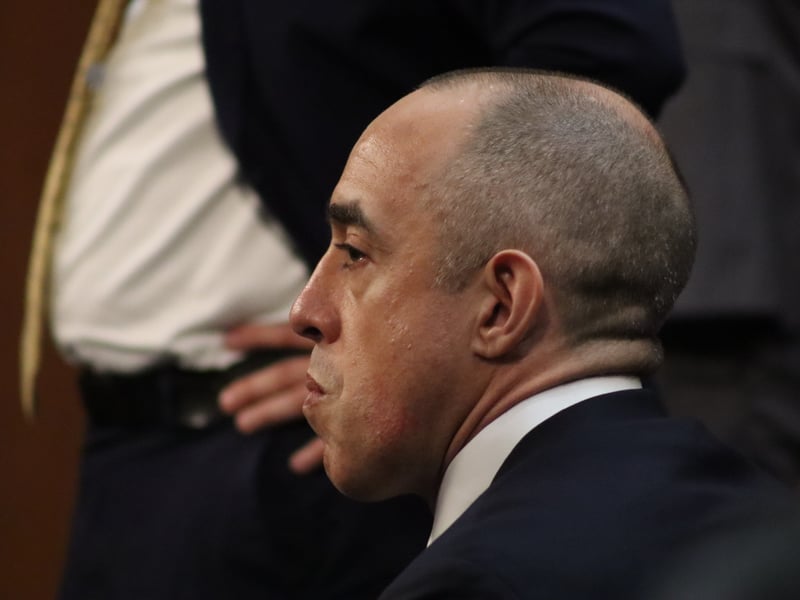
WASHINGTON (CN) — The Senate Judiciary Committee’s top Republican member rejected calls from Democrats to hold a hearing on a whistleblower report that implicated one of President Donald Trump’s nominees for a crucial federal appellate court vacancy.
It was an expected move from Iowa Senator Chuck Grassley, who has long criticized his colleagues for undertaking what he’s framed as a smear campaign against Emil Bove, a former federal prosecutor and personal lawyer to the president who has been nominated to the Third Circuit.
Bove, whose appointment to the judicial bench is set to face a key vote in the Judiciary Committee later this week, has come under fire from Democrats following a whistleblower report from a former Justice Department official who claimed the nominee had expressed intent to violate a court order while serving as acting deputy attorney general earlier this year.
The whistleblower, former agency attorney Erez Reuveni, later followed up with a trove of texts and email messages, which he and Democrats say corroborate claims that Bove had suggested the Justice Department may need to tell a federal judge “fuck you” and violate a legal order to carry out the Trump administration’s mass deportation operation.
And Democrats on Tuesday urged Grassley to hold off voting on Bove’s nomination and to invite Reuveni to testify before the Judiciary Committee.
“It is critical that this committee understands the full scope of Mr. Bove’s actions at the Justice Department prior to voting on his nomination to a lifetime appointment on the federal bench,” they told the panel chairman, pointing out that Reuveni had already expressed interest in testifying on the contents of his report.
But in a Tuesday reply letter, Grassley poured cold water on the idea.
The Iowa Republican contended that Democrats had had the opportunity to discuss the contents of the whistleblower report “in depth” at Bove’s Judiciary Committee hearing last month, as well as in the nominee’s written questions for the record.
“There is no doubt that members of this committee have had a full and fair opportunity to address the issues you raise,” Grassley told his colleagues.
During Bove’s lengthy June hearing — as well as in his written responses to lawmakers — the nominee repeatedly demurred questions about the contents of Reuveni’s whistleblower report.
He told Democrats in a written questionnaire — first reported last week by Courthouse News — that he had an “ethical obligation” to preserve the Justice Department’s confidential communications, including the details of a March 14 meeting laid out in Reuveni’s report in which Bove reportedly made the “fuck you” comment.
“[E]ven the prospect that the executive branch’s confidential information could be required to be disclosed in the context of a confirmation hearing would undermine the candor and free exchange of ideas that is necessary to the effective operation of the executive branch,” Bove wrote at the time.
The nominee told lawmakers at his confirmation hearing that he had “never advised” a Justice Department attorney to violate a court order.
Reuveni’s report claims Bove had advised the Homeland Security Department that it could deplane deportation flights in El Salvador in spite of a court order demanding such flights turn around. The nominee reportedly reasoned at the time that planes that had left U.S. airspace before the judge’s written order was docketed were free to unload.
But Grassley pointed Tuesday to recent reports that Reuveni’s former supervisor told Justice Department officials that Bove had advised agency attorneys to avoid a court order that could halt deportation operations, which he argued contradicted the whistleblower’s claims.
The Judiciary Committee chairman’s office also cast doubt on Reuveni’s report — and Democrats’ interpretation of its claims — in a separate analysis document published Tuesday.
The staff report contended Democrats “grossly mischaracterize[d]” the whistleblower report, pointing out that very few of the documents provided by Reuveni mention Bove directly and that many of the communications involved agency-level discussion about compliance with a court order. Republicans also took issue with text messages purportedly sent between Reuveni and a colleague, which they framed as “ambiguous” and out of context.
“The suggestion that legal analysis about the scope of a court order amounts to misconduct is unfounded,” the GOP review read.
Grassley, meanwhile, told Democrats on Tuesday that Bove’s committee vote would proceed as planned and that the Judiciary Committee would not hold a hearing with Reuveni. Citing a common refrain from former panel chairman and Illinois Senator Dick Durbin, the lawmaker argued there would not be one set of rules for Republicans and another for Democrats.
“I agree with this statement and intend to adhere to the precedent of then-Chairman Durbin,” Grassley wrote.
The Judiciary Committee is set to vote on Bove’s nomination on Thursday. If he advances through the panel, he will face a final confirmation vote on the Senate floor.
Though some Republicans on the committee have expressed a willingness to break with the Trump administration on some judicial nominees, Bove appears to have the support he needs to clear the Judiciary. North Carolina Senator Thom Tillis told reporters outside the Senate on Tuesday that he was still a “yes” on the nominee.
Tillis previously sank the White House’s pick for U.S. attorney for D.C., Ed Martin, over his stance on the Jan. 6, 2021, Capitol riot. Bove has called the prosecution of some people involved in the riot a “grave injustice” and told senators in his written questionnaire last week that while he rejected violence, he thought “heavy-handed” prosecutions of rioters were equally unacceptable.
The nominee also refused to directly condemn the Capitol riot, saying it was still a matter of “significant political debate.”
Still, Tillis said his stance on Bove had not changed, arguing he had not seen evidence that the nominee “excused the behavior” of Jan. 6 rioters.
 Follow @BenjaminSWeiss
Subscribe to our free newsletters
Our weekly newsletter Closing Arguments offers the latest about ongoing trials, major litigation and rulings in courthouses around the U.S. and the world, while the monthly Under the Lights dishes the legal dirt from Hollywood, sports, Big Tech and the arts.