
 Search Articles


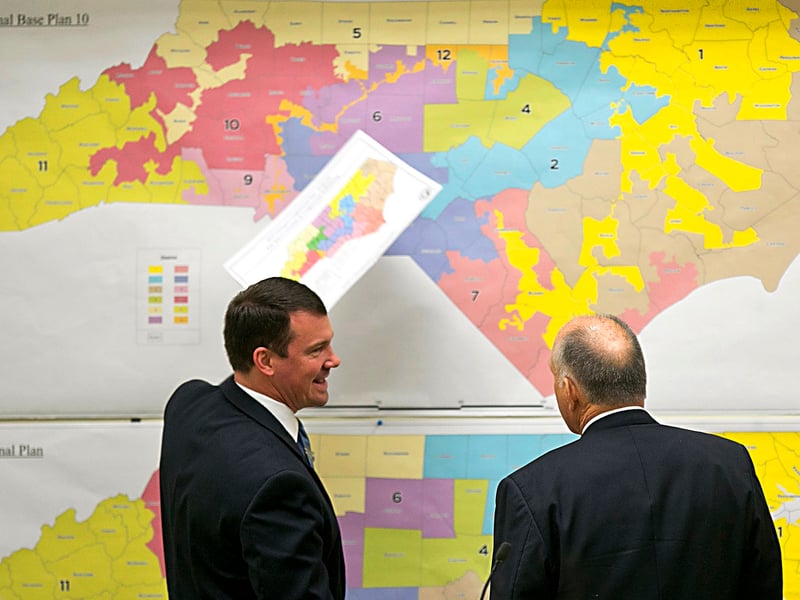
RALEIGH, N.C. (CN) — The trial of a racial gerrymandering case relating to North Carolina’s 2023 Senate map began in Raleigh, North Carolina, on Monday.
The plaintiffs in the suit — two Black North Carolina voters who say their votes are diluted by gerrymandering — both took the stand Monday morning, as the parties skipped opening arguments and moved straight to questioning witnesses.
The plaintiffs are challenging two state Senate districts in northeastern North Carolina, in an area referred to as the “Black Belt.”
There are eight counties in North Carolina that have a majority Black population, and all are in eastern North Carolina. The new legislative map, enacted in 2023, divides the eight counties into four new state Senate districts. The plaintiffs say two of these districts were illegally split in order to dilute their voting power. Black voters were shifted into majority white districts where it isn’t possible for them to elect a candidate of their preference, the plaintiffs said.
In court Monday, experts brought by the plaintiffs said that political polarization doesn’t fully explain the demographic differences in support for Democrats and Republicans in the districts.
“There is a stark difference between Black and white in each county in the Black Belt, and it doesn’t seem to be improving,” former U.S. Representative G. K. Butterfield said, pointing to how racially polarized voting is in northeastern counties. “I think there is some political polarization but that doesn’t fully explore it.”
The Black population in the area prioritizes public education and voting opportunities, which aligns with the Democratic candidates in that area, Butterfield said.
While only 21% of eligible North Carolina voters are Black, in Bertie, Hertford, Edgecombe, Northampton and Halifax counties — all in the Black Belt — more than 50% of the voting population is Black.
Experts presented by the plaintiffs agreed that it would be nearly impossible for a Black-prefered candidate to win in either disputed election district.
“It is entirely improbable that an African American is going to win in either of these districts given the Black voting population in these districts,” Senator Dan Blue said, saying that the new map “cracked” the existing voting blocs into new electoral districts.
The state Legislature has not been responsive to the needs of northeastern Black citizens, plaintiff Moses Matthews said. It delayed expanding Medicaid access and hasn’t adequately addressed health inequalities or access to health services, he said.
“I wanted to be a voice to the legislative body. I want the legislative body to be composed of voices who want the best for northeastern North Carolina,” said Matthews, who added he wants to have the opportunity to be able to elect a candidate who represents his core values.
Plaintiff Rodney Pierce, who recently won his first election to the state House, also emphasized that residents in the Black Belt counties prefer candidates who campaign on improving voting access, bettering public education and protecting the environment, which is why Black voters in the challenged districts overwhelmingly vote for Democrats.
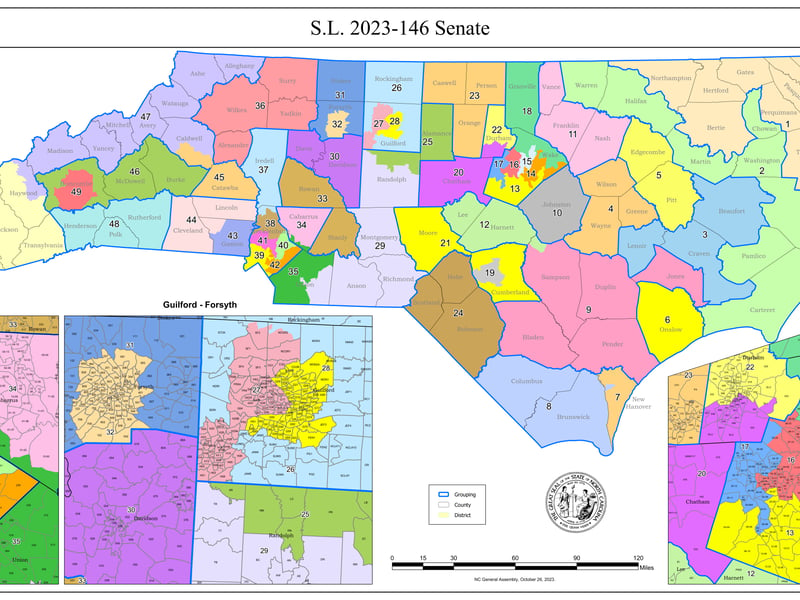
In court Monday, attorneys for the legislative defendants cross examined witnesses brought by the plaintiffs, challenging the idea that it isn’t possible to elect Black-preferred candidates in Senate Districts 1 and 2.
“You are only challenging the district in which a Republican represents you, is that correct?” Attorney Cassie Holt, who represented defendant Republican legislative leaders, asked Pierce, noting that Democrats won the congressional and House races in his district.
Blue called racially polarized voting “undeniably present” in northeastern North Carolina, and questioned if it would be possible to follow the Voting Rights Act, which ensures equal opportunities for all voters to elect their candidate of choice, while mapmaking without factoring in racial data. The Senate has reported it did not factor in racial data while drafting the 2023 map.
The legislative defendants said in legal filings that the plaintiffs haven’t met the threshold to prove that the Black population is politically cohesive, or that the political process isn’t equally open to minority voters. They didn’t introduce any expert witnesses Monday.
The plaintiffs are seeking a remedial plan that includes a minority opportunity district in the Black Belt counties. They originally wanted the courts to interfere and prevent the map from being used in the 2024 elections but lost that fight before the Fourth Circuit, which foundthat they had filed too late and lacked sufficient evidence at the time to require redistricting.
The defendants want the map to be upheld. If it is, it will be used in 2026, 2028, and 2030 elections before redistricting occurs again.
Many other parties are suing over other electoral maps passed at the same time. Those suits include challenges to the new congressional map and the state House and Senate maps.
The trial is expected to wrap up on Friday. U.S. District Court Judge James C. Dever III, a George W. Bush appointee, presided over the court and was largely silent throughout proceedings Monday.
Attorneys for the parties did not immediately reply to requests for comment.
 Follow @SKHaulenbeek
 Follow @shaulenbeek.bsky.social
Subscribe to our free newsletters
Our weekly newsletter Closing Arguments offers the latest about ongoing trials, major litigation and rulings in courthouses around the U.S. and the world, while the monthly Under the Lights dishes the legal dirt from Hollywood, sports, Big Tech and the arts.