
 Search Articles


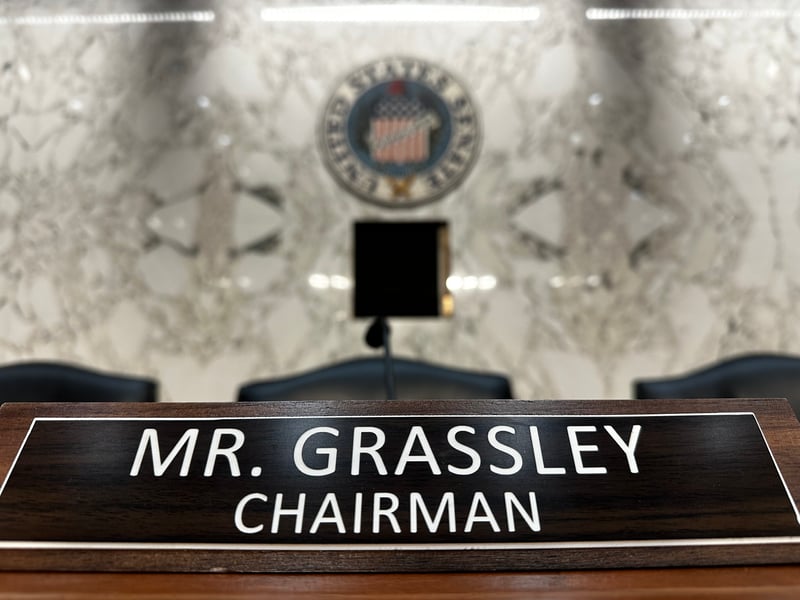
WASHINGTON (CN) — As he returned to the White House in January, President Donald Trump was once again presented with an opportunity to fill the federal judiciary with like-minded judges and prosecutors — an opening seemingly widened by Republicans’ control of the Senate and its all-important Judiciary Committee.
That goal has only been partially realized one year into the president’s second term. The Senate has managed to confirm more federal court nominees than it did during Trump’s first stint in the White House. But the administration has halved its circuit court appointments, and it has lagged in sending new nominations to the Judiciary Committee, thanks to both a lack of vacancies as well as procedural roadblocks in Democratic states.
And the Senate panel’s effort to confirm Trump nominees came as lawmakers grappled with court controversy, rising threats to federal judges and a pressure campaign from the White House on Republicans to do away with a century-old tradition the president has framed as a roadblock to his judicial agenda.
Here’s a look back at some of the issues the Senate Judiciary Committee tackled in 2025.
Entering the nominee doldrums
As the year draws to a close, the second Trump administration has managed to top its own record for judicial confirmations from the first year of the president’s initial term. The Senate has approved 26 new federal judges, including 20 federal district court appointments and six circuit court jurists.
The White House smashed its stats on district court nominees — lawmakers confirmed just six lower court judges during the same period in 2017. But the administration has fallen behind on appellate appointments, netting only six this year. The Senate confirmed 12 circuit court judges in the first year of Trump 1.0.
New nominations also slowed in the latter half of 2025, and the Judiciary Committee has had fewer chances to examine Trump court appointees. As of this week, there are still 40 vacancies on federal benches across the country with only seven White House nominees pending.
Iowa Senator Chuck Grassley, chairman of the Judiciary Committee, has urged the Trump administration to pick up the pace on new nominations, saying during a hearing earlier this month the White House needed to “get on the ball” and send new appointments to the Senate.
The lag in new nominations can at least partly be explained by the lack of new retirements among senior judges appointed by Republican administrations — easy base hits for the Trump White House. But there are still quite a few current vacancies in states with GOP senators, including Alaska, Kansas, Louisiana and Texas.
But the Trump administration’s judicial appointments, particularly for federal district courts and U.S. attorneys, have also been stymied by Democrats who have leveraged an age-old Senate procedural mechanism and a major thorn in the president’s side: blue slips.
Trump’s blue slip blues
The Senate blue slip, an arcane tradition allowing lawmakers to block certain judicial nominees for their home states, became an unexpected focus of the president’s ire in 2025.
Trump’s fury at the oft-overlooked blue slip — which he has called a “hoax” and claimed is unconstitutional — stemmed largely from Democrats’ use of the practice this year to block his picks for U.S. attorneys in blue states. Most recently, the Senate tradition effectively doomed his former lawyer Alina Habba’s tenure as U.S. attorney for the District of New Jersey, after a federal judge ruled she was serving in the role illegally thanks to her lack of Senate confirmation.
New Jersey senators Cory Booker and Andy Kim both withheld blue slip support for Habba’s nomination, effectively eliminating her chances at getting a vote in the Judiciary Committee and final confirmation before the full Senate.
They’re not the only Democrats to leverage blue slips against Trump 2.0 nominees this year, either. Senate Minority Leader Chuck Schumer invoked the tradition to halt a White House pick for a U.S. attorney slot in his home state of New York. And Virginia’s Democratic senators this month signaled they might block Lindsey Halligan, Trump’s controversial U.S. attorney nominee for the Eastern District of Virginia.
The president has for months demanded that Senate Republicans abandon blue slips, saying he “can’t appoint anybody” and claiming — without evidence — that Democrats had ignored the tradition in the past.
Still, Republicans have held fast on blue slips, which many view as an effective tool for the minority party to have a say in White House judicial nominations. Grassley has repeatedly defended the practice and resisted the president’s calls to scrap it.
The Iowa Republican has pointed out that nominees without blue slip support would fail on the Senate floor anyway, and that his own party successfully deployed blue slips during the Biden administration to hold open judicial vacancies that Trump himself was later able to fill.
For now, at least, it appears as though the century-old blue slip practice will continue to frustrate the Trump administration’s efforts to nominate federal prosecutors and federal district court judges in Democratic stronghold states. But the tradition has been altered before.
Grassley himself in 2017 stopped honoring blue slips for appellate nominees. The senator reasoned at the time that a single senator should not have what amounts to veto power over appointees for circuit courts, whose jurisdiction often covers multiple states. That change persisted when Democrats seized control of the Senate under former President Joe Biden, but both parties have abided by the blue slip tradition for other judicial nominees.
Impeachment threats against judges mount
As the Judiciary Committee negotiates new candidates for federal judgeships, the judiciary has warned that heightened political rhetoric under the second Trump administration threatens sitting members of the bench.
The Trump administration, with its sweeping vision of executive authority, has repeatedly found its actions challenged in federal court this year. And judges who have ruled against the White House have found themselves targeted with intense criticism and even impeachment threats from lawmakers.
Republican lawmakers, primarily in the House, have repeatedly tried to impeach judges who have ruled against the Trump administration. Most recently, GOP lawmakers in November resurrected an impeachment push against U.S. District Judge James Boasberg, who has become a primary target of accusations of political activism.
Republicans have also suggested that Boasberg, chief judge on the Washington federal district court, has been gaming the case assignments system to take on the bulk of major Trump administration cases — but an independent review conducted by Courthouse News this year revealed he had been assigned about as many White House-involved cases as his colleagues.
In testimony delivered over the summer to congressional appropriators, U.S. Courts Administrative Office director Judge Robert Conrad cited “threats of reprisal or retribution” against federal judges as conduct he said served to “erode the rule of law.”
“The independence of the judicial branch is jeopardized when judges are threatened with harm or impeachment for their rulings,” said Conrad at the time. “Our constitutional system depends on judges who can make decisions free from threats and intimidation."
Though judicial impeachments have been a hot topic for some lawmakers, formal proceedings have yet to materialize. In the House, top Republicans have been reticent to support such an effort. California Representative Darrell Issa, who leads the House Judiciary Committee’s courts-focused subpanel, said in the spring that the claim of political malfeasance against judges “falls short” of the constitutional criteria for impeachment.
And while some Senate Republicans, such as Missouri Senator Eric Schmitt and Texas Senator Ted Cruz, have voiced support for removing judges who rule against the administration, senior GOP lawmakers such as Grassley have rejected the idea.
“You can’t just impeach a judge just because you disagree with his opinion,” said the Judiciary Committee chairman in April.
The Supreme Court has also weighed in on the matter. In a rare public statement in March, Chief Justice John Roberts wrote that impeachment was “not an appropriate response to disagreement concerning a judicial decision.”
The top jurist has also expressed concern about heightening rhetoric against federal judges, pointing to what he called a “significant uptick” in threats against the judiciary in his 2024 year-end report.
 Follow @BenjaminSWeiss
Subscribe to our free newsletters
Our weekly newsletter Closing Arguments offers the latest about ongoing trials, major litigation and rulings in courthouses around the U.S. and the world, while the monthly Under the Lights dishes the legal dirt from Hollywood, sports, Big Tech and the arts.