
 Search Articles


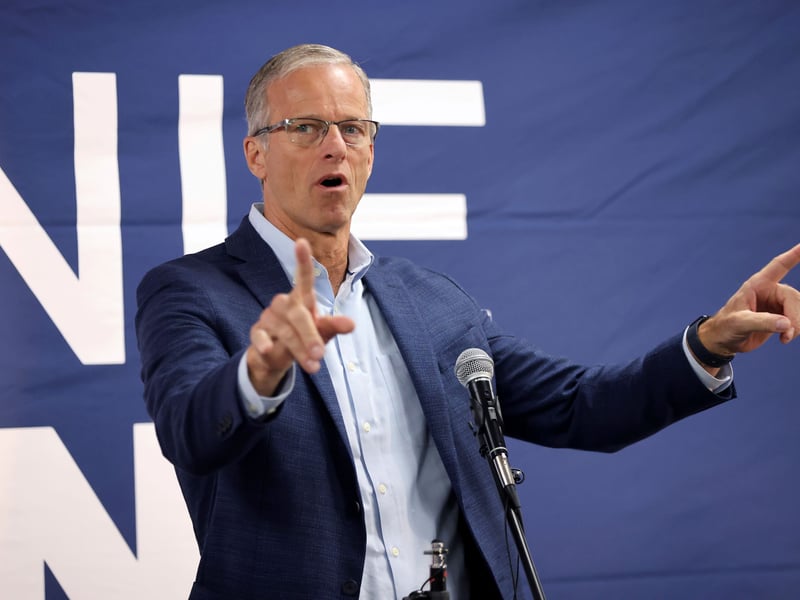
WASHINGTON (CN) — South Dakota Senator John Thune will succeed Senator Mitch McConnell as Senate Republicans’ top lawmaker, the caucus decided Wednesday in a vote that set the tone for the upper chamber’s approach to a second Donald Trump administration.
In a closed-door session on Capitol Hill, Republican senators narrowly voted to elevate Thune, currently the Senate minority whip, as the conference’s leader. He faced challenges from Texas Senator John Cornyn and Florida Senator Rick Scott, both of whom failed to capture sufficient party support.
Thune has been the Mount Rushmore State’s senior senator since 2005, and has been the Senate GOP’s second-in-command since 2021. His election is a win for establishment Republicans and a setback for allies of President-elect Trump, who rallied behind Scott as a figure best positioned to oversee the new administration’s agenda in the upper chamber.
Billionaire and erstwhile Trump adviser Elon Musk was a vocal proponent of Scott’s candidacy for the Republican leadership, voicing his support for the Florida senator on X, formerly Twitter. Musk also appeared to criticize the GOP conference’s secret ballot method for selecting a new Senate leader, writing in a post Tuesday that the public “deserves to know” how Senate Republicans voted.
Scott also got the backing of several more conservative members of the Senate GOP caucus, including Utah Senator Mike Lee, Kentucky Senator Rand Paul and Tennessee Senator Marsha Blackburn. Texas Senator Ted Cruz also endorsed Scott’s candidacy Wednesday morning, opting for the Florida senator over Cornyn, his fellow Lone Star State lawmaker.
Most Republican senators, though, quickly repudiated their Florida colleague on Wednesday — he was reportedly knocked out in the first round of voting.
Despite Scott’s loss, however, the newly minted GOP leader made it clear that he was staunchly behind the president-elect.
“This Republican team is united behind President Trump’s agenda, and our work starts today,” Thune wrote in a statement Wednesday afternoon.
Other Senate Republicans chimed in Wednesday to congratulate the South Dakota senator on his new role.
West Virginia Senator Shelley Moore Capito said she was “excited and proud” of Thune, reiterating the new conference leader’s claim that the GOP was “united” in advancing Trump’s agenda and nominees.
Montana Senator Steve Daines, chair of the National Republican Senatorial Committee, concurred. “I look forward to working with him to confirm [Trump’s] nominees and quickly enact his agenda,” the lawmaker wrote.
“With President Trump in the White House and Republican majorities in both the Senate and House, Republicans are positioned to spend at least the next two years getting our country back on track,” said Thune’s fellow South Dakota Senator Mike Rounds. “My colleagues agree that John is the right man to lead us in these efforts.”
Thune will be the first new Republican leader in nearly two decades. McConnell, who announced this year that he would step aside from his role following the presidential election, has been at the GOP’s helm since 2006.
Meanwhile, House Republicans were also poised Wednesday to confirm their own leadership for the forthcoming term. Though the final breakdown has yet to be confirmed, the GOP looks set to maintain a razor-thin majority in the lower chamber — and House Speaker Mike Johnson appears to have enough support to hold onto his gavel.
Trump joined House lawmakers on Capitol Hill ahead of their leadership elections and threw his weight behind Johnson’s speakership. But some of the caucus’ more conservative members who have long been unhappy with the Louisiana Republican’s leadership may offer an alternative candidate. It’s unclear whether any challenger to Johnson would command the support necessary to unseat him.
 Follow @BenjaminSWeiss
Subscribe to our free newsletters
Our weekly newsletter Closing Arguments offers the latest about ongoing trials, major litigation and rulings in courthouses around the U.S. and the world, while the monthly Under the Lights dishes the legal dirt from Hollywood, sports, Big Tech and the arts.