
 Search Articles


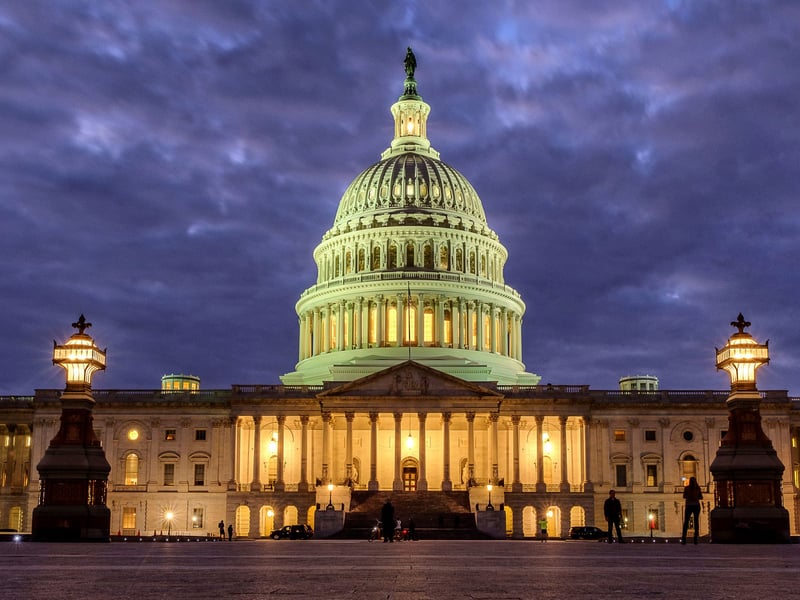
WASHINGTON (CN) — Even as the government shutdown threatened to drag into a third week, the Senate on Thursday forged ahead with President Donald Trump’s judicial agenda, confirming Jennifer Mascott to a key appellate court vacancy.
Just hours after lawmakers failed to advance a short-term budget patch to fund government programs, they voted 50-47 to approve Mascott’s appointment to the U.S. Court of Appeals for the Third Circuit.
Alaska Senator Lisa Murkowski was among the sole Republican lawmakers who voted against her confirmation.
Though legal scholars and Justice Department officials have vouched for her qualifications, Mascott faced scrutiny from Democrats throughout her confirmation process — particularly over what some senators claimed were insufficient ties to the state of Delaware.
Third Circuit judges hear appeals cases from not only the First State but also from Pennsylvania and New Jersey. But the bench seat now filled by Mascott has traditionally been held by jurists with Delaware connections. Former Judge Kent Jordan, who retired in January, had served as assistant U.S. attorney for the District of Delaware. His predecessor, too, had been a U.S. District Court judge in Delaware.
Mascott, though, is not a Delaware resident, though she told the Senate Judiciary Committee last month that her judicial chambers would be in Wilmington were she confirmed. She is not a member of the Delaware Bar and was only admitted to the Third Circuit in May.
Delaware Senator Chris Coons, who has accused the White House of leaving him and fellow Senator Lisa Blunt Rochester out of the selection process for Mascott, has said he thinks the now-appellate judge lacks sufficient ties to the First State.
“Delaware is a special place and a special bar, and this nomination is norm-shattering,” he said in the Judiciary Committee last week.
Home state senators have long had limited options for opposing the White House’s judicial nominees for appellate vacancies. Both Democrats and Republicans have since 2017 refused to honor the Senate’s longstanding “blue slip” tradition for circuit courts. The practice, which allows senators to block nominees for judicial positions in their home states, currently only applies to federal district court and U.S. attorney nominees.
“In a post-blue slip world, I realized state senators didn’t matter, but I guess now home states and ties to the state bench and bar don’t matter either,” said Coons.
Beyond what he saw as Mascott’s insufficient Delaware roots, Coons also raised concerns about the now-judge’s qualifications. Mascott, currently general counsel at the Education Department, has not filed any legal briefs in Delaware. The senator has also pointed out that her expertise is in constitutional law — a difficult match for the criminal, bankruptcy and patent cases she would largely hear as a Third Circuit jurist.
Mascott, though, has defended her experience, telling the Judiciary Committee in September that she has filed “dozens” of appellate briefs, including in the Third Circuit. She admitted she had never voted in Delaware and was not registered to vote there but said her family had a “longtime” home there. In a written questionnaire, Mascott told Coons that her family owned a beach house in the First State.
“Right now, my practice has been as an academic and a public servant here in Washington, D.C.,” she said at the time.
And Iowa Senator Chuck Grassley, chair of the Judiciary Committee, said on the Senate floor Wednesday that Mascott was an “excellent” pick for the Third Circuit. He pointed out that the now-judge was “well known and well respected” on the panel, where she has testified on several occasions.
“I’m confident that Professor Mascott will make an outstanding judge, and I know that she’ll serve the people of Delaware and the Third Circuit with distinction,” said Grassley.
Democrats, meanwhile, have lumped Mascott in with other Trump judicial nominees who they worry would serve as political allies on the bench. They’ve taken issue with her positions on a number of high-profile Supreme Court rulings, such as the justices’ 2024 decision handing the president broad legal immunity for official acts. Mascott told lawmakers during a 2024 Judiciary Committee hearing that the ruling had been “significantly mischaracterized.”
Asked during her confirmation hearing whether the high court decision would render a president immune from prosecution for using the military to assassinate a political opponent, Mascott responded that the ruling did not “fully answer all of the political mechanisms” in place to prevent such a possibility.
The then-nominee also defended approving comments she made about the 2022 Supreme Court ruling in the case Dobbs v. Jackson Women’s Health Organization, which overturned the constitutional right to abortion. Mascott said at the time that her academic work on the subject had been “consistent” with the court’s conclusion.
Before she joined the Trump administration this year, Mascott taught law at the Catholic University of America in Washington, D.C. She has clerked for Supreme Court Justice Clarence Thomas and Justice Brett Kavanaugh when he was an appellate judge on the D.C. Circuit. In the first Trump administration, she was a deputy assistant attorney general in the Justice Department.
Mascott is Trump’s second confirmed nominee to the Third Circuit. The Senate over the summer confirmed Emil Bove, a former Justice Department official and personal lawyer to the president, to the appellate bench.
 Follow @BenjaminSWeiss
Subscribe to our free newsletters
Our weekly newsletter Closing Arguments offers the latest about ongoing trials, major litigation and rulings in courthouses around the U.S. and the world, while the monthly Under the Lights dishes the legal dirt from Hollywood, sports, Big Tech and the arts.