
 Search Articles


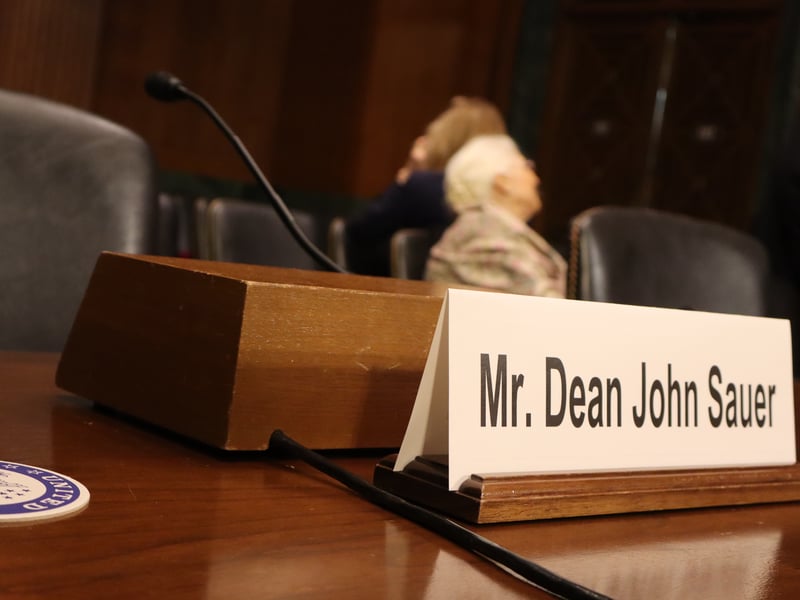
WASHINGTON (CN) — The Senate on Thursday confirmed President Donald Trump’s nominees for two key positions at the Justice Department, including his pick to become the government’s top appellate lawyer.
It was a pair of party-line votes for Dean John Sauer and Harmeet Dhillon, two of the president’s former lawyers who now head to Main Justice to assume top roles on the agency’s litigation team.
Sauer, nominated as U.S. solicitor general, cleared the Senate on a 52-45 vote. Idaho Senator Mike Crapo was the only Republican not to cast a ballot.
As of Thursday evening, Dhillon, tapped by the White House to lead the Justice Department’s civil rights division, had enough votes to pass the chamber on the same margin. The vote on her nomination, however, remained open for more than an hour as Senate leadership deliberated on bringing up unrelated budget measures after her poll closed.
The pair of nominees faced little resistance from GOP lawmakers — but were the subject of sharp scrutiny from Democrats who have long worried about the political independence of the Justice Department in the second Trump administration.
Both Sauer and Dhillon have represented the president in high-profile court cases.
Sauer, who as solicitor general will represent the federal government before the Supreme Court, argued on behalf of Trump in the 2024 high court case which ultimately handed the president broad immunity for official acts.
Dhillon, meanwhile, served as a legal adviser on the president’s 2020 reelection campaign and her law firm fought efforts to get his name removed from the 2024 ballot in some states.
During their February confirmation hearing in the Senate Judiciary Committee, the nominees fielded questions from Democrats about whether they would be willing to refuse illegal or unconstitutional orders from the White House.
Sauer told lawmakers at the time that it was “not a plausible scenario.”
“I represented President Trump for two years, and I’ve never been put in any situation like that,” he said.
Dhillon concurred, telling the Judiciary Committee’s Democratic members that she couldn’t “fathom” the president asking her to do something unconstitutional in her role. Trump had never asked her to do anything of the sort when she was representing him, Dhillon reasoned.
Those answers, though, have been less than convincing for top Democrats.
“The Solicitor General represents the government before the Supreme Court,” wrote Illinois Senator Dick Durbin in a post on X Thursday following Sauer’s confirmation. “They’re supposed to be apolitical. John Sauer gave zero indication that he’d fit the bill.”
Concerns about the Justice Department’s independence were a central thread for Democrats as they grilled the Trump administration’s other nominees for top agency positions. Attorney General Pam Bondi, Deputy Attorney General Todd Blanche and FBI Director Kash Patel all came under similar scrutiny. All of the nominees, who have since been confirmed, pledged not to “play politics” in the Justice Department.
Democrats have also expressed concern about whether the Trump administration’s Justice Department would support efforts by the president to defy lawful orders from federal courts. The White House has raged in recent weeks against judges who have issued temporary injunctions blocking their sweeping executive action — Trump himself has called for the impeachment of at least one jurist.
Asked in February whether he thought the president could ignore a judicial order, Sauer waffled, saying that litigants are generally bound by such mandates but adding that he believed there were “extreme cases” which could warrant such action.
He pointed to Supreme Court rulings he said were morally reprehensible — such as decisions which upheld Japanese internment and blocked enslaved people from claiming U.S. citizenship — as examples of such cases. But Sauer largely dismissed the Democratic line of questioning as hypothetical.
“Just a general reference in this hearing to a litigant morally disagreeing with the decision of the court is too hypothetical for me to be able to answer,” he told New Jersey Senator Cory Booker.
Booker fired back, telling Sauer at the time that his answer was “not a comfortable assurance” that he would not support Trump if he decided to defy a court order.
“You’re not giving me great confidence by not stating unequivocally that we are a nation that respects the separation of powers and the role of the courts," the senator said.
Democrats’ needling over adherence to court orders infuriated Republicans. During a Judiciary Committee meeting last month, Texas Senator Ted Cruz slammed his colleagues for their scrutiny on the issue — pointing out that former President Joe Biden had said it would refuse to acknowledge a Supreme Court ruling blocking his administration’s efforts to relieve student loan debt.
Both Sauer and Dhillon cleared the upper chamber’s legal affairs panel last month on a party line vote.
 Follow @BenjaminSWeiss
Subscribe to our free newsletters
Our weekly newsletter Closing Arguments offers the latest about ongoing trials, major litigation and rulings in courthouses around the U.S. and the world, while the monthly Under the Lights dishes the legal dirt from Hollywood, sports, Big Tech and the arts.