
 Search Articles


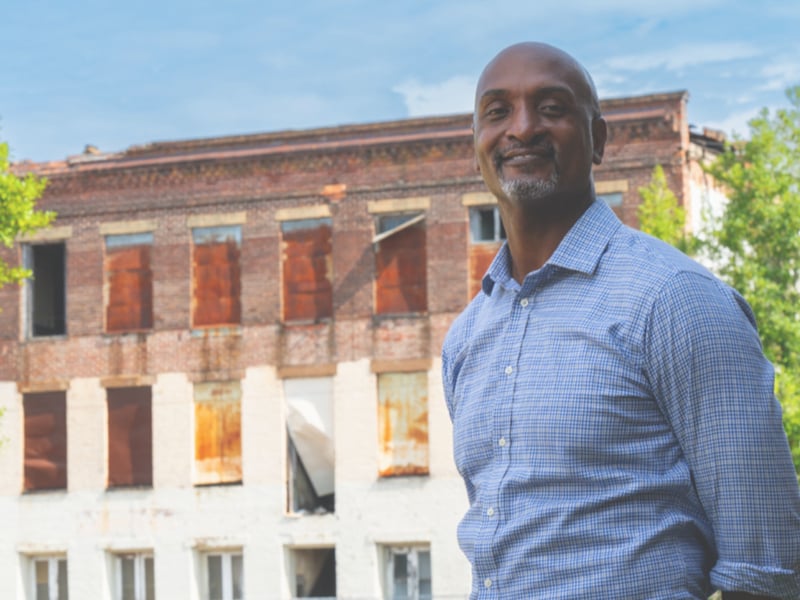
SELMA, Ala. (CN) — Along the Alabama River on Water Avenue in downtown Selma is a property that was once a slave marketplace.
Many of the city’s Black residents were held in wooden barracks here. These enslaved people ended up at plantations across the South, fueling an agricultural empire that made Selma one of Alabama’s wealthiest cities.
Shortly before the Civil War in 1855, this lot became the three-story brick Edistone Hotel.
The Edistone was originally built for white guests — but in a bit of historic irony, this former slave market would become a hub for racial justice.
During the Reconstruction Era, the Edistone served as the local office for the Freedmen’s Bureau, the short-lived federal agency tasked with supporting newly emancipated individuals.
Black civic leaders worked with officials here to establish schools and vocational training for Black people. Newly emancipated slaves came for food rations and other aid.
During the Civil Rights Movement a century later, this integrated hotel once again stood witness to Black American history.
Civil rights leaders like Dr. Martin Luther King Jr. and John Lewis organized at nearby churches and homes. In 1965, protesters stayed here during pivotal civil rights events of that year. Those include “Bloody Sunday” on March 7, when the Civil Rights Movement was galvanized by images of authorities brutally beating demonstrators, and “Turnaround Tuesday” on March 9, when protesters marched 54 miles from Selma to Montgomery to help secure support for the Voting Rights Act.
In the following years, the Edistone fell into disrepair. It was abandoned sometime around the 1970s or ’80s and left to deteriorate on Water Avenue.
Now, it’s getting a new lease. Working with the city and MASS Design Group, a Boston-based architectural firm which also collaborated with the Equal Justice Initiative on a memorial square at the National Memorial for Peace and Justice in nearby Montgomery, the nonprofit Conservation Fund in March bought it from private owners. Although a public input phase is still ongoing, the groups envision turning it into a museum, co-working space, grocery store or all of the above.
“You have this beautiful historical connection,” Phillip Howard, manager of the Legacy Places Initiative for the nonprofit, said in an interview. He said the Edistone “can really tell the story from Civil War to Civil Rights in a powerful way.”

Although the Conservation Fund primarily focuses on environmental and historic conservation, it tries to do so in a way that brings a clear benefit to distressed communities.
That includes Selma. Although the city is still majority Black just as it was before the Civil War, it’s much poorer now, with around a third of residents living in poverty.
Through its Legacy Places Initiative, the Conservation Fund has preserved other noteworthy sites of Black history, including writer Zora Neale Hurston’s final home in Florida, the Harriet Tubman Underground Railroad National Monument in Maryland and the Freedom Riders National Monument in Alabama.
As for the Edistone project, it’s a case study in “how memorializing the past can be a catalyst for our shared futures,” said Jha D Amazi, a principal with MASS Design Group who’s involved in the restoration project. As she put it, the goal was “delivering resources and amenities for city residents and visitors while honoring and acknowledging the location’s profound history.”
Howard’s involvement with saving the Edistone began in 2023, when Sarah Aghedo, executive director of the Selma Redevelopment Authority, warned the property faced demolition after years of failed deals and rising costs.
Aghedo tracks endangered historic sites as part of her job — and downtown Selma has lots of them.
Besides the Edistone, there’s one of the oldest YMCA buildings in the country on nearby Broad Street, from 1887. There’s also the George Wilson Community Center, a former venue that once hosted Black artists like Duke Ellington, Nat King Cole and Fats Domino.
“My impression is that Selma is just a little behind the gun in terms of recognizing that we need to invest in our downtown if we’re going to prosper as a community,” Aghedo said. And while the city may not always have the resources for restoration projects like these, she said partnerships with groups like the Conservation Fund offered hope and a path forward.
Selma’s downtown began declining after World War II — a trend accelerated by the 1970s closure of a nearby Air Force pilot training center and by broader trends of suburbanization.
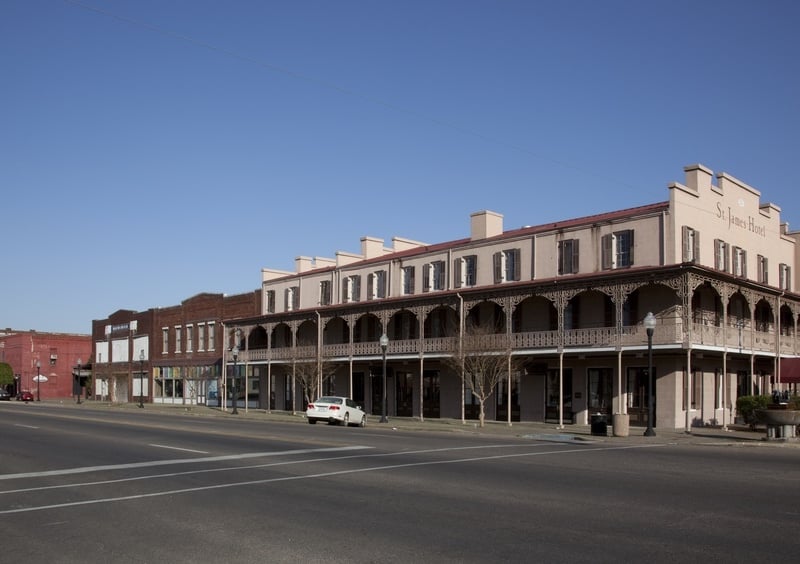
Unlike some other cities, Selma has never really recovered from that decline. Its population has continued to drop, including a 14% drop from 2010 to 2020, according to the U.S. Census Bureau. A tornado in 2023 further devastated the city, damaging or destroying more than 3,000 structures including hundreds of homes.
As Selma officials seek to revitalize downtown, they hope a restored Edistone could help support a burgeoning local industry built around civil-rights tourism. Down the road in the state capital of Montgomery, the Equal Justice Initiative’s “Legacy Sites” projects, which explore racial injustice from slavery days to the present, drew nearly half a million visitors in 2024, according to an annual report from the group.
In Selma, the main tourism draw is the annual Bridge Crossing Jubilee, which commemorates Bloody Sunday. There are not enough attractions, hotel rooms or restaurants to support a more robust tourism economy.
The Edistone faced demolition several times before the Conservation Fund stepped in, Aghedo said. She said the city needed convention and visitor spaces but that stakeholders were still deciding the building’s future and that restoration funding was still being worked out.
“We’re just trying to do what we can to ensure that the downtown area develops economically, socially and culturally, as much as it can,” she said.
For Howard, the Edistone project is part of a broader effort to preserve Civil Rights sites. “The hard part is sustaining it and stewarding it forward,” he said, “and finding partners on the ground that can help us."
 Follow @gabetynes
Subscribe to our free newsletters
Our weekly newsletter Closing Arguments offers the latest about ongoing trials, major litigation and rulings in courthouses around the U.S. and the world, while the monthly Under the Lights dishes the legal dirt from Hollywood, sports, Big Tech and the arts.