
 Search Articles


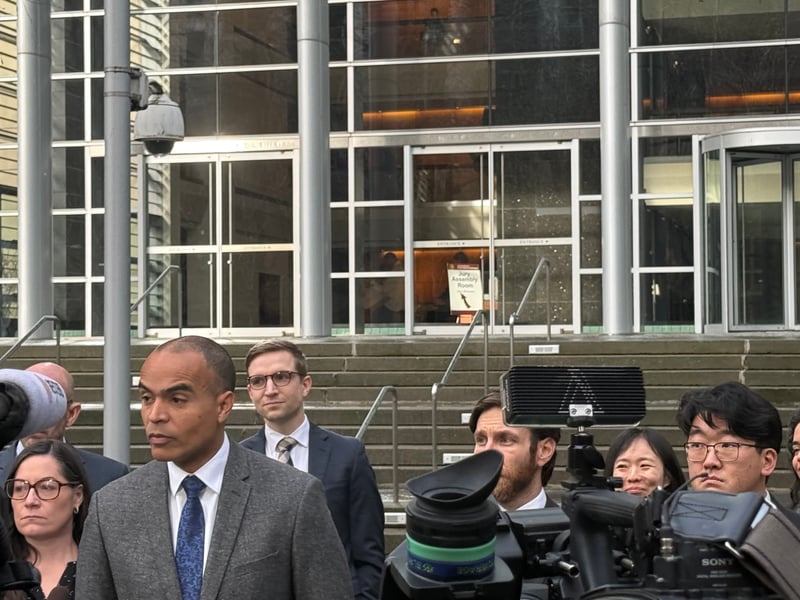
SEATTLE (CN) — A federal judge in Washington state blocked a controversial executive order altering the longstanding interpretation of U.S. citizenship law on Thursday morning, granting a coalition of states’ motion for a nationwide preliminary injunction. The order comes a day after a federal judge in Maryland ordered a nationwide pause on the executive order in a separate lawsuit.
“The Constitution is not something with which the government can play policy games,” U.S. District Judge John Coughenour said before signing the preliminary injunction.
President Donald Trump’s “Protecting the Meaning and Value of American Citizenship” executive order was set to take effect Feb. 19. The executive order narrows birthright citizenship to people born to one or more parents who are already citizens. Trump signed the order hours after his inauguration on Jan. 20.
The following day, a coalition of 22 states sued, along with the District of Columbia and the city and county of San Francisco filed lawsuits challenging the order. The attorneys general of Washington state, Arizona, Illinois and Oregon won an early victory when Coughenour, a Ronald Reagan appointee, issued a temporary restraining order to block the executive order on Jan. 23.
While granting the temporary restraining order, Coughenour called the executive order “blatantly unconstitutional,” and on Thursday the judge again admonished the president.
“It has become ever more apparent that, to our president, the rule of law is but an impediment to his policy goals. The rule of law is, according to him, something to navigate around or simply ignore, whether that be for political or personal gain,” Coughenour said. “Nevertheless, in this courtroom and under my watch, the rule of law is a bright beacon which I intend to follow.”
The sentiment toward the president was echoed by Washington Attorney General Nick Brown, who after the hearing said Trump has a “disdain for the U.S. Constitution” and celebrated Coughenour’s decision.
“My hope is that any judge would do what Judge Coughenour did today, which is to say that the rule of law matters,” Brown said.
The attorneys general argued in their motion for a preliminary injunction that those impacted by the executive order would be “placed into positions of instability and insecurity as part of a new, presidentially created underclass in the United States.”
The attorneys general also argued the executive order would place significant administrative and operational burdens on the states and forcibly shift unrecoverable financial costs. The states will face a reduction in federal funding and reimbursements for programs they administer, like Medicaid and foster care programs, in addition to facing the burden of quickly changing the operational structures of such programs, the attorneys general say.
The legal challenges to the order have expanded beyond state governments. Three days after the attorneys general filed their lawsuit, three Seattle-area pregnant women filed a class action claiming the executive order violates the rights of their unborn children.
On Tuesday, one of the women dropped out of the case, which Matt Adams, an attorney representing the class, said “speaks to the very real fears our clients have because of this,” and added that another plaintiff pulled her child out of daycare. Adams is the legal director of the Northwest Immigrant Rights Project.
The pregnant women are not U.S. citizens and have due dates between March and July, creating a risk that their children will be born without citizenship and potentially targeted by immigration enforcement officers.
“They will be left on the outside of society and forced to remain in the shadows in fear of immigration enforcement actions that could result in their separation from family members and removal from their country of birth,” the women say in the complaint, filed Jan. 24.
Under the executive order, children born to parents legally in the country on temporary visas, like students or workers, or to undocumented immigrants will lose automatic citizenship recognition.
On. Jan. 27, Coughenour consolidated the pregnant women’s lawsuit with the attorneys general, allowing the claims to proceed together.
The 14th Amendment mandates that anyone “born or naturalized in the United States, and subject to the jurisdiction thereof, are citizens of the United States and of the state wherein they reside.” It was ratified in 1868 to establish citizenship for Black Americans post-slavery after the Civil War and stems from the principle of “jus soli,” or citizenship determined by birthplace. The amendment has historically been interpreted to extend birthright citizenship to those born in the U.S. to parents who are not citizens.
Trump’s executive order refutes that interpretation.
“The 14th Amendment has never been interpreted to extend citizenship universally to everyone born within the United States,” Trump proclaimed in his order. “The 14th Amendment has always excluded from birthright citizenship persons who were born in the United States but not ‘subject to the jurisdiction thereof.’”
Subscribe to our free newsletters
Our weekly newsletter Closing Arguments offers the latest about ongoing trials, major litigation and rulings in courthouses around the U.S. and the world, while the monthly Under the Lights dishes the legal dirt from Hollywood, sports, Big Tech and the arts.