Search Articles


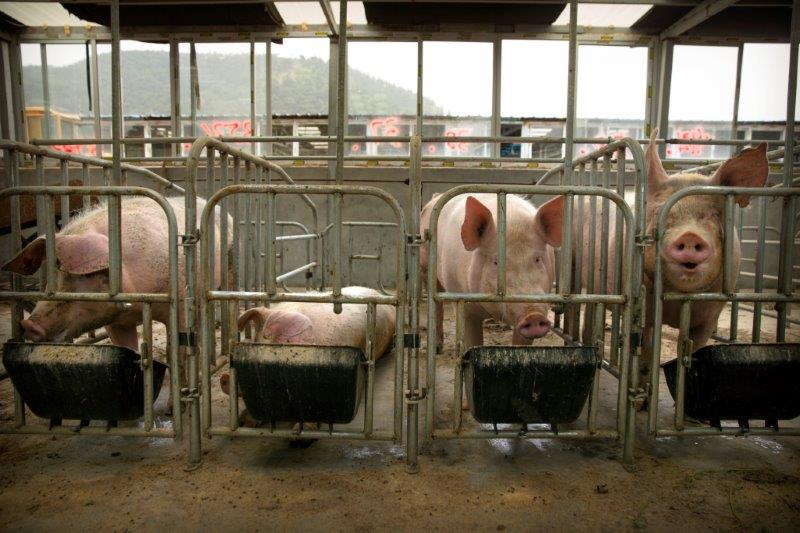
MANHATTAN (CN) — A Second Circuit panel on Thursday refused to revive a lawsuit over meat processing deregulation measures from President Donald Trump’s first term, which animal rights advocates said increased the risk of severe disease outbreaks and potentially subjected sick pigs to inhumane treatment before they were slaughtered.
The U.S. Department of Agriculture rolled out its New Swine Inspection System in 2019, couching it as an effort to modernize pork inspections throughout the country by establishing a voluntary inspection system for slaughterhouses while speeding up the slaughter lines for faster and more efficient meat processing.
Animal Outlook, a national nonprofit animal advocacy organization, joined six other animal rights groups in challenging the USDA’s decision to dramatically reduce federal oversight at pig slaughterhouses, which they said increased the likelihood of contaminated meat entering the food supply.
In a summary order made public Thursday, the Second Circuit affirmed a lower federal District Court’s dismissal of their challenge to revised slaughterhouse inspection protocol, concluding that the coalition of animal rights groups “failed to allege concrete standing” and therefore did not have grounds to advance their claims.
“All of these alleged injuries to plaintiffs involve voluntary expenditures to advocate against policies embodied in the New Swine Inspection System or the diversion of resources from other aspects of their missions to rescue pigs they allege will be affected by these new policies,” the three-judge panel wrote in its unsigned eight-page summary order. “Both the Supreme Court and this court have held that these types of injuries — the diversion of an organization’s resources or frustration of its mission — are inadequate to establish standing.”
The plaintiffs had claimed the new regulatory regime sharply cut back the roles of government food safety inspectors at slaughterhouses while increasing the regulatory responsibilities of private meatpackers who are tasked with deciding which hogs will go into the food supply system and be inspected by the USDA.
The groups sought to have the regulation vacated for violations of the Administrative Procedure Act, arguing the new meat inspector regulations violate Congress’ explicit mandates to protect public health, unlawfully delegate agency responsibility to regulated parties and are not grounded in reasoned decision-making.
U.S. District Judge Elizabeth Wolford dismissed the group’s complaint on summary judgment in December 2023, finding the plaintiffs failed to meet the burden of proof to show that the delegation of the sorting process was improper.
They subsequently brought an appeal before the Second Circuit to reverse the lower court’s dismissal of their complaint on summary judgment.
The USDA, meanwhile, contended against the appeal that many swine plants using the traditional system have historically already voluntarily segregated animals that show signs of diseases or conditions from healthy animals before USDA inspectors conduct their ante-mortem — performed before death — inspections.
The USDA also noted that while new regulations eliminated existing line speed limits for post-mortem inspections under the new system, the head inspector on-site can still force establishments to reduce their speeds if they are operating too fast for the inspectors to perform adequate carcass-by-carcass inspection.
Plaintiff-appellants Farm Sanctuary and Animal Equality joined Animal Outlook on appeal, with Animal Legal Defense Fund, the Center for Biological Diversity, Mercy For Animals and North Carolina Farmed Animal Save named as co-plaintiffs.
The three-judge panel included U.S. Circuit Judges Gerard Lynch, a Bill Clinton appointee, and Trump appointees William Nardini and Steven Menashi.
 Follow @jruss_jruss
Subscribe to our free newsletters
Our weekly newsletter Closing Arguments offers the latest about ongoing trials, major litigation and rulings in courthouses around the U.S. and the world, while the monthly Under the Lights dishes the legal dirt from Hollywood, sports, Big Tech and the arts.
Additional Reads

 Roofer calls Iowa insurance-adjuster law unconstitutional April 16, 2026
 EU in talks with Anthropic over risks of AI model Mythos April 16, 2026