
 Search Articles


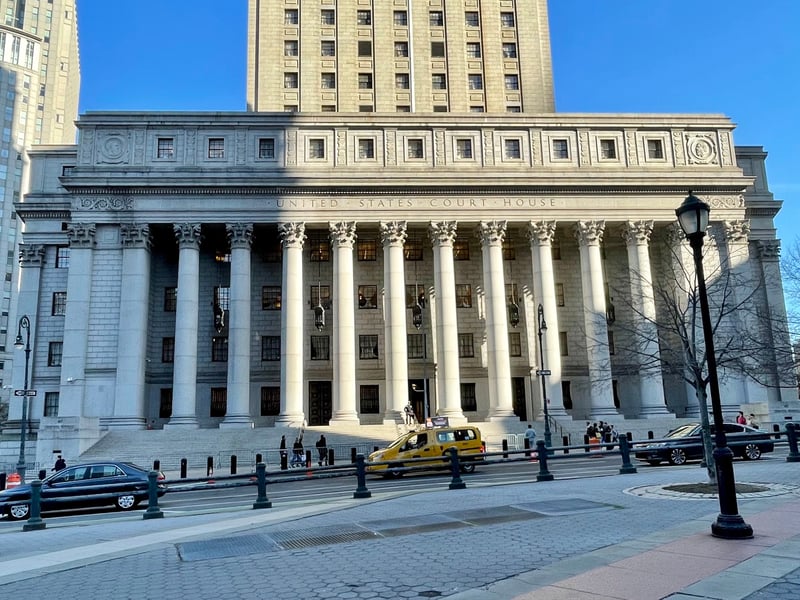
MANHATTAN (CN) — The Second Circuit struck down copyright infringement claims against Vimeo on Monday, finding the video-sharing company lacks the ability to control users’ infringing activity.
A dozen record labels — led by Universal Music Group’s subsidiary Capitol Records — sued in Manhattan federal court claiming Vimeo ignored red flags when employees encountered recognizable recordings on its ‘Lip Dub Stars’ channel. Other labels joining the lawsuit included Caroline Records, Virgin Records, Stone Diamond Music Corporation and several EMI subsidiaries.
But a federal judge found that the record labels did not sufficiently prove that Vimeo knowingly overlooked infringing content and tossed the lawsuit.
A Second Circuit panel agreed, also affirming the federal court’s finding that the Digital Millennium Copyright Act, or DMCA, grants providers safe harbor from infringement claims, regardless of whether the recordings were published before or after 1972.
The “safe harbor” provisions have typically protected internet providers and other intermediaries from such claims under the DMCA, passed during the Bill Clinton administration.
At oral arguments, the record labels claimed Vimeo knew its users may have difficulty determining if recordings they used contained copyrighted music.
But the panel said that is not enough to establish that the company knowingly ignored red flags when viewing users’ posts that contained recognizable recordings.
“Even if a person without specialized knowledge would have instituted a likelihood that many of the posted videos were not authorized, that would not make it obvious that a particular video lacked authorization to use the music,” U.S. Circuit Judge Pierre N. Leval, a Bill Clinton appointee, wrote for the panel.
The panel also disagreed that Vimeo had a “right and ability” to control users’ activity, striking down the record labels’ claims that the video-sharing company exercised substantial influence over its content by its ability to promote or demote user posts based on their merit or appeal to others.
“Calling attention to selected videos by giving them a sign of approval or displaying them on a Staff Picks channel (or the contrary, by demoting them) did not restrict the freedom of users to post whatever videos they wished,” the panel said.
The panel also found that interventions by Vimeo staff when regulating content only affected a tiny percentage of user content.
In 2012, about 43,000 videos were posted to Vimeo’s website each day, amounting to over 15 million new videos that year. But during that year, the panel pointed out, Vimeo only had 74 employees.
“Apart how minimal an intrusion it is for a staff member to select a video to receive an indication of approval,” the panel said. “The number of videos that 74 staff members could have evaluated and emphasized amounted to no more than an insignificant percentage of those posted.”
This is not the first time Universal has sued a music-sharing service for copyright infringement. In 2013, the music corporation sued Grooveshark in 2013 and was granted summary judgment after a New York state appeals court found the DMCA’s protections did not extend to unlicensed music recorded before 1972.
But that decision was later overturned by the Second Circuit in a 55-page opinion in which Leval found excluding state copyright infringement would misconstrue Congress’ intent in passing the DMCA.
Leval reiterated those arguments in Monday’s decision, asserting that denying Vimeo protection from the “safe harbors” provision would undermine Congress’ intent.
“To deny Vimeo access to the safe harbor merely because of the tiny influences it exercised would subject Vimeo to a huge expense in monitoring millions of posts to protect itself against the possibility of liability for infringements,” Leval wrote.
U.S. Circuit Judge Barrington D. Parker, a George W. Bush appointee, and U.S. Circuit Judge Sarah A.L. Merriam, a Joe Biden appointee, joined the opinion.
In a statement, Vimeo said it was “pleased” that the panel affirmed its protection under the DMCA’s safe harbor provisions.
“This decision reinforces our ability to provide a trusted platform for millions of creators to share their work,” a Vimeo spokesperson said. “It ensures Vimeo can continue empowering innovation and artistic expression while respecting intellectual property rights.”
The record labels did not respond to a request for comment.
 Follow @NikaSchoonover
Subscribe to our free newsletters
Our weekly newsletter Closing Arguments offers the latest about ongoing trials, major litigation and rulings in courthouses around the U.S. and the world, while the monthly Under the Lights dishes the legal dirt from Hollywood, sports, Big Tech and the arts.