
 Search Articles


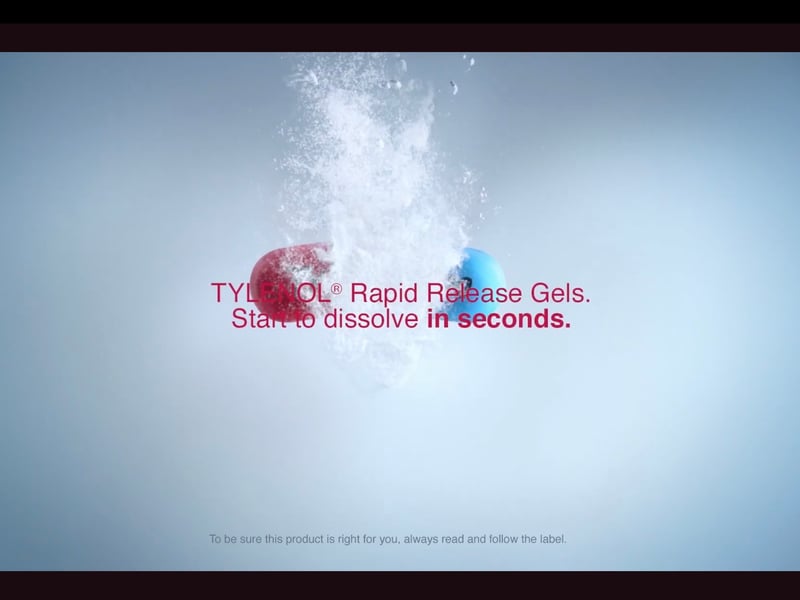
MANHATTAN (CN) — A consumer class on Thursday asked a Second Circuit panel to renew claims that Tylenol misled them by charging more for “rapid release” capsules advertised as offering faster pain relief than alternatives, despite the medication in fact working no faster than regular, non-rapid Tylenol pills.
After a lower court ruled that state law claims in the 2023 lawsuit are preempted by federal law, the plaintiffs abandoned their labeling claims, but they maintain on appeal that the advertising and higher price point leads customers to believe they’ll get quicker results with the gelcaps.
Three judges peppered both parties with questions digging into what relief is possible and whether the “rapid release” claims go too far.
U.S. Circuit Judge Joseph F. Bianco, a Donald Trump appointee, confirmed the plaintiffs agree that their labeling claim was preempted by the Food, Drug and Cosmetic Act — ruling out a court order to, say, add a disclaimer to the label saying the rapid release capsules don’t work faster than ordinary tablets.
“I’m not saying you need to change the label — I’m just saying don’t claim that the rapid release is faster than the non-rapid release,” attorney Mark Sigmon of Milberg argued for the class.
On behalf of Johnson & Johnson Consumer Inc., a subsidiary of Kenvue Inc., attorney Mark Neubauer said that’s not a current claim the drug company makes, and argued that if the label claim is preempted then “everything else fails.”
“We don’t say faster, we don’t say rapider — we say fast and rapid,” said Neubauer, of the firm Carlton Fields.
Bianco raised a specific marketing claim highlighted in the consumers’ complaint: language touting the gelcaps as being “even faster than before.”
“The implication — what was before?” the judge asked.
That claim, Neubauer replied, concerned a previous version of the pills that was recalled in 2009. He agreed that calling the capsules faster than competitors when that isn’t so would be actionable, but said the “faster than before” language hasn’t been used to sell the product that was reintroduced in 2017.
“That’s history, it’s old news,” Neubauer said.
U.S. Circuit Judge Sarah A.L. Merriam touched on the science behind the claim of fast pain relief, asking whether the rate at which the capsules dissolve can be directly tied to the language “for fast relief.”
“The question is, are you allowed to take that step?” asked Merriam, a Joe Biden appointee. “Can you say, ‘This is skim milk, because it’s less than 1% [milk fat], and therefore you’ll be skinny if you drink it?’”
Neubauer said the speed the medication is absorbed and the speed at which customers feel better relate to each other, and further pointed to the case Sapienza v. Albertson’s Cos. Inc. , which quotes from legislative history and doesn’t talk about the kind of distinction Merriam raised.
Sigmon, the class attorney, attempted to speak to the timing issue on rebuttal, pointing to ads referenced in the complaint. Merriam clicked one of the links in question, leading her to a YouTube ad posted 15 years ago by “some guy” — not Johnson & Johnson.
Bianco jokingly praised his colleague’s speedy research: “Judge Merriam is fast. She’s rapid.”
“I would say very rapid,” Merriam added.
Admitting he hadn’t clicked the links himself, Sigmon acknowledged that if it turns out none of the ads using the scrutinized language are from the past few years, he has a timeliness issue.
“If it turns out we’re barred by limitations, we will lose, and will lose appropriately," he said.
Rounding out the panel was U.S. Circuit Judge Maria Araújo Kahn, a Joe Biden appointee. The panel reserved ruling.
 Follow @NinaPullano
Subscribe to our free newsletters
Our weekly newsletter Closing Arguments offers the latest about ongoing trials, major litigation and rulings in courthouses around the U.S. and the world, while the monthly Under the Lights dishes the legal dirt from Hollywood, sports, Big Tech and the arts.