
 Search Articles


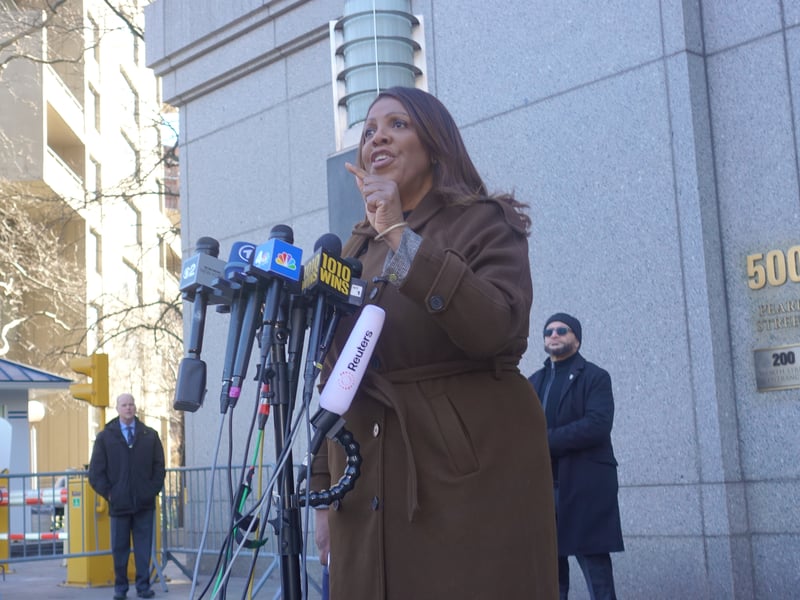
(CN) — A Second Circuit panel on Monday upheld a preliminary injunction allowing anti-abortion advocates to continue advertising a treatment that they say reverses the effects of abortion pills.
New York Attorney General Letitia James sued the anti-abortion group Heartbeat International and 11 pregnancy centers in May 2024, accusing them of fraud, deceptive business practices and falsely advertising an abortion pill reversal treatment that major medical groups say is unproven and potentially dangerous.
Weeks later, the National Institute of Family and Life Advocates, an anti-abortion group, and two anti-abortion pregnancy centers sued James in federal court, claiming that she was trampling on their First Amendment right to free speech by threatening punishment for touting the treatment.
U.S. District Judge John Sinatra, a Donald Trump appointee in New York’s Western District, agreed and issued a preliminary injunction barring James from targeting pregnancy centers for promoting the treatment.
James appealed to the Second Circuit, which held oral arguments in June before U.S. Circuit Judge Joseph Bianco, a Trump appointee, and U.S. Circuit Judges Allison Nathan and Judge Eunice Lee, both Joe Biden appointees.
On Monday, the panel rejected James’ arguments and upheld the preliminary injunction.
Writing for the panel, Bianco found in a 46-page opinion that the institute’s promotion of the contentious abortion pill reversal treatment is informational, not commercial, because it is motivated by “religious and moral” purpose rather than financial.
If promoting the treatment isn’t commercial, then it is protected by the First Amendment, Bianco wrote for the panel.
Jonathan Hitsous of the attorney general’s office had argued before the panel that the groups seek to sell patients on physicians who will perform the controversial treatment, effectively inducing a transaction. However, the panel found that argument unpersuasive.
The institute doesn’t perform the treatment, nor does it profit from pregnant people who seek it.
Like in the panel’s unanimous opinion, Bianco noted that this broad definition could imperil nonprofits performing similar referral work, like immigration services and environmental groups.
“To hold otherwise could potentially subject a sweeping range of nonprofits to regulation of their speech for providing the public with information and resources concerning critical services,” Bianco said in the opinion. “This could include, depending on the particular facts and context of each situation, a reproductive rights group in a state with abortion restrictions that provides information about out-of-state organizations.”
James’ civil enforcement case will be complicated by the injunction, but Bianco made it clear that it is not intended to bar the case entirely. He suggested that James find other avenues to achieve her goals.
The court also addressed James’ threshold argument that the federal case shouldn’t have even happened while her civil enforcement suit is pending.
On this, too, the panel ultimately agreed with Sinatra — the federal plaintiffs and the civil defendants may partake in the same protected speech, but the federal court is not required to hold for state court proceedings when constitutional rights are on the line.
James is not likely to turn this around in the face of strict scrutiny, which requires her to show that regulation of the anti-abortion groups’ speech is tailored to serve a compelling state interest.
The institute claimed that it has stopped promoting the abortion pill reversal treatment to avoid being drawn into James’ civil enforcement case against Heartbeat International. Though they are not party to the civil enforcement case, they also promote the contentious treatment option in an informational capacity.
In granting the preliminary injunction, Sinatra reasoned that the groups could not alone cause enough harm to warrant limiting their speech because the treatment requires a doctor’s prescription.
Neither party could be reached for comment by press time.
 Follow @desdev5
Subscribe to our free newsletters
Our weekly newsletter Closing Arguments offers the latest about ongoing trials, major litigation and rulings in courthouses around the U.S. and the world, while the monthly Under the Lights dishes the legal dirt from Hollywood, sports, Big Tech and the arts.