
 Search Articles


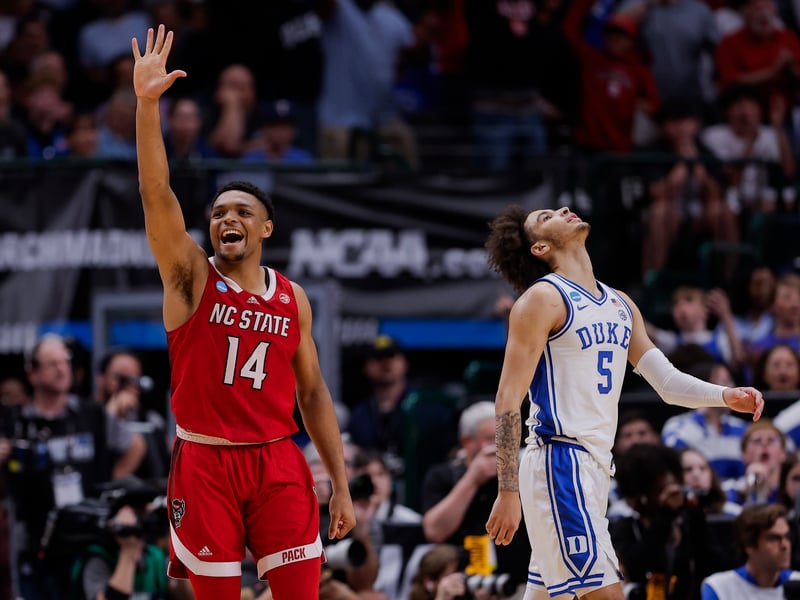
MANHATTAN (CN) — A federal appeals court on Monday upheld the dismissal of an antitrust class action brought by former college basketball players, including University of Kansas legend Mario Chalmers, who say the NCAA illegally coerced hoopers to sign away their publicity rights.
“It is undisputed that plaintiffs filed their lawsuit on July 1, 2024, which is more than four years after June 14, 2016, the last day any putative class member was enrolled in an NCAA-affiliated university,” the Second Circuit panel wrote in an unsigned summary order, affirming the lower court’s dismissal of the players’ class action as time-barred under the applicable statute of limitation.
Chalmers and 15 other former collegiate players filed the complaint in Manhattan federal court last year, claiming the NCAA and several major conferences unjustly enriched themselves by usurping profits from former college players’ names, images and likenesses in subsequent March Madness ads without any backpay to those featured players.
Chalmers, who went on to win two NBA titles with the Miami Heat, last played for the Kansas Jayhawks in 2008; fellow plaintiffs Jason Terry and Alex Oriakhi last played for the University of Arizona in 1999 and the University of Missouri in 2013, respectively.
In the players’ initial complaint, they honed in on Chalmers’ game-tying 3-pointer in the 2008 NCAA national championship game against Memphis — widely considered to be one of the most iconic March Madness moments ever — as a key example of the NCAA’s continued unjust use of players’ NIL.
U.S. District Judge Paul Engelmayer, a Barack Obama appointee, sided with the NCAA in dismissing Chalmers’ suit in April, finding it untimely due to the four-year statute of limitations limiting legal action for violations of federal antitrust law.
On appeal, Chalmers and the other players argued that under the continuing violation doctrine, the limitations period restarts each time defendants use their NIL for commercial purposes. But the Second Circuit panel wasn’t convinced.
“Each commercial use of plaintiffs’ names, images, and likeness — including the NCAA’s entry into commercial licensing agreements and discrete acts of advertising — is ‘a manifestation of the ‘overt act,’ the decision to enter the contract, rather than an independent overt act of its own,’” the panel wrote.
Representatives for the players did not immediately respond to a request for comment Monday.
The panel who heard the players’ appeal was composed of U.S. Circuit Judge Gerard Lynch, an Obama appointee; Senior U.S. Circuit Judge Guido Calabresi, a Bill Clinton appointee; and U.S. Circuit Judge Sarah Merriam, a Joe Biden appointee.
Until 2021, the NCAA barred players from earning money through personal branding or outside income. In 2021, the NCAA implemented a groundbreaking policy, in response to state laws and a unanimous Supreme Court order in NCAA v. Alston, allowing college athletes to earn endorsement money for the first time.
Publicity rights can be very lucrative for top college athletes. University of Texas quarterback Arch Manning boasts an NIL valuation of $5.3 million.
 Follow @jruss_jruss
Subscribe to our free newsletters
Our weekly newsletter Closing Arguments offers the latest about ongoing trials, major litigation and rulings in courthouses around the U.S. and the world, while the monthly Under the Lights dishes the legal dirt from Hollywood, sports, Big Tech and the arts.