
 Search Articles


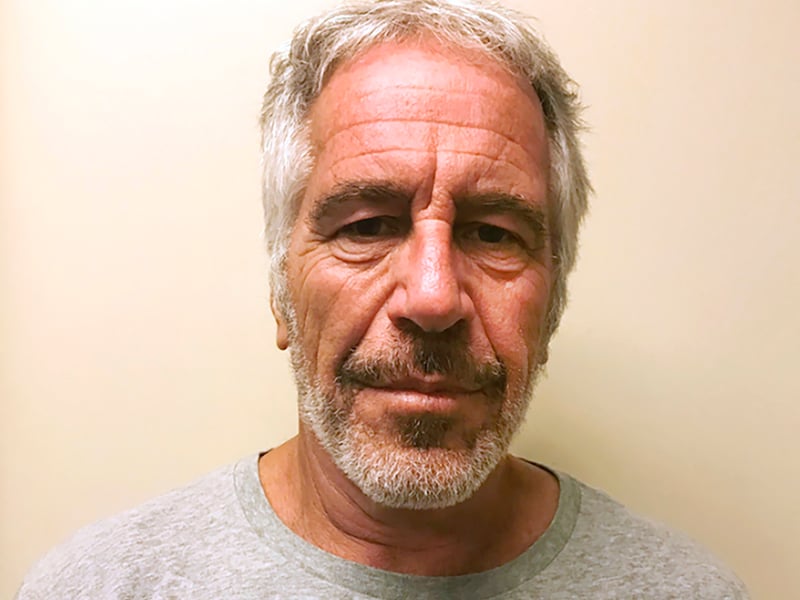
MANHATTAN (CN) — A New York City federal appeals court on Wednesday signaled it was likely to remand a FOIA case seeking documents from the FBI’s 2000s investigation into pedophile financier Jeffrey Epstein back to a lower court to consider how the bureau’s public disclosure obligations are now shaped by the Epstein Files Transparency Act and pending appeals from Epstein’s convicted co-conspirator Ghislaine Maxwell.
Tabloid website Radar Online sued the FBI in Manhattan federal court in 2017 — one year before the Miami Herald ran a bombshell exposé on the disgraced billionaire Epstein’s sex crimes — seeking production of documents from the federal investigation into Epstein’s underage sex trafficking operation, but the lower court sided with the Department of Justice in 2024, ruling on a second summary judgment that the FBI was right to decline the FOIA request for privacy concerns and issues related to the Maxwell case.
During oral arguments on Wednesday, Radar asked the appeals court to vacate the lower court’s “categorical, blanket” exemption from the disclosure obligations under the Freedom of Information Act and to remand the case back to the District Court judge to reconsider the FBI’s FOIA obligations and how that may align with the documents that are expected to be released under the Epstein Files Transparency Act.
“Enough is enough — the public is entitled to these files,” media law attorney Daniel Novack said. “In 2017, when Radar first filed their FOIA request, Jeffrey Epstein was alive and well, a free man, not under any investigation for two years. The FBI withheld materials from disclosure out of stated deference to Epstein’s person.”
U.S. District Judge Denny Chin asked Radar whether the more tactful course in regards to the website’s nearly decade-old FOIA request was to wait a beat and learn how much of Radar’s complaint may be mooted by the next large document dump pursuant to Congress’ transparency act.
“If there are going to be lots of documents released soon — I think I have a copy of the government’s letter to Judge Engelmeyer yesterday, it says ‘in the near term’ — does it not make sense to wait and see what indeed is released?” he asked.
“Would it be any faster to continue this process and for us to write an opinion, and then for it to go back to the District Court? Would it be any more efficient?” Chin, a Barack Obama appointee, asked.
“I would love to see a scenario where, in the coming months, that all this is mooted. I don’t think we should proceed under that assumption,” Novack replied.
On Tuesday, the DOJ filed a letter in the Epstein criminal case docket saying it was going finish going through the Epstein files “in the near term,” but it “is not able to provide a specific date.”
U.S. Circuit Judge Steven Menashi questioned both sides as to the viability of Maxwell’s self-represented pro se habeas corpus petition and asked how likely they believed the pending appeal would result in a new trial for the convicted former British socialite.
“I have read Ghislaine Maxwell’s pro se habeas petition,” Menashi, a Donald Trump appointee, said. “Would you agree it’s probably not a reasonable expectation that this is going to result in a new absolutely trial?”
“Her habeas petition is unlikely to go anywhere, and she can serially file appeals and subsequent ones,” Novack said.
Menashi observed that the Epstein Act states there must be an active and ongoing prosecution to withhold documents and suggested that Maxwell’s habeas petition is a civil action rather than an active criminal prosecution.
“If there is an ongoing law enforcement proceeding, and then it ends, that’s a change in circumstance that then means that the documents can no longer be withheld, right? Correct? So why wouldn’t it work the other way, that if there is, like, if law enforcement proceeding materializes, then the exemption applies?” he asked.
On appeal, the FBI does not oppose a remand back to the lower court for new briefing in light of the Epstein Files Transparency Act, which was signed into law on Nov. 19, 2025.
“The government believes that the proper procedure is for this court to remand this case to District Court for further proceedings,” Assistant U.S. Attorney Allison Rovner told the panel. “That’s because this case is materially different than the case that was briefed before this court or in district court.”
“We’ll see what’s released under the Epstein Act,” Rovner added. “And it’s very possible that once the documents are released, then the arguments being made in this FOIA case will be moot because the documents will have been released, right?”
Rovner declined to speculate on the likelihood of Maxwell’s habeas filing resulting in a retrial when pressed on the topic by Menashi.
In earlier appeals filings before the change of circumstances from the Epstein Files Transparency Act, the DOJ asked the Second Circuit to affirm the dismissal of Radar’s FOIA claims on summary judgment.
“The withheld records sought by Radar Online fall at the heart of this exemption because their premature release could reasonably be expected to harm the government’s criminal prosecution of Maxwell if she were to obtain a retrial on further review of her conviction,” the FBI wrote.
U.S. Circuit Judge Raymond Lohier, an Obama appointee, joined Menashi and Chin on the panel, which did not immediately rule from the bench.
One month after his arrest on criminal sex trafficking charges, Epstein was found dead in his Manhattan jail cell in August 2019. New York City’s chief medical examiner ruled his hanging death in custody a suicide.
Maxwell was arrested the following year and later convicted by a New York City jury in December 2021 on five of six criminal counts and sentenced to 20 years in prison.
In August 2025, Radar reported that an internal FBI document obtained through a Freedom of Information Act lawsuit shows Epstein was operating as an FBI informant before his sweetheart deal with prosecutors that dropped substantial federal charges if he pleaded guilty to lesser state charges.
 Follow @jruss_jruss
Subscribe to our free newsletters
Our weekly newsletter Closing Arguments offers the latest about ongoing trials, major litigation and rulings in courthouses around the U.S. and the world, while the monthly Under the Lights dishes the legal dirt from Hollywood, sports, Big Tech and the arts.