
 Search Articles


MANHATTAN (CN) — An upstate New York school district can’t duck a lawsuit from the state attorney general raising concerns over sexual harassment and gender discrimination claims, the Second Circuit ruled Tuesday.
The court revived New York Attorney General Letitia James’ 2021 Title IX case against the Niagara Wheatfield Central School District, which James says failed to protect students from sexual harassment and gender-based bullying. A lower court dismissed the suit in 2022 for lack of standing, finding James failed to prove that the school district’s supposed conduct affected a “substantial segment” of the state’s population.
“We disagree,” the Second Circuit ruled Tuesday in a 32-page decision.
The panel found that James indeed established her standing in parens patriae — a legal doctrine that allows the state to step in and serve as a guardian for children, the mentally ill, the elderly and other protected groups.
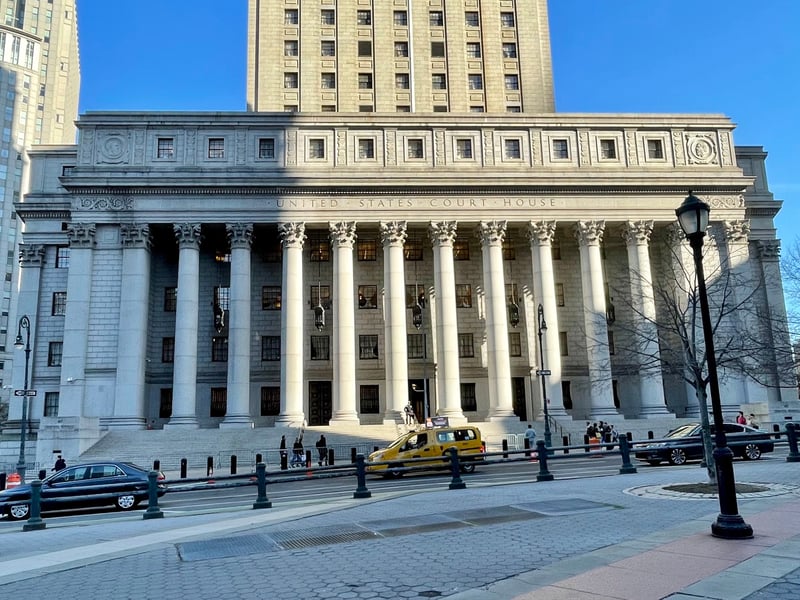
Tuesday’s ruling came from a panel of three Second Circuit judges: U.S. Circuit Judges Robert Sack and José Cabranes, Bill Clinton appointees, and U.S. Circuit Judge Sarah Merriam, a Joe Biden appointee. That same panel oversaw the oral arguments in this case, which took place nearly a year ago at Manhattan’s Thurgood Marshall Courthouse.
In her lawsuit, James cited four instances in which Niagara Wheatfield failed to protect its students. In one, a female student, referred to only as TG, was raped by a classmate and subsequently harassed by her peers. The incident prompted TG to stop showing up for cheerleading practice and to get a panic attack at a school event, which the school’s assistant principal said she “faked” for “attention,” according to the case.
James also claims that TG’s cheerleading absences were unexcused by her coach, who supposedly stated that “girls get assaulted all the time.”
The school’s handling of the incident prompted a 2019 walkout protest that garnered national media coverage. Partly because of that attention, the Second Circuit agreed with James that a substantial segment of the state’s population was affected by the school district’s conduct.
“Because of this allegedly widely known incident, students had to contend with the fear that, if something comparable happened to them, the school district would also leave them unprotected,” Sack wrote for the panel.
The panel also concluded that a substantial number of New Yorkers felt “indirect effects” of the school’s conduct, further bolstering James’ standing.
“First, they were felt by the parents of the four students who were left with the understanding that the school district would not protect their children and therefore were required to contend with the psychological and financial burdens of dealing with the effects the school district’s inaction had on their children,” Sack wrote for the panel. “Second, and as alleged, there are victims of ‘future harassment’ and ‘future sexual assaults.’”
The state offered the same rationale during oral arguments last year.
“The district court improperly focused on factual variance in the actual type of harassment experienced by the victims … rather than focusing on the consistent pattern of deliberate indifference that was discriminatory,” state attorney Alexandria Twinem told the court nearly a year ago.
During those arguments, the school district’s lawyer Daniel LeCours claimed that the TG situation was “extraordinary,” but was not necessarily indicative of a pattern of mismanagement by the school since it was so factually different from the other scrutinized conduct.
“There’s no similarity or throughline between the TG situation and the other three cases,” LeCours said.
At the time, the panel appeared skeptical of that argument — especially Merriam, who suggested that James’ cited instances could represent a broad issue within the school district, even if they were “very different factually.”
James celebrated the ruling in a statement to Courthouse News.
“My office will do everything in its power to protect students, and I look forward to continuing this case,” James said.
LeCours didn’t immediately respond to a request for comment.
The panel remanded the case to U.S. District Judge John Sinatra of the Western District of New York. Sinatra, a Donald Trump-appointee, has been unkind to James’ legal efforts in the past. He recently issued unfavorable rulings for the attorney general in her cases involving abortion information and body armor access.
 Follow @Uebey
 Follow @uebey.bsky.social
Subscribe to our free newsletters
Our weekly newsletter Closing Arguments offers the latest about ongoing trials, major litigation and rulings in courthouses around the U.S. and the world, while the monthly Under the Lights dishes the legal dirt from Hollywood, sports, Big Tech and the arts.