
 Search Articles


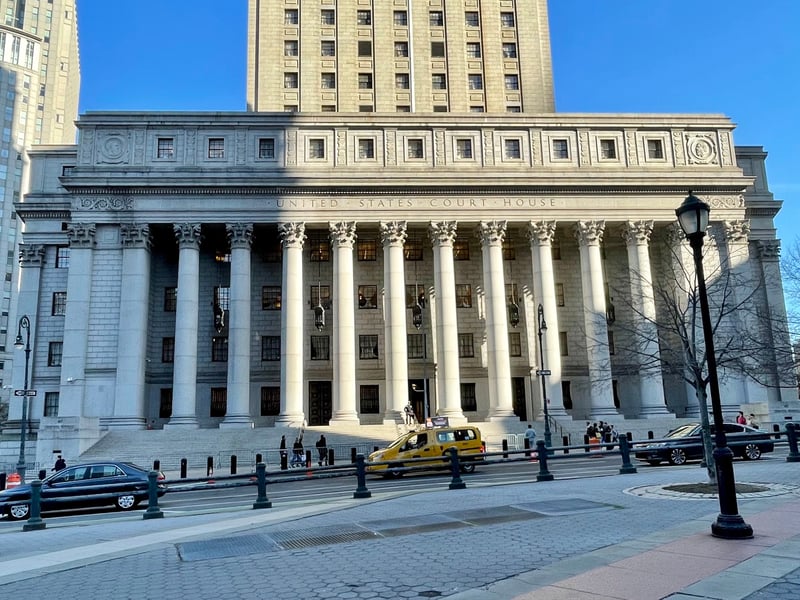
MANHATTAN (CN) — New York City foster families earned a win from a federal appeals panel on Monday, which found children had “suffered a real-world harm” when relatives of children in foster care were disqualified of state financial resources for caregivers based on prior convictions.
The three-judge panel for the Second Circuit overturned a lower court’s dismissal of the class action filed by a group of foster children and their relatives in Brooklyn federal court in November 2021.
“The plaintiffs who did not receive any foster placement have also been denied the medical and social services provided to children in foster care,” the panel wrote in the opinion. “The plaintiffs who were placed in the foster care of non-relatives have also been exposed to risks of psychological and emotional harms. These are real-world injuries, traceable to the defendants, and redressable by a favorable ruling. The district court erred by ruling otherwise.”
The plaintiffs claimed in appeals brief New York’s Social Services Law routinely and arbitrarily disqualifies potential relative “kin caregivers” from receiving those financial subsidy funds solely based on the fact that the relative or adult household member has a criminal conviction — or even just a criminal charge — without an individualized assessment of whether placement in a foster or adoptive home with the relative is safe.
The families claimed violations of due process rights on behalf of themselves and other children who were or will be removed from their parents and denied a foster or adoptive placement with a relative caregiver, and instead placed into a revolving door system of foster homes.
New York provides various services and support to foster children and their foster parents, including monthly payments to foster parents as reimbursement for care-related expenses, and funds for transportation, clothing allowance, school related expenses and miscellaneous expenses.
Represented by The Legal Aid Society and Dechert LLP, the families called the state’s mandatory disqualification systems overly broad, unconstitutional, and discriminatory, but U.S. District LaShann DeArcy Hall, a Barack Obama appointee, dismissed their complaint in 2023 for lack of standing.
The panel, which heard oral arguments on the families’ appeal in December 2024, concluded “the plaintiffs suffered concrete injuries-in-fact” when they were denied placements with relative foster parents, that were traceable to the city, the state and the New York State Office of Children and Family Services.
“The City of New York, acting through [Administration for Children’s Services], refused to certify the plaintiffs’ relatives as foster parents. These denials followed the guidelines issued by [Office of Children and Family Services] that identify which crimes require mandatory disqualification,” U.S. Circuit Judge Stephan Menashi wrote.
Menashi, a Trump appointee, was joined on the three-judge panel by U.S. Circuit Judges Maria Araújo Kahn, a Joe Biden appointee; and Michael Park, a Trump appointee.
In 2026, just one named plaintiff has standing to challenge New York’s certification scheme for adoption on remand back to the Eastern District of New York — three of the underlying claims are moot, with two plaintiffs are now in the care of a relative foster parent and another who has aged out of the foster system.
Lisa Freeman, attorney-in-charge of the special litigation and law reform unit with the juvenile rights practice at The Legal Aid Society, called the ruling, “a powerful recognition that children’s constitutional rights may be violated when the state blocks them from living with their families.”
“The court made clear that denying children placement with relatives may deprive them of stability, vital services, and family connections, as well as expose them to serious emotional and psychological harm,” Freeman said in a statement Monday. “This ruling affirms that children have their own constitutional rights at stake when government policies deprive them of willing and capable kin foster parents.”
The families seek declaratory and injunctive relief requiring New York to modify its scheme to provide a more “individualized evaluation” of prospective foster or adoptive parents.
Before 2008, foster and adoptive parents were in fact entitled to those individual assessments, according to the families. Then, the state began automatically denying the applications of those who were convicted of certain felonies, which include criminal marijuana possession and possession of a weapon.
 Follow @jruss_jruss
Subscribe to our free newsletters
Our weekly newsletter Closing Arguments offers the latest about ongoing trials, major litigation and rulings in courthouses around the U.S. and the world, while the monthly Under the Lights dishes the legal dirt from Hollywood, sports, Big Tech and the arts.