
 Search Articles


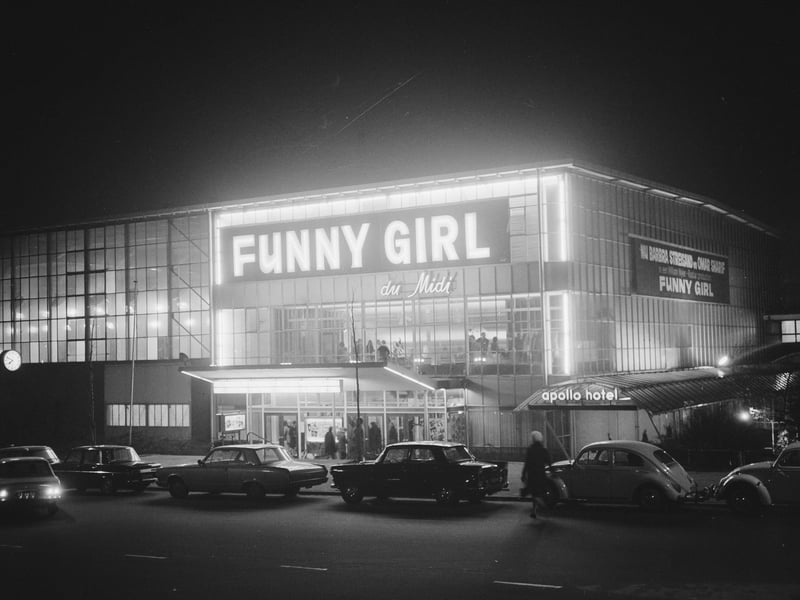
MANHATTAN (CN) — The rights to “Funny Girl,” the Broadway musical that ushered Barbra Streisand into stardom in the 1960s were legally transferred via a royalties agreement in 1963, a Second Circuit panel ruled Thursday.
The dispute, brought by the widow of the musical’s writer, sought to cancel the decades-old agreement by claiming it was not a full sale of royalties but only of certain rights to the popular musical.
Under the original agreement, Broadway producer Eliot Hyman paid lyricist Bob Merrill $82,500 in exchange for “an undivided two-third” interest in future compensation from the musical.
However, in 2015 Bob Merrill’s widow Suzanne claimed the deal was not a royalties agreement but instead governed by the 1976 Copyright Act, which gave her the right to terminate it and did not impart to Hyman any right to future revenue.
Merrill claimed her husband only had sold “grand rights” to the show that are different from “small performance rights” and that she had the ability to cancel the sale years later. “Small performance rights” allow companies to publicly perform specific songs but not to replicate the musical in its entirety.
Hyman’s family countersued Suzanne Merrill, seeking a court order stating she was guilty of tortious interference and prohibiting her from interfering with the receipt of royalties under the agreement.
A federal judge in Connecticut ruled against Suzanne Merrill in late 2022, finding the 1963 agreement focused on future royalties and not copyrights. This month, the Second Circuit heard oral arguments on the case.
In the nine-page ruling issued Thursday, U.S. District Judge Paul Englemayer wrote that the 1963 agreement between the parties is “unambiguously a royalties agreement” and noted the contract’s language explicitly stated Bob Merrill wanted to sell financial rights to compensation to Hyman.
The 1963 agreement, cited by the court in the opinion, states that Bob Merrill desired to sell his two-thirds share of “all royalties, percentage compensation, rights and other compensation derived by him from the results and proceeds of any and all services rendered by him in connection to ‘Funny Girl.’”
Englemayer, a Barack Obama appointee sitting by designation from the Southern District of New York, stressed the agreement “never defines a copyright right that is being transferred or specifies the nature of any license to use the lyrics in a particular way.” He also wrote that Bob Merrill’s copyright rights were obtained since he created the lyrics and not as compensation from the production company.
Englemayer also added that Bob Merrill never adequately explained what two-thirds of the right to perform lyrics would be or how it could be paid.
U.S. Circuit Judges Guido Calabresi and Alison Nathan — Bill Clinton and Joe Biden appointees, respectively — joined the opinion.
“Funny Girl” was considered a hit after opening in 1964 and was nominated for Tony Awards for Best Musical and Best Score. Streisand garnered an Academy Award for the 1968 movie version of the musical. The musical enjoyed a revival on Broadway in 2022 and 2023.
 Follow @NickRummell
Subscribe to our free newsletters
Our weekly newsletter Closing Arguments offers the latest about ongoing trials, major litigation and rulings in courthouses around the U.S. and the world, while the monthly Under the Lights dishes the legal dirt from Hollywood, sports, Big Tech and the arts.