
 Search Articles


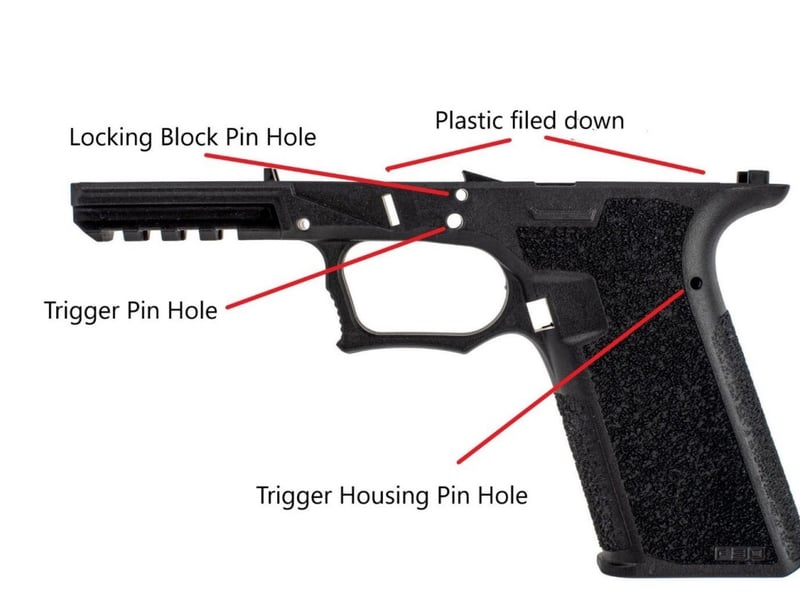
MANHATTAN (CN) — A Texas online gun retailer asked a federal appeals panel on Wednesday to breath new life into its claims for liability insurance coverage against civil enforcement actions arising from the sales of untraceable “ghost gun” components sold online as unfinished gun kits without serial numbers.
Hoping to overturn a lower court’s judgment in favor of its insurers, Houston-based gun seller Primary Arms requested the Second Circuit certify to the Texas Supreme Court a judicial query whether, under Texas law, “a lawsuit alleging that a firearm retailer negligently caused injuries to others through its sales of unfinished frames and receivers potentially allege an ‘occurrence’ under products completed operations liability coverage?”
The insurers, Granite State Insurance Company and National Union Fire Insurance Company of Pittsburgh, PA — two subsidiaries of the American International Group global insurance corporation — sued Primary Arms in Manhattan federal court in August 2023, seeking a declaration that the insurers are not obligated under respective policies to defend or indemnify Primary Arms against public nuisance lawsuits that directly linked ghost gun parts sold online to violent crimes in the state of New York.
“Here we submit the district court erred by focusing on the intentional sale of the products of issue, unfinished frames and receivers, as opposed to the unintentional bodily injuries, or property damage resulting therefrom,” Alexander Brown of Lathrop GPM, representing Primary Arms said at oral arguments on Wednesday.
U.S. Circuit Judge Denny Chin quickly interjected and repeatedly asked Brown to pinpoint where any negligence was claimed in the public nuisance enforcement lawsuits.
“The complaints alleged intentional marketing in a way to address the individuals who do not have licenses, who would not be able to buy guns,” the Barack Obama appointee said. “The products are intentionally shipped into New York. They’re intentionally designed, so they do not fit the definition of a firearm. The intent is to avoid the gun requirements, background check, serialization. How is that accidental conduct?”
U.S. Circuit Maria Araújo Kahn also pressed the attorney to point where.
“The test isn’t whether they’ll be successful in their complaint,” said Kahn, a Joe Biden appointee. “The test is whether the complaint alleges intentional conduct or negligent conduct an occurrence."
Brown told the judges that count six of the of the underlying New York complaint falls under the negligent entrustment theory of liability.
“Number one, there are specific theories of negligence, including negligent entrustment, which is traditionally covered under Products Completed Operations coverage," he said. “Now, that combined with the fact that there are no allegations in the complaint anywhere that our client intended the injuries, that they intended to or expected the injuries, that they intended to cause an increase in domestic violence, or that they intended to increase in suicides. There were no such allegations.”
Primary Arms argues it paid high premiums to the insurers for “products-completed operations coverage” for the exact purpose of protecting itself from lawsuits claiming that these firearm products caused bodily injury or property damage to other.
The insurance companies meanwhile asked the Second Circuit to affirm the lower court’s summary judgement, urging the appeals panel to reject the gun retailer’s argument that its marketing and shipping of ghost gun components into New York didn’t amount to harm caused by an ‘accident’ — the threshold that triggers insurer liability.
U.S. District Judge Lorna Schofield had granted summary judgment to the insurers in 2024, concluding that Primary Arms “took deliberate action to enable the anonymous acquisition of uncontrolled firearms with the predictable outcome of increasing gun violence.”
“The allegations in the underlying suits … make clear that the failure to perform any checks regarding defendant’s customers was not a mistake, but rather a deliberate part of defendant’s business and marketing model in order to maximize sales,” Schofield, a Barack Obama appointee wrote in the 2024 opinion.
Represented on appeal by Christopher St. Jeanos from Willkie Farr & Gallagher, the insurance companies echoed the lower court’s finding that Primary Arms took deliberate steps to facilitate the anonymous acquisition of uncontrolled ghost guns.
“As alleged … at this stage in the proceedings, was a six year business plan between 2016, 2022, Primary shifted into New York more than 25,000 packages, the vast majority of which contain parts and as little as an hour can be assembled into a working firearm, such as a Glock 9 handgun or AR 15 assault rifle, and that wasn’t by accident. It was just part was alleged to be part of a plan,” St. Jeanos said Wednesday. “The state said that Primary did much more than simply sell unfinished frames and receivers. That included extensive marketing efforts, touting their products as a way around background checks, and other public safety laws.”
Primary Arms argues that Schofield’s focus on “critical allegations” and reading the complaint “as a whole” impermissibly narrows the so-called “duty to defend” its policyholders.
Kahn and Chin were joined on the panel by U.S. Circuit Judge William Nardini, a Donald Trump appointee.
The three-judge panel did not immediately issue a ruling from the bench on Wednesday afternoon.
New York Attorney General Letitia James filed a landmark civil enforcement action against ten gun sellers and distributors in June 2022, applying for the first time a then-newly enacted Public Nuisance statute to hold the gun distributors responsible for ghost gun-related crimes.
An untraceable, partially 3D-printed ghost gun is believed to have been used by accused gunman Luigi Mangione in the early morning killing of UnitedHealthcare CEO Brian Thompson last December.
In addition to state and federal murder charges, Mangione is also facing firearms charges stemming from that arrest in Pennsylvania after officers found a 3D-printed ghost gun and a silencer in his backpack at the McDonald’s.
Ballistics analysis from the ghost gun recovered on Mangione further reveals that it was the same firearm used in the shooting, prosecutors argue.
 Follow @jruss_jruss
Subscribe to our free newsletters
Our weekly newsletter Closing Arguments offers the latest about ongoing trials, major litigation and rulings in courthouses around the U.S. and the world, while the monthly Under the Lights dishes the legal dirt from Hollywood, sports, Big Tech and the arts.