
 Search Articles


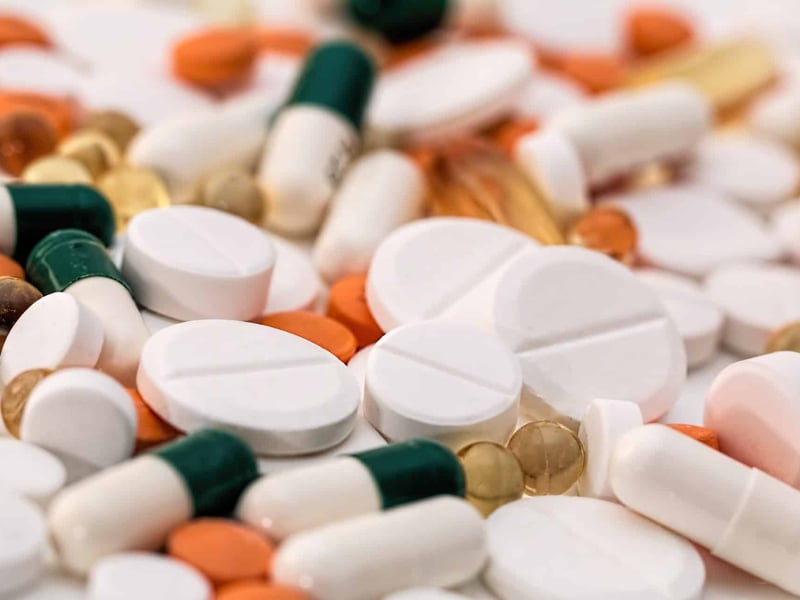
MANHATTAN (CN) — The manufacturer of a lucrative blood pressure drug did not violate antitrust laws by paying competitors to delay the market entry of the drug’s generic version, the Second Circuit found Monday, shoring up two previous federal court wins for Forest Laboratories.
CVS Pharmacy, Rite Aid and Walgreens brought the challenge alongside direct purchasers of Forest’s billion-dollar-per-year blood pressure treatment, Bystolic. They claim that the manufacturer made the “reverse” settlement payments to six competitors who agreed not to sell the drug for seven years.
The pharmacy chains say Forest paid the generic manufacturers at least $15 million each in side deals related to a patent settlement, then covered up the payments by “pretextually compensating the generics for goods and services that Forest did not truly need” in order to delay the market release of the drug.
Forest Laboratories’ competitors, including Hetero, Torrent, Alkem, Amerigen and Watson Laboratories, are also named as defendants.
The claims had been dismissed twice already in the Southern District of New York, where the Trump-appointed U.S. District Judge Lewis J. Liman said the pharmacy chains failed to demonstrate the payments were unjustified.
On Monday, a Second Circuit panel agreed.
“Plaintiffs do not plausibly allege that Forest’s reverse payments were sham and pretextual rather than payments that constituted fair value for goods and services obtained as a result of arms-length dealings,” U.S. Circuit Judge Dennis Jacobs, a George H.W. Bush appointee, wrote in the panel’s 60-page decision.
The pharmacy chains claimed during oral arguments that the settlement payments exceeded the value of goods and services the generic manufacturers provided.
Siding with the chains, the Federal Trade Commission added in an amicus brief that the side deals demonstrated that the payments were made in order to prevent the generic drug from reaching the market.
“The side deal was unjustified,” FTC attorney Bradley Grossman said during oral arguments. “Which means that the side deal featured a payment greater than litigation costs — and, in our position, that element also includes that the payment had unusual features — suggesting that it was a way to compensate the competitors for staying off the market.”
The Second Circuit judges didn’t buy it, writing, “Plaintiffs mostly rely on speculation and supposition in contending otherwise.”
The panel pointed to Forest’s agreement with Hetero, a pharmaceutical company that agreed to supply Forest with at least half of the active ingredient in Bystolic, nebivolol API, needed by the drugmaker for five years. Forest would then sell and distribute the drug in the U.S. and Canada, and in exchange, had agreed to pay Hetero at least $37.5 million.
The pharmacy chains say that Forest didn’t need a nebivolol API supply agreement with Hetero because it had entered into a similar agreement with another company, Janssen Pharmaceutical NV, seven months earlier.
But the Second Circuit panel said the existence of a previous supply agreement did not make it plausible that the agreement with Hetero was a pretext for an unlawful reverse payment.
According to the panel, Forest had expressed in a filing with the Securities and Exchange Commission that difficulties in the supply chain for nebivolol API could lead to “shortages or long-term product unavailability.”
“It is therefore not plausible that Forest’s securing of an alternative nebivolol API supplier for a billion-dollar blockbuster drug was nefarious,” the panel said.
“Consistent with Forest’s legitimate commercial interests, the Janssen agreement and Hetero term sheet complemented and accommodated each other with provisions in both agreements that together authorized and encouraged Forest to seek out alternative nebivolol API suppliers at lower prices,” the panel added.
U.S. Circuit Judge Robert Sack, a Bill Clinton appointee, and U.S. Circuit Judge William Nardini, a Donald Trump appointee, also participated in the decision.
Attorneys from neither party responded to requests for comment.
 Follow @NikaSchoonover
Subscribe to our free newsletters
Our weekly newsletter Closing Arguments offers the latest about ongoing trials, major litigation and rulings in courthouses around the U.S. and the world, while the monthly Under the Lights dishes the legal dirt from Hollywood, sports, Big Tech and the arts.