
 Search Articles


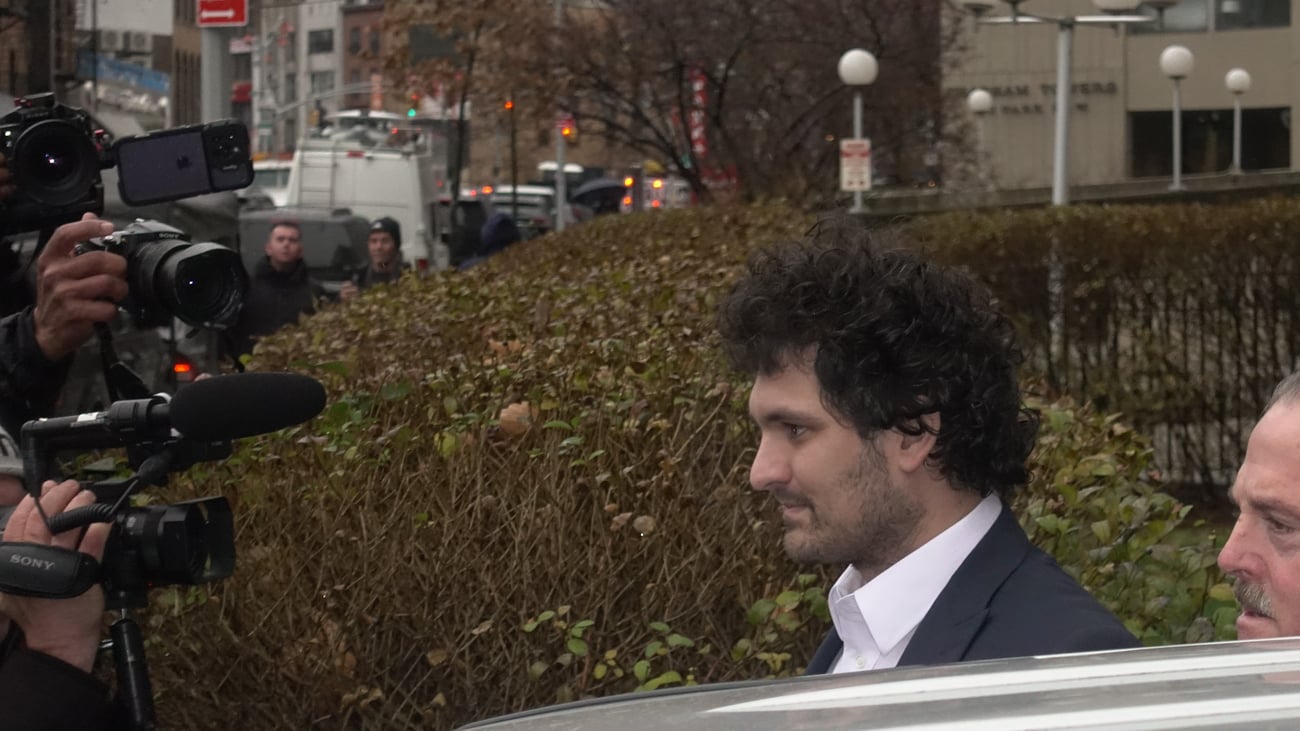
MANHATTAN (CN) — A New York federal appeals court on Friday upheld the criminal convictions of cryptocurrency mogul Sam Bankman-Fried, who is serving a 25-year prison sentence for defrauding investors and lenders in connection with his collapsed cryptocurrency exchange platform FTX.
Bankman-Fried, 34, argued on appeal he had been “hamstrung” at trial by the prejudicial rulings of the Manhattan federal judge who oversaw his criminal fraud case. He said he was never afforded the presumption of innocence in his high-profile criminal proceedings.
The convicted FTX founder stressed he was wrongfully precluded from making the case to jurors that his companies FTX and Alameda were never completely insolvent because his speculative investments provided sufficient liquidity to ensure that investors were made whole and would not lose money.
Among the hedge fund’s tech wagers, Bankman-Fried pointed out that his $500 million investment in AI developer Anthropic would eventually reap substantial gains, landing at a value of between $1 billion and $1.4 billion.
A panel sitting for the Second Circuit Court of Appeal on Friday was not persuaded, instead affirming the lower court’s judgment.
Writing for the three-judge panel, U.S. Circuit Senior Judge Barrington D. Parker said Bankman-Fried mounted his appeal “in the face of a trial at which the government’s evidence against him was, conservatively stated, robust.”
“The overwhelming evidence presented at trial proved that Bankman-Fried knowingly and intentionally committed large-scale fraud on FTX’s customers,” Parker wrote in the 42-page opinion. “While he was publicly reassuring customers, investors and regulators that FTX customer funds were safe, he was simultaneously using FTX as his own personal piggy bank, spending customer funds on real estate, political contributions and investments.”
Pointing to trial testimony from company insiders, many of whom pleaded guilty and cooperated with prosecutors, the judges found Bankman-Fried’s claims of judicial prejudice were outweighed by evidence presented at trial.
“Given the overwhelming evidence against him, we are not convinced that the isolated statements Bankman-Fried points to tainted the jury’s verdict,” Parker wrote.
The panel — Parker, a George W. Bush appointee, was joined by U.S. Circuit judges Eunice Lee and Maria Araújo Kahn, both appointed by Joe Biden — rejected Bankman-Fried’s argument that the “crippling” $11 billion forfeiture imposed at sentencing was illegal and unconstitutional.
“We recognize that $11 billion is a very large amount, especially in the context of an illegal scheme in which many victims may be made whole,” the Second Circuit panel wrote. “But Congress has fashioned a scheme under which the size of the forfeiture depends on the amount of a defendant’s gains as opposed to some other matrix such as moral culpability. And we are constrained by the laws Congress enacted.”
The U.S. Attorney’s Office for the Southern District of New York had asked the Second Circuit to affirm both Bankman-Fried’s conviction and the forfeiture order.
The government argued on appeal that the forfeiture amount “reflected funds Bankman-Fried fraudulently obtained and was not disproportionate to the gravity of Bankman-Fried’s offenses.”
Bankman-Fried can appeal the decision to the U.S. Supreme Court.
Representatives for Bankman-Fried’s defense did not immediately respond to a requests for comment Friday.
Bankman-Fried was arrested in the Bahamas in December 2022, a month after the abrupt collapses of FTX, which he opened in 2019, and Alameda Research, the cryptocurrency hedge fund he started in 2017.
At trial, federal prosecutors accused Bankman-Fried of operating a “pyramid of deceit” that defrauded his companies’ customers, investors and lenders.
Prosecutors showed jurors evidence that he spent billions of dollars of customer money on real estate, straw donations to politicians, celebrity endorsements and publicity deals, in addition to large venture capital investments.
A New York City jury found Bankman-Fried guilty in 2023 of all seven criminal counts, including fraud and conspiracy. He faced a maximum of 115 years in prison, but Kaplan ultimately sentenced him in March 2024 to 25 years in prison.
Three former executives from FTX and Alameda — Alameda co-CEO Caroline Ellison, FTX co-founder Gary Wang and former FTX Director of Engineering Nishad Singh — each pleaded guilty to criminal charges and testified at trial as key prosecution witnesses, under cooperation agreements.
Office of the Pardon Attorney records show Bankman-Fried filed an application for a “pardon after completion of sentence” some time in 2026.
In the past year, Bankman-Fried’s X social media account has been actively courting the attention of President Donald Trump, posting about “Biden’s political lawfare,” tagging Trump’s personal account and granularly praising in bullet points the president’s recent pardon of former Honduran president Juan Orlando Hernandez, who was detained at the same federal jail in Brooklyn as Bankman-Fried ahead of their respective trials.
 Follow @jruss_jruss
Subscribe to our free newsletters
Our weekly newsletter Closing Arguments offers the latest about ongoing trials, major litigation and rulings in courthouses around the U.S. and the world, while the monthly Under the Lights dishes the legal dirt from Hollywood, sports, Big Tech and the arts.
Additional Reads

 Digital ad app asks Ninth Circuit to lift Google’s ban June 12, 2026