
 Search Articles


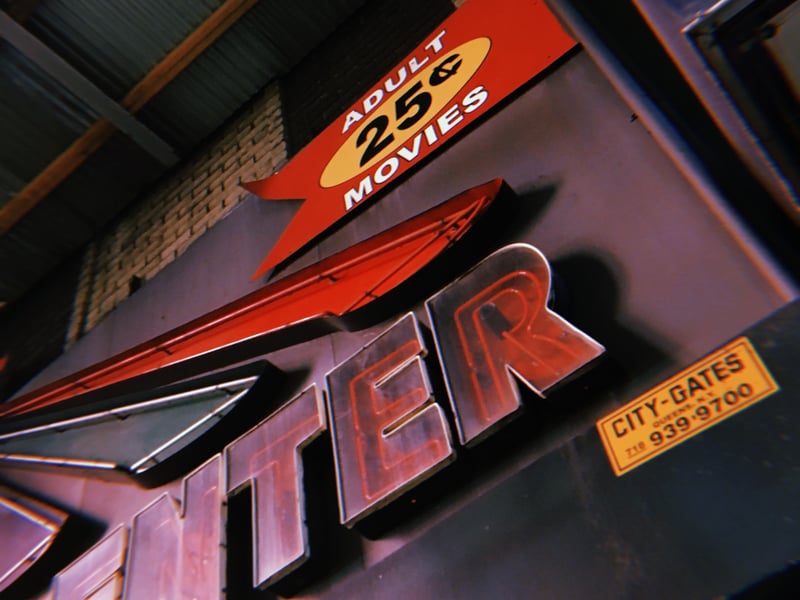
MANHATTAN (CN) — A federal appeals court on Tuesday upheld the constitutionality of two-decade-old amendments to New York City zoning ordinance that clamped down on the X-rated porn shops and neon-lit sex clubs that once filled Manhattan’s Times Square neighborhood.
“While the First Amendment protects adult expression, it also allows a municipality to regulate adult entertainment establishments,” a three-judge panel for the Second Circuit Court of Appeals ruled in a summary order.
“Even in areas where adult-oriented businesses are allowed, a city may prohibit such businesses from operating close to churches, parks, schools, residential areas, or other adult establishments,” the panel wrote in the unsigned ruling.
The Second Circuit panel — comprised of Joe Biden-appointed U.S. Circuit Judges Myrna Pérez and Alison Nathan, along with U.S. Circuit Judge Steven Menashi, a Donald Trump appointee — sided with New York City on appeal, ruling that as part of the city’s zoning power, it may prohibit adult establishments from operating in certain areas.
“The city has a legitimate interest in curbing the negative secondary effects associated with adult establishments, and the zoning requirements are a rational means of advancing that interest,” the Second Circuit wrote, citing Supreme Court precedent on minimizing “secondary effects” that can come with the prurient enterprises, “including crime, decreased property values, and urban decay.”
The law in question, a 2001 amendment to the city’s 1995 regulations on adult entertainment facilities, under then-Mayor Rudy Giuliani’s crusade to clean up the area, limited locations where so-called “adult uses” would be permitted and stipulated that adult establishments, such as topless clubs, peep shows and triple-X video stores, must have at least 60% of the space dedicated to “non-adult” merchandise.
While the ordinance took effect in 1998, enforcement of the controversial 2001 amendment has been held up by litigation for two decades amid a slew of lawsuits from affected businesses that challenged its constitutionality.
The 1995 zoning law directed some businesses to reduce their floor space devoted to adult entertainment to 40%. But the amendment, six years later, eliminated the so-called “60/40” rule and reclassified violating establishments as any business that primarily markets adult entertainment.
The regulations barring adult businesses from operating near churches or schools and in most commercial and residential neighborhoods further pushed the historically seedy X-rated businesses out of midtown Manhattan, aimed at reducing crime and increasing property values.
The plaintiff-appellants in this appeals case — eight strip club businesses and six porn shops — sought to overturn a 2024 federal court ruling, arguing they’ll be forced to close their doors if the 2001 amendment is allowed to stand, drastically reducing the public’s access to constitutionally protected adult entertainment.
The lower court’s ruling at issue on appeal was penned by U.S. District Judge Lewis Liman, a Trump appointee who ruled in 2024 that the city was within its rights to require the 60/40 adult entertainment establishments to pack up and move.
“If New York City can, with proper justification, treat adult establishments differently from other establishments for zoning purposes, it follows that New York City can require adult establishment businesses to move when it does not require other businesses to move,” Liman said in a 167-page order that followed a bench trial.
The group of New York City strip clubs and porn shops argued the 2001 amendments violated the Equal Protection Clause of the 14th Amendment by treating adult establishments differently from other regulated entities.
New York City, meanwhile, argued on appeal that the change was necessary because some establishments merely adopted “superficial and sham compliance” to achieve the 40% floor space requirement with dummy shelves lined with videotapes of Westerns, kung fu movies and cartoons while remaining primarily adult entertainment businesses.
The regulations on porn shops and sex shows in the 1990s shuttered many of more than 170 such establishments around the city.
 Follow @jruss_jruss
Subscribe to our free newsletters
Our weekly newsletter Closing Arguments offers the latest about ongoing trials, major litigation and rulings in courthouses around the U.S. and the world, while the monthly Under the Lights dishes the legal dirt from Hollywood, sports, Big Tech and the arts.