
 Search Articles


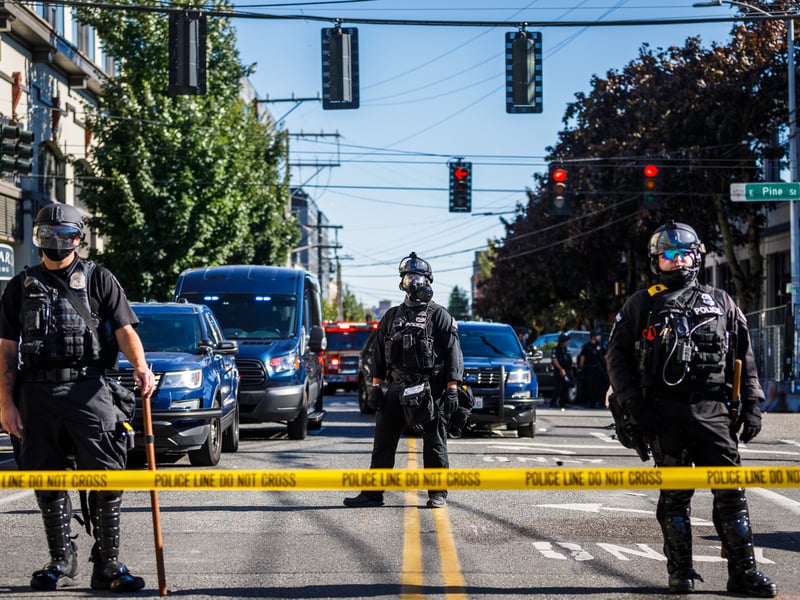
SEATTLE (CN) — After 13 years of federal oversight, Seattle and its police department are no longer bound by a court-ordered consent decree.
“What separates a stagnant department from a learning, growing organization is seizing upon those opportunities to get better,” Seattle Mayor Bruce Harrell said in federal court on Wednesday.
The consent decree has been in place since 2012, after a Justice Department investigation determined officers of the Seattle Police Department engaged in a pattern of excessive force.
Originally, the court anticipated the city and police would reach full compliance with the consent decree within five years.
“That didn’t happen,” said U.S. District Judge James Robart, shortly before granting the city’s motion to terminate the consent decree.
Instead, Seattle spent more than a decade overhauling the policing practices and strengthening accountability to meet terms set by federal monitors.
“Those first few years were difficult when you had the court with the responsibility of enforcing its consent decree, which was not widely accepted by the people that were impacted,” Robart said.
The Seattle Police Officers Guild, the union that represents the city’s police officers, had been critical of the consent decree from the start and praised the termination of the “weaponized financial grift” on Wednesday.
“With the consent decrees’ overly burdensome policy restrictions put onto Seattle’s police officers, these policies have had a detrimental impact on Seattle’s public safety,” Mike Solan, president of the guild, said in a statement.
The guild’s reproval contrasted with Seattle Police Chief Shon Barnes, who told the court his responsibility is to uphold the progress made under the court order.
“The concept of support is one that the consent decree clearly recognizes,” Barnes said.
The city and police department maintained compliance for nearly two years from 2018 to 2020 until mass protests in response to the murder of George Floyd derailed that progress.
The police department’s response to the protests undermined public trust and sent it back to its independent police accountability entities for recommendations to improve its crowd management policies, tactics and training.
Since 2012, the city has poured over $127 million into reforming the police department. In 2023, both sides filed a proposed agreement to end the oversight.
“When I think about the 13 years the consent decree has been in effect, one of my sincerest wishes is that John T. Williams, who was shot by an inexperienced officer on Aug. 30, 2010, could realize the significance of what his death created,” Robart remarked.
“His life was not in vain.”
A Seattle police officer shot Williams, a Native American woodcarver, four times after he walked through a crosswalk carrying a scrap of wood and an unopened pocket knife. Two years after his death, the city entered a consent decree with the Justice Department.
Now, 15 years after that death, the Justice Department agreed with the city that substantial improvements had been made to the police force.
“The use of force is less frequent and less severe across the board,” said Jeffrey Murray, Justice Department attorney.
In the 2011 report, the Justice Department found that, for all incidents that involved the use of force, the police department used excessive and unconstitutional force in an estimated 20% of the time. Now, the use of force is a “statistically rare occurrence,” according to the city. In 2021, officers only used the most serious force 20 times, which amounted to 0.003% of all dispatches, a figure it says has remained mostly consistent since 2015.
“The Seattle Police Department has worked over many years to develop and implement policies and procedures that have transformed the department into an example for other police forces,” Acting U.S. Attorney Teal Luthy Miller for the Western District of Washington said in a statement.
City leaders also celebrated the police department.
“This is about accountability and our community knowing they have a police force that can be counted on,” said Ann Davison, Seattle city attorney.
Robart commended the city and police department for maintaining compliance, and Harrell restated a commitment to continuing to fund the independent oversight system it created to ensure accountability.
“In my opinion, it’s not perfect, it’s not optimal, and I think it’s fair to say that it should be, and we work toward it to be optimal,” Harrell said. “There’s no intent to defund these organizations, only an intent to improve them.”
Subscribe to our free newsletters
Our weekly newsletter Closing Arguments offers the latest about ongoing trials, major litigation and rulings in courthouses around the U.S. and the world, while the monthly Under the Lights dishes the legal dirt from Hollywood, sports, Big Tech and the arts.