
 Search Articles


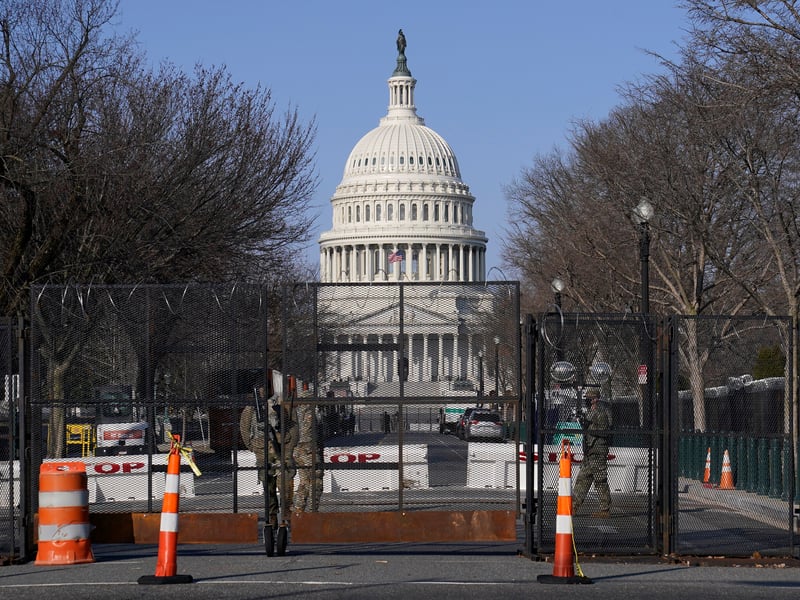
WASHINGTON (CN) — A group of current and former Seattle police officers have asked the Supreme Court to protect their anonymity as they fight a public records request that would reveal information about their presence at a rally for President Donald Trump right before the Jan. 6, 2021, Capitol riot.
The law enforcement officers, who said they have been cleared of any wrongdoing in the Capitol attack, argued that disclosing their names in court records related to the request would violate their First Amendment rights and affect their willingness to voice “unpopular opinions.”
In a Supreme Court application docketed Tuesday, the group of four Seattle police officers explained that they had attended Trump’s “Stop the Steal” rally in D.C. on Jan. 6, 2021. Just hours after Trump’s remarks at that event, a group of his supporters breached the U.S. Capitol in an attempt to halt the congressional certification of then-President-elect Joe Biden’s 2020 victory.
An internal investigation conducted by the Seattle Police Department found no wrongdoing, the applicants said. Despite that, “several” members of the public made records requests with the department seeking information about police officers who had participated in the Jan. 6 rally.
The four law enforcement officers sued to block the release of the internal investigation, and during litigation asked to be identified using pseudonyms. Washington’s court of appeals ruled that withholding such information was acceptable, reasoning that the First Amendment grants people the right to be anonymous while in public. And the state would need a good reason to disclose the police officers’ identities, the court said, because the proposed records request required them to expose their “political beliefs and associations.”
But the Washington State Supreme Court in April reversed that decision, contending the police officers had not demonstrated that their privacy rights would be violated if their real names were used in proceedings.
Now, the applicants are asking the justices to step in, arguing that Washington’s high court “overlooked” key points in the case which demonstrate the harms that could stem from identifying the four Seattle cops.
Chief among those was that the scope of the Seattle Police Department’s investigation went beyond the officers’ presence at the Jan. 6 rally and their participation in potentially illegal conduct, they argued.
“[I]nvestigators explored the Applicants’ motivations for attending the Rally, their impressions and reactions to the Rally, as well as their political affiliations,” the police officers said. Further, they added, department investigators asked them to explain how their attendance at the rally did not amount to “unprofessional conduct.”
The experience “chilled their willingness to voice unpopular opinions,” the law enforcement officers said.
In arguing their case, the applicants fell back on the argument that revealing their names to the public would violate their First Amendment rights — specifically, their rights to “maintain their privacy in their political expression and association.”
Citing Supreme Court case law, the officers pointed out that the justices have previously rejected “compelled disclosure” of political associations and beliefs. And they pointed to questions asked during the Seattle Police Department’s investigation as exactly the kind of political information that should remain under wraps.
“These very private questions strike at the very core of political speech that the Government is now threatening to disclose publicly,” the applicants wrote. “Although the public is entitled to be informed concerning the workings of its government … this entitlement cannot be unlimited and inflated into general power to invade the constitutional privacy rights of individuals.”
And the applicants argued that they already faced a chilling effect related to the possible disclosure of their information, pointing to amicus briefs filed with the Washington State Supreme Court that tied them to white supremacy and right-wing extremism.
Claims made in those briefs and on social media have made the law enforcement officers reticent to express beliefs that they say “differ significantly” from the political climate of Seattle.
“This is understandable: would anyone feel free to exercise their First Amendment rights knowing that their names would be plastered all over the Seattle Times?” the applicants wrote.
The group of police officers asked the Supreme Court to issue a stay on the lower court proceedings and deliver an injunction that would prevent the disclosure of their names while the justices consider the application.
“This will allow the Applicants to keep their identities, beliefs and associations private as secured by the First Amendment of the United States Constitution,” they said.
The four Seattle police officers requesting anonymity aren’t the only members of the Seattle Police Department to face scrutiny for their attendance at the Jan. 6 rally and the proceeding riot. Two other officers — married couple Alexander and Caitlin Everett — were fired in 2021 after the department found that they had crossed police barricades outside the Capitol and approached the building with rioters.
 Follow @BenjaminSWeiss
Subscribe to our free newsletters
Our weekly newsletter Closing Arguments offers the latest about ongoing trials, major litigation and rulings in courthouses around the U.S. and the world, while the monthly Under the Lights dishes the legal dirt from Hollywood, sports, Big Tech and the arts.