Search Articles


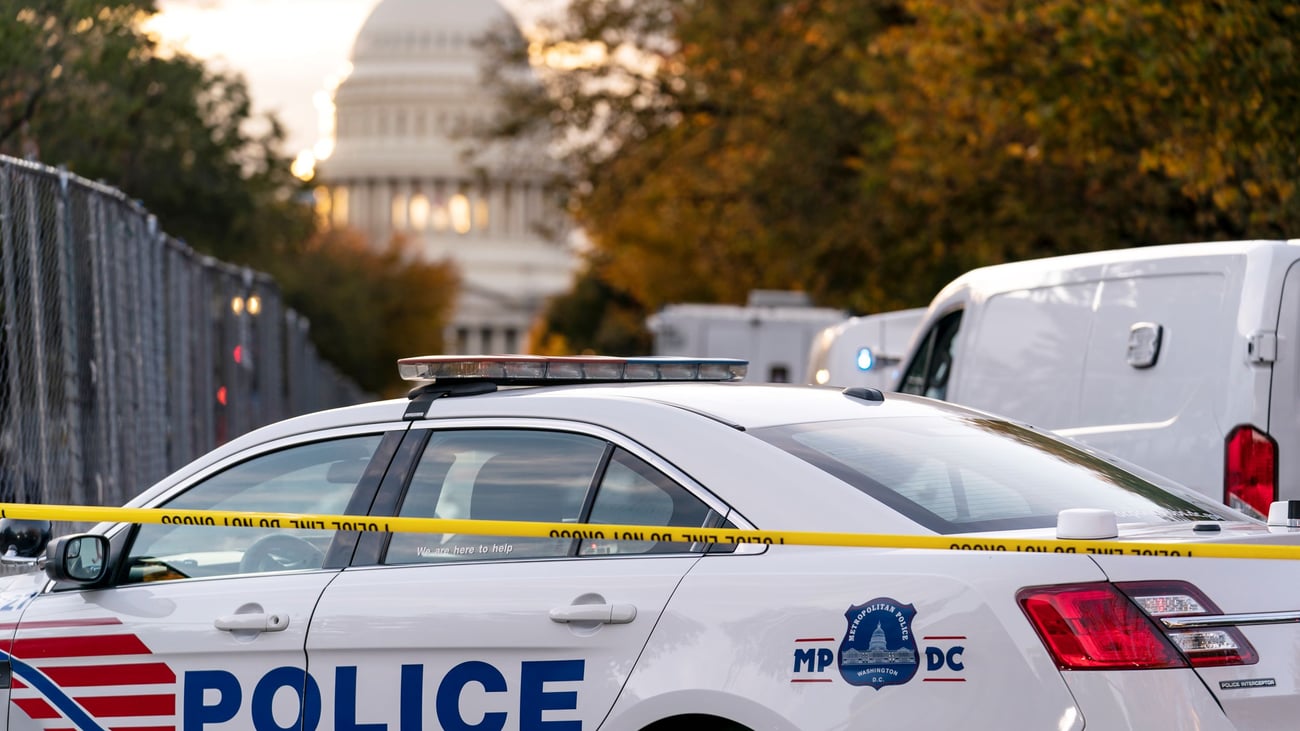
WASHINGTON (CN) — The Supreme Court turned down an opportunity to consider the role of race in policing, refusing on Monday to review whether D.C. officers recovered a federal agent’s stolen gun through an unlawful police stop.
A lower court found that officers with the city’s gun recovery unit unlawfully stopped Donte Carter without reasonable suspicion. The District of Columbia Court of Appeals subsequently suppressed the evidence obtained during the stop and vacated Carter’s firearm and theft convictions.
The Trump administration asked the Supreme Court to review that decision, arguing the appeals court effectively overturned Carter’s convictions because, as a Black man, he could have reasonably believed he had no choice but to comply with police despite the lack of legal grounds for the stop.
According to the government, that approach makes the seizure analysis race-specific, allowing the same police conduct to constitute a seizure for one person but not another based on race.
“Injecting such stereotypes into the Fourth Amendment puts that Amendment at cross-purposes with the equal-protection guarantee,” the Trump administration wrote. “It also puts officers in the untenable and unworkable position of needing to rely on racial stereotyping in order to assess the legality of their conduct.”
The Supreme Court denied the Trump administration’s petition. But Justice Samuel Alito, a George W. Bush appointee, joined by Justice Clarence Thomas, a George H. W. Bush appointee, dissented, arguing that the lawfulness of the lower court ruling was important for doctrinal and practical reasons.
“Under the test, officers will need to quickly assess a person’s race, and if officers and courts must craft special rules for black persons, what about darkskinned Latinos, other Latinos, and members of other minority groups?” Alito wrote.
Carter was one of 10 Black men approached by police in Northwest Washington in 2020. Officers, wearing tactical vests and visibly armed, repeatedly asked him to lift his shirt and expose his waistband. After Carter complied three times, they asked him to hike up his pants as well.
Officers then noticed an L-shaped bulge in his pants and conducted a frisk, recovering a firearm that had been stolen from an FBI agent in Georgetown. Carter was arrested and charged with eight firearm-related offenses.
D.C.’s high court said Carter’s search failed the Fourth Amendment’s “free to leave” test, which determines whether a seizure occurs based on whether a reasonable person would have believed he was not free to leave. If an individual would have been fearful of not cooperating with officers, the encounter is considered a seizure and police must show they had reasonable suspicion for the stop.
The District of Columbia Court of Appeals cited Carter’s race as one factor supporting its conclusion that police needed reasonable suspicion for the stop. Under the Supreme Court’s 1980 decision in United States v. Mendenhall, race may be considered in that analysis.
According to the ACLU, Black residents are disproportionately stopped by D.C. police. Between 2022 and 2023, Black people accounted for 70% of police stops despite making up about 40% of the district’s population. White residents, who also comprise roughly 40% of the population, accounted for less than 13% of stops.
Carter’s attorneys argued race was only one factor considered by the lower court. Because Mendenhallheld that race is not irrelevant to the Fourth Amendment seizure analysis, they said Supreme Court review was unwarranted.
But Alito said the court’s recent rulings refute most consideration of race. He said that the Constitution is color-blind, citing the high court’s landmark ruling gutting affirmative action policies used by colleges.
Alito also noted that the conservative majority rejected treating persons differently based on race in a more recent ruling on the Voting Rights Act.
“It is dangerous to allow an individual to be treated differently based on statistics, studies, or expert testimony that purports to show that members of the racial or ethnic group to which he belongs are more likely to act in a certain way than are members of other groups,” Alito wrote. “Here, the special treatment helped the individual; in other situations it will not. Perhaps the DCCA’s test has legitimate justifications. In any event, it is important, and it warrants this court’s review.”
 Follow @KelseyReichmann
 Follow @kelseyreichmann.bsky.social
Subscribe to our free newsletters
Our weekly newsletter Closing Arguments offers the latest about ongoing trials, major litigation and rulings in courthouses around the U.S. and the world, while the monthly Under the Lights dishes the legal dirt from Hollywood, sports, Big Tech and the arts.