Search Articles


WASHINGTON (CN) — The Supreme Court ruled Monday that Virginia detectives violated cellphone users’ constitutional rights when collecting location data to solve a 2019 bank robbery.
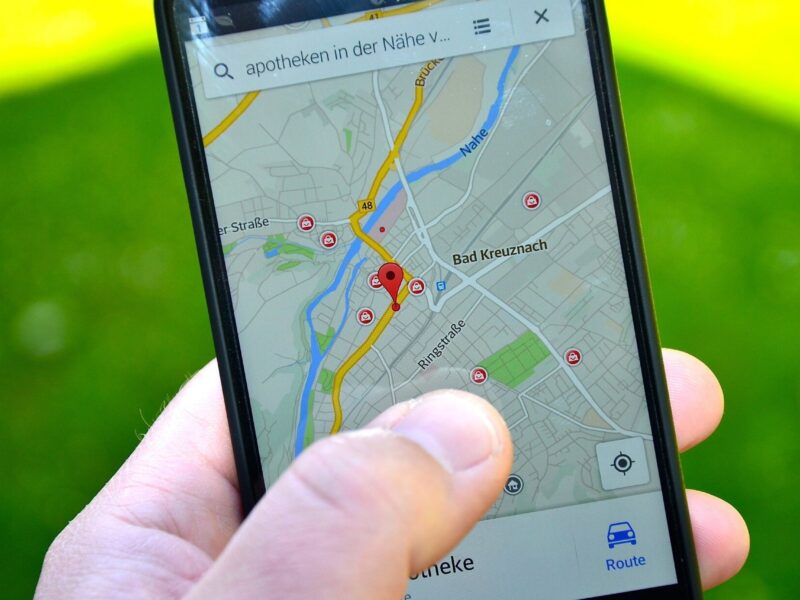
Geofence warrants allow the government to obtain location data from service providers to identify users in a particular area at a particular time. The high court was asked whether law enforcement’s use of the technology violated the Fourth Amendment.
In the 5-4 opinion, the majority held the Fourth Amendment does apply to searches into Google’s “database of physical location information.”
“That database is new, but the principle covering it is not: That principle is instead the one our history has given,” Justice Elena Kagan wrote for the opinion.
“The Fourth Amendment must, as ever, protect against unjustified governmental intrusion on the privacy of the individual,” the Barack Obama appointee added.
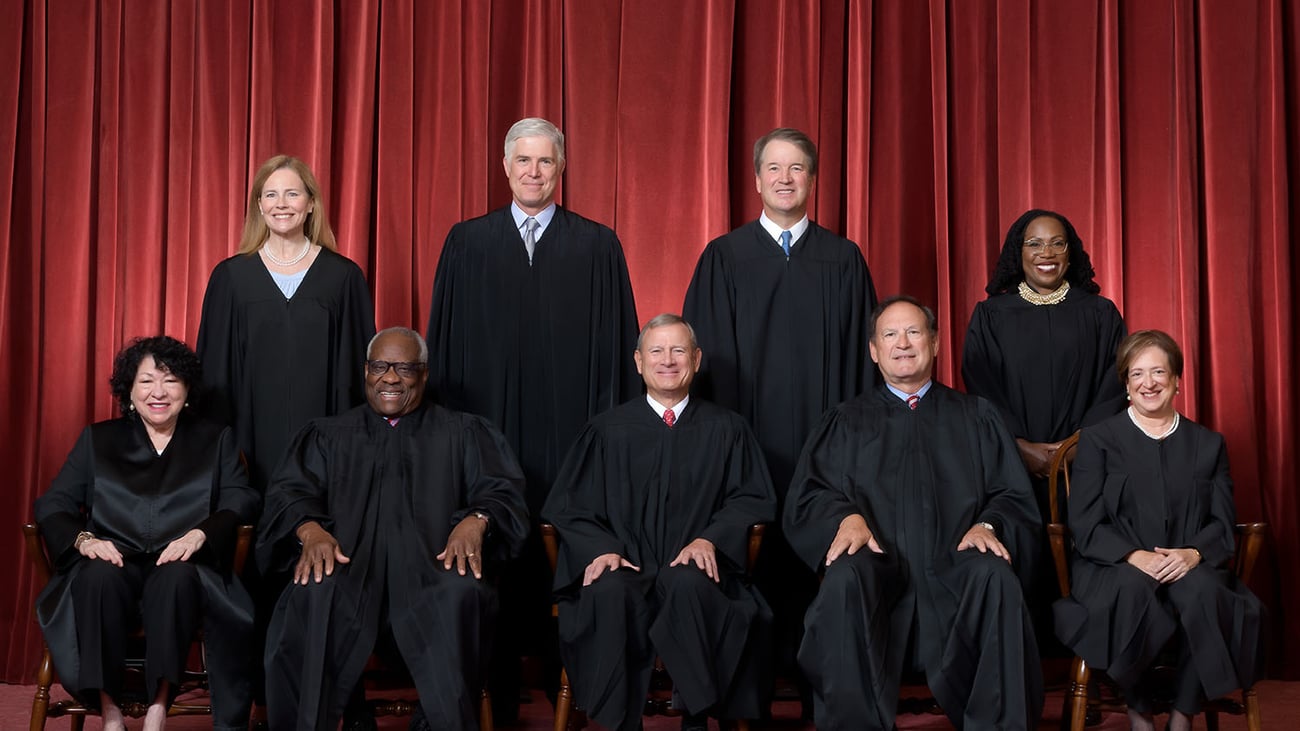
Chief Justice John Roberts joined the opinion, along with Justices Sonia Sotomayor, Brett Kavanaugh and Ketanji Brown Jackson.
Okello Chatrie’s data showed up in a geofence warrant that a Virginia detective obtained after running out of leads while investigating the 2019 robbery at a credit union in Midlothian, Virginia.
He told the court the search violated his Fourth Amendment right because it authorized the police to search the virtual private papers of every single person within the geofence merely because of their proximity to the crime.
Google gave the detective anonymized data for 19 users within a 300-meter diameter around the bank. The tech giant then provided additional data on nine users at the detective’s request and ultimately deanonymized three numbers.
Most of the other 19 users swept up in the search were sitting at a nearby church. During oral arguments in April, several justices said the identification of churchgoers seemed to epitomize the danger of giving the government unfettered access to sensitive information.
The majority’s decision relied on its prior precedent in Carpenter v. United States, where it held that accessing cellphone location information constitutes a Fourth Amendment search because “individuals have a reasonable expectation of privacy in the whole of their physical movement.”
Everything Carpenterrelied on to find that law enforcement officers conducted a Fourth Amendment search when they accessed such records applies as well, or better to the police’s accessing of location data, Kagan wrote.
Justice Neil Gorsuch agreed with the decision, but for different reasons.
“Count me unpersuaded. Why does tracking Mr. Chatrie’s movements digitally over an hour or two invade his reasonable expectation of privacy when an officer tailing him for the same length of time would not?” Gorsuch wrote in a separate opinion.
The Donald Trump appointee questioned how Chatrie’s data voluntarily shared with Google differs from bank records, which the court previously held were not private papers and could be seized.
Gorsuch said more work is needed to bring coherence to the court’s Fourth Amendment jurisprudence and how private information entrusted to third parties should be protected.
The justices left unresolved whether the warrant issued against Chatrie was “unreasonable” in violation of his Fourth Amendment rights.
The warrant at issue was an uncommon, and Chatrie has contested the legality of each step of the search process it authorized. But because the Fourth Circuit failed to address the questions raised, the Supreme Court remanded the issue back for the federal appeals court to decide.
Jackson wrote separately to say she would have held the search was unreasonable, because the warrant left too much discretion in the officers’ hands, allowing them to collect more data than what was permitted. The Joe Biden appointee was joined by Sotomayor, who was appointed by Barack Obama.
Justice Samuel Alito also wished the court would have determined the case’s outcome instead of diverting the ultimate question.
“Although today’s decision will send seismic waves through our Fourth Amendment doctrine, not one iota of the majority opinion will affect the outcome of this case,” the George W. Bush appointee wrote in a dissenting opinion.
“Indeed, by refusing to review the one question that could have at least theoretically given Chatrie some hope of relief, the court carefully set the stage for its planned performance: striking a pose as a great champion of privacy in the digital age. I cannot support this irresponsible escapade,” Alito added.
In his opinion, the geofence search did not violate Chatrie’s constitutional rights, because prior precedent holds that a defendant does not have a reasonable expectation of privacy in records entrusted to third parties.
Chatrie gave Google his location information for its own use and assumed the risk that it might be disclosed to others, including the police, Altio wrote.
“Today’s decision all but guarantees that we will be cleaning up debris for the foreseeable future,” he added.
Justice Amy Coney Barrett said she agrees with Alito, but the Donald Trump appointee issued a separate dissenting opinion to say she has no quarrel with the court’s decision in Carpenter.
Chatrie’s location data showed that he entered the geofence about 10 minutes before the robbery and headed toward a residential area immediately after leaving the bank. Following further police work, a federal grand jury charged Chatrie with robbery and related firearms offenses, and he moved to suppress the information the police obtained from Google.
“The court decisively held that people have a privacy right in their personal data—no matter how short the timeframe or whether the information is held by a tech company,” Chatrie’s attorney from the National Association of Criminal Defense Lawyers and Fourth Amendment Center Litigation Director, Michael Price, said.
“The court definitively recognized that accessing this data is a search that triggers constitutional protections, and as counsel for Mr. Chatrie, I look forward to returning to the Fourth Circuit to ensure those protections are fully enforced in the digital age,” Price added.
 Follow @Megwiththenews
Subscribe to our free newsletters
Our weekly newsletter Closing Arguments offers the latest about ongoing trials, major litigation and rulings in courthouses around the U.S. and the world, while the monthly Under the Lights dishes the legal dirt from Hollywood, sports, Big Tech and the arts.