
 Search Articles


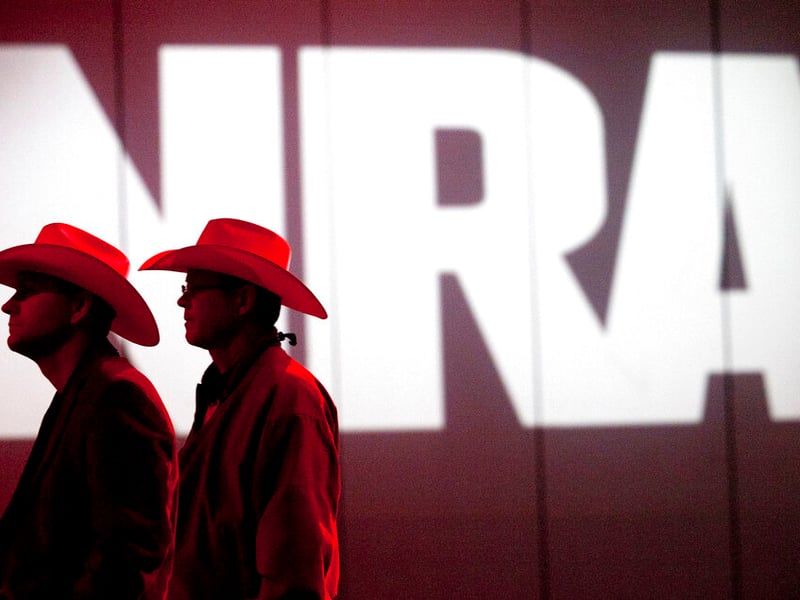
WASHINGTON (CN) — The Supreme Court sided with the National Rifle Association on Thursday, finding that a New York government regulator overstepped its authority by coercing businesses to distance themselves from the gun rights group.
The court unanimously found that the NRA had plausibly claimed that Maria Vullo, then superintendent of the New York Department of Financial Services, leveraged her authority to coerce the group’s business associates to distance themselves to suppress pro-gun speech.
Justice Sonia Sotomayor, a Barack Obama appointee, wrote the court’s opinion, noting that in the 1963 case Bantam Books Inc. v. Sullivan, the court held that a government entity threatening legal sanctions to achieve such suppression clearly violated the First Amendment.
In this case, the NRA plausibly argued that Vullo did just that, Sotomayor said.
“Today, the court reaffirms what it said then: Government officials cannot attempt to coerce private parties to punish or suppress views that the government disfavors,” Sotomayor wrote.
The court’s decision paves the way for the gun group to stake a First Amendment claim against the New York regulator at a lower federal court, as the justices were considering an appeal of a motion to dismiss. Therefore, they only needed to determine that the claims were reasonably plausible.
The case centers on a former NRA insurance program known as Carry Guard, which covered losses NRA members incurred by using their firearms, including criminal defense costs. The program covered cases of excessive force, even if members acted with criminal intent.
Vullo launched a probe into the program in 2017 that determined Carry Guard violated the state’s insurance law by covering illegal conduct. Soon after, Chubb Ltd. and Lockton Companies LLC, the underwriter and administrator of the program, suspended it.
Following the Feb. 18, 2018, Parkland shooting — where 17 students and staff were shot and killed in Florida— Vullo and former New York Governor Andrew Cuomo took aim at the NRA, publicly urging companies throughout the state to cut ties with the gun rights group.
The NRA then filed suit against Vullo, Cuomo and the department in U.S. District Court for the Northern District of New York, asserting both censorship and First Amendment violations. Vullo moved to dismiss, arguing the conduct did not rise to the level of coercion and that she had qualified immunity.
The federal court denied Vullo’s motion, after which she appealed to the Second Circuit, who reversed, finding Vullo’s actions were legitimate law enforcement.
The Supreme Court reversed the Second Circuit’s decision and remanded the case to the Northern District of New York for further proceedings.
Sotomayor explained how she and her colleagues determined Vullo’s conduct was coercive.
“Vullo was free to criticize the NRA and pursue the conceded violations of New York insurance law,” Sotomayor wrote. “She could not wield her power, however, to threaten enforcement actions against DFS-regulated entities in order to punish or suppress the NRA’s gun-promotion advocacy.”
Sotomayor said an example of clear coercion happened in Vullo’s communications urging third-party insurance company Lloyd’s of London — which underwrote at least 11 other programs similar to Carry Guard — to disassociate itself from the NRA or else face legal action.
Vullo also singled out the NRA in a set of guidance letters and a news release, which reminded regulated entities of their obligations to consider the “reputational risks” and tied that obligation to urge them to disassociate with the NRA and other gun-rights groups.
At arguments in March, David Cole, the national legal director of the American Civil Liberties Union representing the gun group, claimed that Vullo’s published guidance to avoid business with the group was a “scarlet letter.” Cole noted that the guidance remains posted on the regulator’s website and continues to harm the NRA.
Justice Ketanji Brown Jackson, a Joe Biden appointee, wrote a concurring opinion stressing the distinction between government coercion and a violation of the First Amendment.
“Coercion by a third party can be the means by which the government violates the First Amendment rights of another,” Jackson wrote. “But the fact of coercion, without more, does not state a First Amendment claim. Rather, in addition to finding that the government has crossed a line from persuasion to coercion, courts must assess how that coercion actually violates a speaker’s First Amendment rights.”
Justice Neil Gorsuch, a Donald Trump appointee, wrote a brief concurring opinion to urge lower courts not to hold too tightly to a four-pronged test to determine coercion claims, and rather treat it merely as a “guidepost.”
Legal experts applauded the court’s decision, including Alex Abdo, litigation director of the Knight First Amendment Institute at Columbia University.
“This is an important decision that reaffirms the bedrock First Amendment rule that the government may not coerce others to suppress constitutionally protected speech,” Abdo said in a statement. “The ruling also appropriately recognizes that, while the government may not employ coercion, it must be allowed to attempt to persuade the public of its views.”
 Follow @Ryan_Knappy
Subscribe to our free newsletters
Our weekly newsletter Closing Arguments offers the latest about ongoing trials, major litigation and rulings in courthouses around the U.S. and the world, while the monthly Under the Lights dishes the legal dirt from Hollywood, sports, Big Tech and the arts.