
 Search Articles


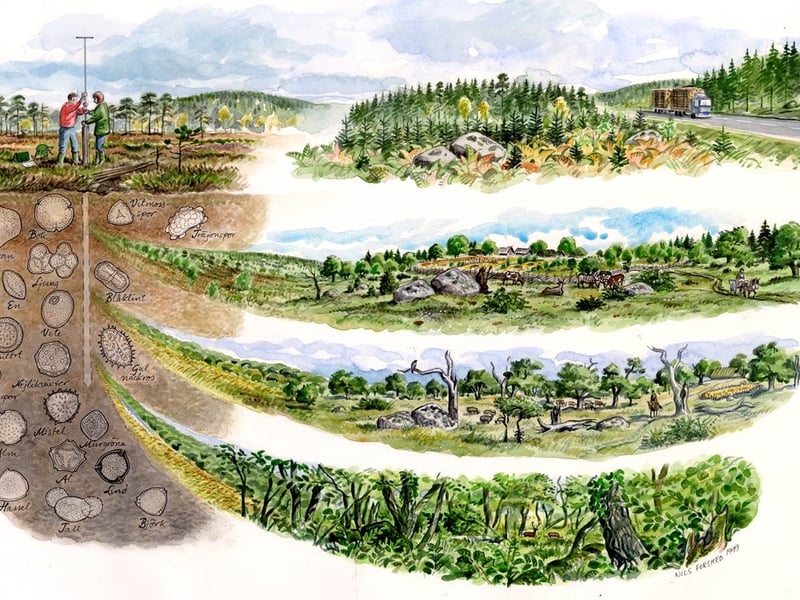
(CN) — Researchers cracked into the study of ancient European environments using hazelnuts, revealing kernels of insight into whether areas around archaeological sites were forested or pasture-like, and how humans changed those habitats over time.
In a paper published in Frontiers in Environmental Archaeology on Feb. 29, researchers from the University of Oxford and Lund University in Sweden describe their use of the carbon isotope values of hazelnut shells to investigate forest densities and human interaction with the landscape over millennia.
“By analyzing the carbon in hazelnuts recovered from archaeological sites in southern Sweden, from Mesolithic hunter-gatherer campsites through to one of the largest and richest Iron Age settlements in northern Europe, we show that hazelnuts were harvested from progressively more open environments,” lead author Amy Styring of the University of Oxford said.
The scientists explained that hazelnuts from open environments have higher carbon isotope values, due to sunlight and rates of photosynthesis.
“This means that a hazelnut shell recovered on an archaeological site provides a record of how open the environment was in which it was collected,” senior author Karl Ljung of Lund University said. “This in turn tells us more about the habitats in which people were foraging.”
The researchers said humans have been using hazel trees as a source of food and materials for thousands of years.
“The nuts are an excellent source of energy and protein, and they can be stored for long periods, consumed whole or ground,” Ljung said. “The shells could also have been used as a fuel.”
The researchers said their finding that nuts from more recent periods of time had been collected from more open environments was consistent with other environmental reconstructions based on pollen analyses. However, they added that their method of isotope analyses could be used to reconstruct environments lacking in pollen records.
They said their study could help uncover more connections between environmental changes and people’s foraging activities.
“We would like to directly radiocarbon date and measure the carbon isotopes of hazelnut shells from a wider range of archaeological sites and settings,” the study authors said. “This will provide much more detailed insight into woodlands and landscapes in the past, which will help archaeologists to better understand the impact of people on their environment, and perhaps help us to think differently about woodland use and change today.”
 Follow @MarkHebert100
Subscribe to our free newsletters
Our weekly newsletter Closing Arguments offers the latest about ongoing trials, major litigation and rulings in courthouses around the U.S. and the world, while the monthly Under the Lights dishes the legal dirt from Hollywood, sports, Big Tech and the arts.