
 Search Articles


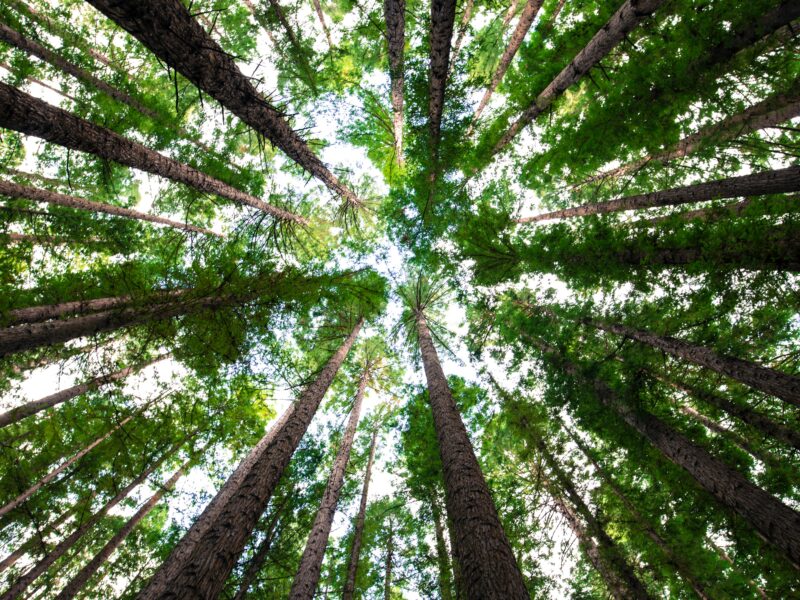
(CN) — Forests may not capture as much planet-warming carbon as scientists once thought.
Researchers have found oak trees continue photosynthesizing long after their annual growth has stopped, suggesting that taking in more carbon does not always translate into more carbon stored in wood.
The findings, published Friday in Science Advances, suggest some climate models may overestimate the amount of carbon forests can store if they assume increased photosynthesis automatically translates into increased growth.
“Right now, most models assume that if you have photosynthesis, you have growth. We find that’s not the case,” said lead author Mukund Palat Rao, an ecoclimatologist at Columbia University’s Lamont-Doherty Earth Observatory, in a press release. “Just because there is more photosynthesis might not necessarily mean more tree growth in the future.”
Forests play a critical role in slowing climate change by absorbing carbon dioxide from the atmosphere and storing it in wood, roots and other plant tissues. Many scientists have expected that rising carbon dioxide levels would boost photosynthesis and help trees grow larger, allowing forests to store more planet-warming carbon over time.
The new research suggests the relationship may be more complicated.
During photosynthesis, trees absorb carbon dioxide and use sunlight to convert it into sugars. Some of that carbon becomes part of a tree’s woody structure, where it can remain stored for decades or even centuries. But carbon can also be directed toward leaves, roots, fruits and other short-lived processes rather than long-term storage.
In order to better understand how carbon uptake and growth are connected, Rao and his colleagues examined multiple sources of data, including satellite imagery, canopy-level carbon dioxide measurements, tree sensors that tracked tiny changes in trunk size and growth ring records dating back to 1950.
The researchers analyzed oak trees at 137 sites across the eastern U.S. and California, generating daily records of photosynthesis, carbon uptake and growth.
They found oak trees in the eastern U.S. generally grew from May through July, even though photosynthesis continued into October. Roughly 36% of the carbon absorbed through photosynthesis occurred after growth had already stopped for the year.
A similar pattern emerged in California. There, oak trees typically grew between December and April, but growth slowed during the summer and ended by August despite continued photosynthesis. About 26% of annual carbon uptake occurred after growth ceased.
According to researchers, the findings suggest a significant share of the carbon trees absorb each year is not immediately converted into new wood.
“Understanding how photosynthesis and growth are linked is very important from the perspective of understanding how forests will store carbon over long time scales,” Rao said.
Researchers say the disconnect makes biological sense.
Tree growth depends not only on available carbon but also on water. When conditions become hot and dry, trees can continue photosynthesizing while losing the internal water pressure needed to expand their tissues and produce new wood.
“The moment you have dry and hot conditions, growth activity stops pretty instantly while photosynthesis seems to continue at a slightly decreased rate,” Rao said.
Some of the carbon absorbed after growth ends is stored and used to jump-start growth the following year, some is used to produce leaves and roots and some is consumed by the tree itself to keep cells alive through winter.
Exactly how much ultimately ends up locked away in woody biomass remains unclear, but researchers say their findings suggest assumptions about forests storing ever-increasing amounts of carbon in a warmer, carbon dioxide-rich world may need to be revisited.
Researchers also found the disconnect between photosynthesis and growth was strongest during years marked by swings between unusually wet and unusually dry conditions.
Since climate change is expected to increase weather variability in many regions, that pattern could become more common in the future.
Rao said they are now investigating whether the same phenomenon occurs in other tree species and ecosystems.
“There are many questions still left to address,” he said.
Subscribe to our free newsletters
Our weekly newsletter Closing Arguments offers the latest about ongoing trials, major litigation and rulings in courthouses around the U.S. and the world, while the monthly Under the Lights dishes the legal dirt from Hollywood, sports, Big Tech and the arts.
Additional Reads

 The hidden legacy of dead species June 10, 2026