
 Search Articles



(CN) — In what was described as a breakthrough discovery, researchers at the Icahn School of Medicine at Mount Sinai have identified a potential treatment to slow or halt the progression of Alzheimer’s disease, a deadly type of dementia with no effective treatments which currently affects nearly 7 million Americans.
The researchers focused on the role of reactive astrocytes — cells in the nervous system that alter themselves in response to injury, disease or infection — and a protein known as plexin-B1. Through previous research, neuroscientists have understood that reactive astrocytes are responsible for inducing the degeneration that can lead to dementia and Alzheimer’s.
Their findings, published Monday in the journal Nature Neuroscience, reveal that with the help of the plexin-B1 protein, “reactive astrocytes also control cell distancing” in Alzheimer’s patients, “restricting microglial access to amyloid deposits.”
Amyloid deposits, or plaques, are abnormal proteins that accumulate in tissues and organs, including in the brains of Alzheimer’s patients. Glial cells surround neurons and hold them in place to form “nets” while also supplying nutrients and oxygen, insulating neurons from one another and destroying pathogens.
“Many years of research has gone into understanding why the plaques form and if they can be removed,” said Hongyan Jenny Zou, a professor of neuroscience and neurosurgery at the Icahn School of Medicine at Mount Sinai, who is one of the study’s lead authors.
Zou said excess plaque is a hallmark of Alzheimer’s and her team’s study is notable for being the first look at the cellular space within the plaques and whether it can be accessed by glial cells to repair damage.
“People know glial cells can naturally eat up these plaques,” Zou said. “Microglia are professional innate immune cells that can clear all kinds of debris, including plaques, but they need access to the plaques.”
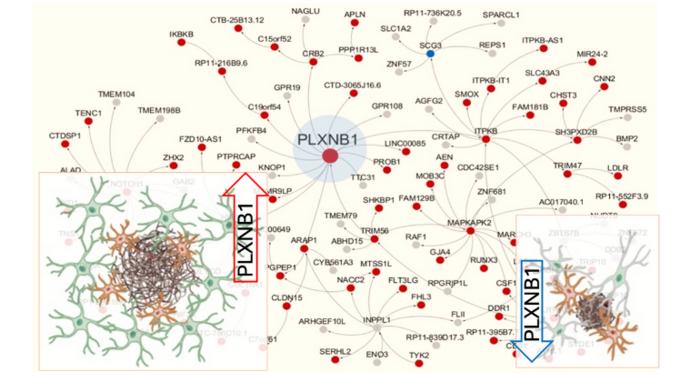
Zou said one team on the study analyzed millions of data sets to determine the role of plexin-B1. Once researchers reached a level of confidence the protein was responsible for cellular spacing, they genetically removed it from mutant mice.
“It was good for the mouse patient,” Zou said. “The number of amyloid plaques were reduced and the overall plaque burden was reduced. And if you look at the plaque characteristics, it seems like they’re smaller and more compact. The smaller and more compact plaque is good for the patient, because the bigger the plaque, the more likely they’re going to cause damage.”
The test has yet to be replicated in humans, but the research concluded that “relaxing glial spacing by targeting guidance receptors may present an alternative strategy to increase plaque compaction and reduce neuroinflammation” in Alzheimer’s patients.
The Centers for Medicare and Medicaid Services recently approved a monoclonal antibody treatment for Alzheimer’s patients which also targets plaques, Zou noted, although results have been mixed.
Zou said the research is ongoing and her team is working to identify “a small list of compounds that may target or inhibit the function” of plexin-B1.
“We are actually about to screen through those to see if any mimic the genetic knockout” of the plexin-B1 protein, Zou said, adding researchers are also developing a function-blocking antibody that may also soon be approved by Medicaid.
In a press release, co-author Bin Zhang said the study “lays a solid foundation for developing novel therapeutics targeting such highly predictive network models.”
“Our ultimate goal," Zhang said, “is to develop treatments that can prevent or slow down Alzheimer’s progression.”
 Follow @gabetynes
Subscribe to our free newsletters
Our weekly newsletter Closing Arguments offers the latest about ongoing trials, major litigation and rulings in courthouses around the U.S. and the world, while the monthly Under the Lights dishes the legal dirt from Hollywood, sports, Big Tech and the arts.