
 Search Articles


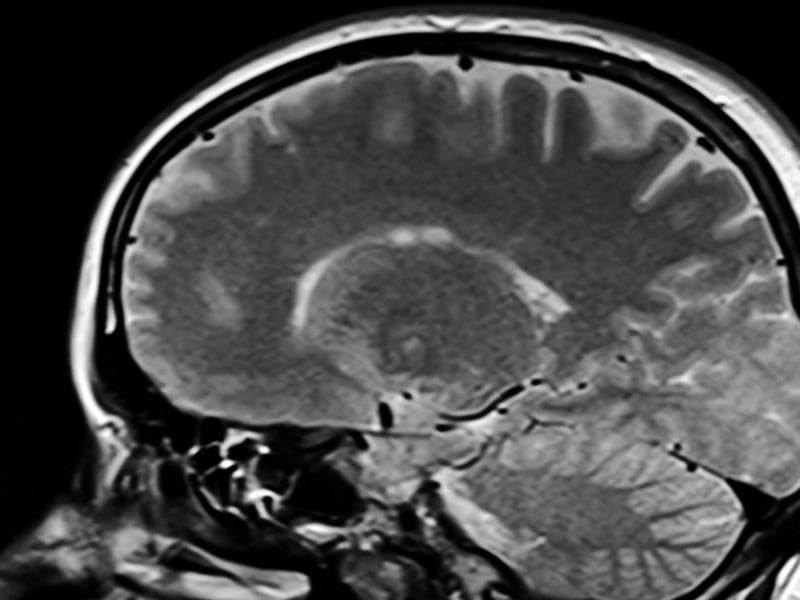
(CN) — Washington University researchers say they have made an important breakthrough in studying and potentially treating the most common form of Alzheimer’s disease with a technique called cellular reprogramming, described in a paper set to appear Friday in the journal Science.
Researchers at the university’s School of Medicine in St. Louis used the new method to study the effects of aging on neurons in people with late-onset Alzheimer’s. They turned skin cells taken from late-onset Alzheimer’s patients into neurons in a way that retained the cells’ age-related signatures, making it possible to study how the disease affects brain cells without the risks of brain biopsies.
“Sporadic, late-onset Alzheimer’s disease is the most common type of Alzheimer’s disease, representing more than 95% of cases,” senior author Andrew Yoo said in a statement. “It has been very difficult to study in the lab due to the complexity of the disease stemming from various risk factors, including aging as an important contributor. Until now, we did not have a way to capture the effects of aging in the cells to study late-onset Alzheimer’s.”
The researchers said this approach could help them study the disease and work toward new treatment strategies.
Alzheimer’s disease is the fifth-leading cause of death for Americans over 65. Yet even though late-onset Alzheimer’s is by far the predominant form of the disease, scientists have had only limited ways to study how age affects the brain cells of these Alzheimer’s patients.
While animal models have helped in the study of early-onset Alzheimer’s, a much rarer form of the disease that affects people under 65 and is caused by certain genetic mutations, they are of limited use for studying late-onset Alzheimer’s, the causes of which are less well understood.
The researchers found neurons made from skin cells can grow in a thin gel layer or self-assemble into small clusters called spheroids, mimicking the 3D environment of the brain. They created spheroids from late-onset Alzheimer’s patients, inherited Alzheimer’s patients and healthy individuals of similar ages. For the first time, neurons made in a lab accurately reproduced the hallmarks of Alzheimer’s disease, including protein plaques and cell death.
The scientists found that “jumping genes” — small pieces of DNA that move to different parts of the genome — associated with aging could contribute to the development of late-onset Alzheimer’s.
They used the antiretroviral drug lamivudine to inhibit the jumping genes, which reduced protein deposits and neuron death in the spheroids from late-onset Alzheimer’s patients. The same treatment had no effect on spheroids from inherited Alzheimer’s patients, suggesting that late-onset Alzheimer’s has distinct molecular features.
The researchers are planning future studies involving spheroids with multiple types of brain cells.
“We look forward to using this model system as we work toward new personalized therapeutic interventions for late-onset Alzheimer’s disease,” Yoo said.
Subscribe to our free newsletters
Our weekly newsletter Closing Arguments offers the latest about ongoing trials, major litigation and rulings in courthouses around the U.S. and the world, while the monthly Under the Lights dishes the legal dirt from Hollywood, sports, Big Tech and the arts.