
 Search Articles


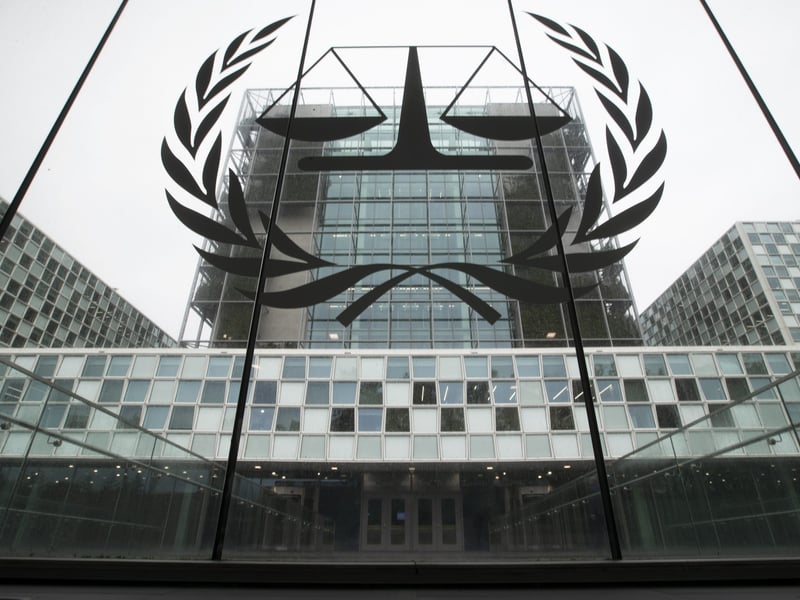
THE HAGUE, Netherlands (CN) — When U.S. President Donald Trump brought back sweeping sanctions on Feb. 6, 2025, the International Criminal Court was already facing some of its most politically charged cases. The timing put judges and prosecutors directly in Washington’s sights.
The court, created by the Rome Statute in 1998 and operating in The Hague since 2002, is the first permanent tribunal for the world’s most serious crimes. It hears cases of genocide, crimes against humanity, war crimes and aggression. Today, 124 countries are members — but the U.S., along with other military powers such as China, Russia, Turkey, Israel, Saudi Arabia, North Korea, Iran and India, do not recognize the court’s jurisdiction.
That mandate has often put the ICC on a collision course with powerful states. It opened an investigation into crimes by U.S. forces in Afghanistan, and more recently issued arrest warrants for Israeli Prime Minister Benjamin Netanyahu and Defense Minister Yoav Gallant over the war in Gaza. Hitting both America and its close ally struck a nerve in Washington.
Those clashes quickly turned into concrete measures once Trump returned to office. In June, four ICC judges were blacklisted. By late August another two judges and two deputy prosecutors were added, all linked to cases touching on U.S. and Israeli actions.
The moves drew sharp pushback. The ICC blasted the sanctions as an attack on its independence and said it would keep carrying out its mandate under international law. The court pledged to stand with its staff and the victims it serves, and urged member states and supporters of international justice to rally behind its judges and prosecutors. European leaders also stepped forward with words of support.
Inside the court, the jump from looming threat to real enforcement came as a shock, according to an ICC insider who asked not to be named for professional reasons.
“It was one thing to face the possibility of sanctions, and quite another to see the prosecutor listed on the U.S. Treasury’s Office of Foreign Assets Control website as a specially designated national,” the insider said.
Warnings turn real
The impact came fast. ICC Prosecutor Karim Khan, who has stepped aside pending an external investigation into sexual misconduct, suddenly lost access to his official email after Microsoft shut down his account, forcing him onto a Swiss provider, according to the Associated Press. His bank accounts in the U.K. were frozen. The AP also reported that American staff members were warned they could face arrest if they set foot in the United States. Some NGOs even broke ties entirely, with one group instructing its members not to reply to messages from the court.
The unease spread beyond those directly targeted. The ICC insider said colleagues feared that even routine cooperation with a sanctioned official might land them in trouble. Some backed away from sensitive cases, particularly those touching on investigations in Palestine and Afghanistan. Others, especially those with family or financial links to the U.S., decided to leave altogether.
The effect mirrored what had happened during Trump’s first term. Then, too, prosecutors and advisers either quit or lowered their profiles, fearful of drawing Washington’s attention. This time, however, judges were on the list, raising the stakes further.Former ICC prosecutor Alex Whiting, now a Harvard Law professor, says the sanctions place enormous strain on both the court and the people inside it. He added that the designations are “extraordinarily burdensome on the individuals targeted because it affects many parts of their lives, including their ability to conduct financial transactions.”
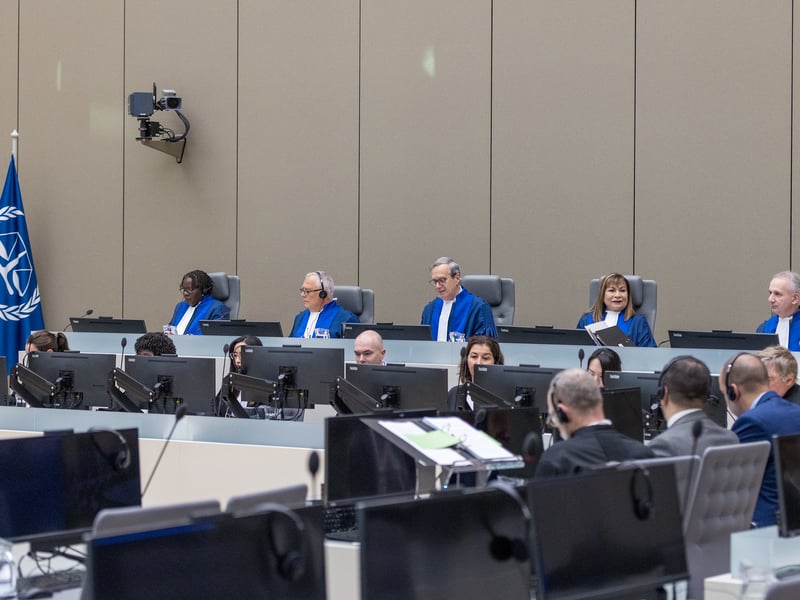
The pressure doesn’t stop there. Partners and supporters may think twice about working with the court, worried they could face penalties.
More than 900 staff from about 100 nations keep the court running. Its work is divided among four main branches: the presidency, the judges, the prosecutor’s office and the registry.
Still, Whiting stressed that the ICC “continues to do its work investigating cases, issuing arrest warrants, effectuating arrests, trying accused individuals and rendering judgments.”
The ripple effect
For Benjamin Thorne, an assistant professor in criminal law at the University of Reading in England, the concern is not only those already sanctioned but those who might be drawn into what he calls a “web of sanctions.”
He warned: “If enough individuals, and possibly partners in different facets of the court’s sphere, become sanctioned, it would become very difficult for non-sanctioned individuals, groups and organizations to know how to continue engaging with the court without tripping into the web of sanctions. This could eventually halt the court’s ability to function meaningfully and have a similar effect as sanctioning the court itself.”
Some observers also note the ambiguous and unintended effects of sanctions. Patryk Labuda, a professor of international law and international relations at Central European University in Vienna, Austria, pointed out that they can also provide a boost.
“U.S. sanctions are a threat to the ICC’s operations, but the court continues to do its work as best it can. In some ways, the sanctions have the opposite effect, bolstering the ICC’s credibility and standing among constituencies that remain critical of some aspects of its work. In that sense, the sanctions have almost a ‘rally-around-the-flag’ effect, because even friendly skeptics understand that the ICC needs to be defended against bad faith attacks from Trump.”
At the same time, Labuda stressed it is still too soon to know how the moves will play out. The long-term result could be a stronger sense of solidarity around the court — or just as easily, a more cautious pulling back.
Europe’s line in the sand
In Brussels, the response was swift. On the very day the first sanctions hit, European Commission President Ursula von der Leyen declared the ICC “a cornerstone of international justice.”
The European Commission doubled down in a statement to Courthouse News. Anitta Hipper, spokesperson for foreign affairs and security policy, said the ICC remains central to the fight against impunity. She warned that “attacks or threats against the court, its officials, staff or those cooperating with it are not acceptable,” adding that the commission will fully support efforts to protect the court from external pressure.
When asked whether the EU might use a law that seeks to shield European companies and individuals from the reach of U.S. sanctions, Hipper explained that “when it comes to the blocking statute, we are in constant exchange with member states. We will be monitoring the implications of the executive order and will assess possible further steps.”
The Dutch Ministry of Foreign Affairs told Courthouse News in a statement that it disapproves of the renewed U.S. sanctions on ICC officials and emphasized that “independent international courts and tribunals must be able to carry out their work without hindrance.” The ministry said it continues to stand firmly behind the court but would not go into specifics, noting that such work has to be handled confidentially.
So far, however, European governments have offered mostly words rather than concrete protections, leaving the court to navigate risks largely on its own. Thorne observed that after strong reactions in February, momentum has faded. “Since then, and particularly in the aftermath of the sanctions in June and in August, there has been a slower and more lukewarm response,” he said.
Thorne added that the gap between words and action matters. “States regularly say that impunity for mass violence cannot be tolerated. They stress that accountability and justice are essential for the most serious international crimes. But this is not always followed through with tangible action,” he said.
Between defiance and survival
Within the ICC, the mood is one of steady persistence. Trials move forward, judgments are delivered and investigations continue. Yet the work now carries an added layer of vigilance, with staff more careful about how they go about their day-to-day tasks. As the insider put it, those who stayed “just tried to keep the work going, but with much more caution.”
The question now is whether governments that claim to defend the rule of law will do more than issue statements. Without firmer backing, the court risks being undermined not in the courtroom but in the background systems that allow it to function, such as banks, airlines and vendors.
For now, the ICC keeps moving, case files in hand, even as sanctions shadow every decision. The insider was blunt: “The only way to avoid the negative consequences is to give in to the United States. But if you give in to the United States, then again, the court shouldn’t exist anymore. It would be better to not have an ICC than to have an ICC that is only allowed to investigate what the United States approves of.”
He acknowledged that the court will likely “muddle along” and fall short of what it could achieve, but insisted there is no alternative. “You just have to keep your head down and keep doing the work. And hopefully there’s enough people that are brave enough to risk the consequences of that.”
Courthouse News reporter Eunseo Hong is based in the Netherlands.
Subscribe to our free newsletters
Our weekly newsletter Closing Arguments offers the latest about ongoing trials, major litigation and rulings in courthouses around the U.S. and the world, while the monthly Under the Lights dishes the legal dirt from Hollywood, sports, Big Tech and the arts.