Search Articles


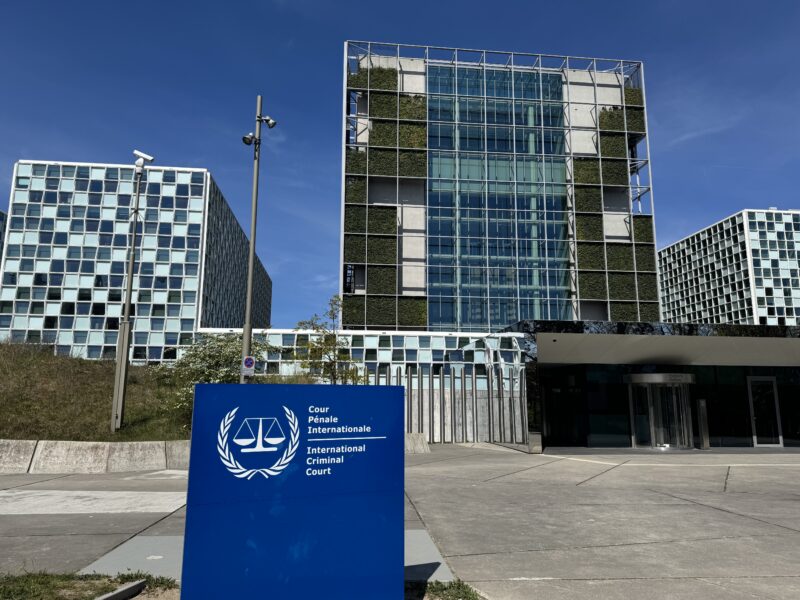
THE HAGUE, Netherlands (CN) — Frozen bank accounts, canceled credit cards and blocked travel led three International Criminal Court judges to sue the Trump administration Wednesday, arguing they were punished simply for the cases they decided.
In the 66-page complaint, filed in U.S. District Court for the Southern District of New York, the trio asks a judge to strike down President Donald Trump’s sanctions order, remove Judges Kimberly Prost, Solomy Bossa and Reine Alapini-Gansou from the U.S. sanctions list, unblock any frozen property and bar the government from enforcing the measures against them.
In a statement released with the lawsuit, the judges said the sanctions had “deeply affected many aspects of our personal lives” and called them “an attack on judicial independence and a threat to the important work of the court to deliver justice for victims of grave crimes.”
The International Criminal Court, created in 2002 to prosecute people accused of the world’s gravest crimes when national courts cannot or will not act, is the world’s only permanent international criminal tribunal.
The ICC judges argue the sanctions were designed to punish judges for decisions the administration disliked and pressure them to rule differently in the future.
“The sanctions regime punishes Judges Prost, Bossa and Alapini-Gansou for having done nothing more than — when called upon to adjudicate matters before them — faithfully discharge their judicial offices by rendering decisions with which the administration disagrees,” the judges say.
After months of watching others challenge the sanctions, the first lawsuit by sanctioned ICC judges themselves has now arrived. Earlier lawsuits by U.S. human rights advocates resulted in rulings barring the administration from enforcing the order against Americans providing speech-based services to the ICC.
Trump signed Executive Order 14203 on Feb. 6, 2025, after the ICC pursued investigations involving U.S. personnel in Afghanistan and Israeli leaders over the war in Gaza. The order declared a national emergency and authorized sanctions against foreign nationals involved in ICC investigations or prosecutions targeting U.S. citizens or nationals of allied countries that do not recognize the court’s jurisdiction.
The administration first sanctioned ICC Prosecutor Karim Khan before expanding the list to include the court’s two deputy prosecutors, eight judges, U.N. Special Rapporteur Francesca Albanese and three Palestinian human rights organizations: Al-Haq, Al Mezan Center for Human Rights and the Palestinian Centre for Human Rights.
Although the sanctions formally freeze U.S.-based assets and bar Americans from providing funds or services, the judges say they ripple far beyond the United States because global banks, payment systems and technology companies rely heavily on the U.S. financial system.
According to the judges, they lost access to bank accounts, credit cards and online services, struggled to book travel, saw financial transfers blocked and, in some cases, lost health insurance. Prost says HSBC froze her New York account, companies including Amazon, Google and Expedia restricted or closed her accounts, and she had to cancel speaking engagements at Fordham University, Vanderbilt University and other U.S. institutions. Bossa says her longtime United Nations Federal Credit Union account in New York was frozen, while Alapini-Gansou says the sanctions disrupted her banking, travel and professional activities and forced her to increase personal security.
The judges also say the sanctions interfere with the ICC’s work because Americans risk severe penalties for providing services to designated individuals, making it harder to gather evidence, receive legal submissions and carry out court proceedings.
The judges say the administration’s objective is “to punish these judges for past decisions and to pressure them and their colleagues on the bench to render future decisions more to the administration’s liking.”
The judges attack the sanctions from multiple angles. They argue Trump exceeded the authority Congress gave him under the International Emergency Economic Powers Act because the ICC does not pose the kind of “unusual and extraordinary threat” needed to trigger emergency sanctions. They also say the measures clash with other federal laws governing U.S. policy toward the ICC, violate the Fifth Amendment by freezing property without due process and are arbitrary and unlawful under the Administrative Procedure Act.
The judges claim the sanctions strike at the independence of international courts by punishing them for carrying out their judicial duties. They also argue the order disrupts ICC investigations that Republican and Democratic administrations alike have backed over the years, including cases involving Sudan, Libya, Uganda, Mali, the Democratic Republic of the Congo and Ukraine.
Each judge was sanctioned over a different decision. Prost and Bossa joined a 2020 appeals ruling that allowed the ICC prosecutor to investigate suspected war crimes and crimes against humanity in Afghanistan. Alapini-Gansou sat on the panel that approved arrest warrants for Israeli Prime Minister Benjamin Netanyahu and former Defense Minister Yoav Gallant.
The case now heads into the next phase of federal litigation. The Justice Department is expected to respond next, after which the district court will decide whether the judges are entitled to the declarations and injunction they seek. Any appeal would go to the Second Circuit and could ultimately reach the U.S. Supreme Court.
Courthouse News reporter Eunseo Hong is based in the Netherlands.
Subscribe to our free newsletters
Our weekly newsletter Closing Arguments offers the latest about ongoing trials, major litigation and rulings in courthouses around the U.S. and the world, while the monthly Under the Lights dishes the legal dirt from Hollywood, sports, Big Tech and the arts.