
 Search Articles


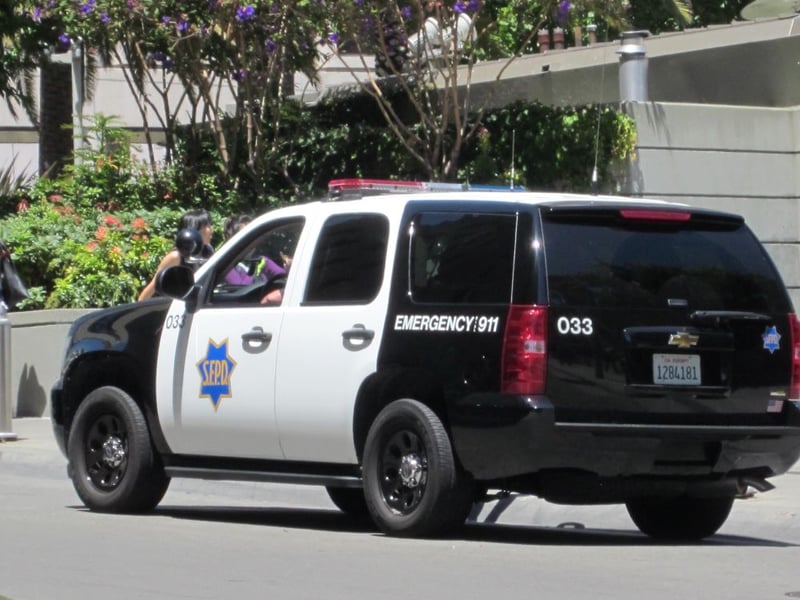
SAN FRANCISCO (CN) — A San Francisco Police Department officer asked a federal judge to dismiss an excessive force lawsuit filed against him by an unarmed man he shot on the ground in 2019.
SFPD officer Christopher Flores argued Monday morning that he was within his rights to shoot Jamaica Hampton, a San Francisco man who attacked Flores and a fellow officer in the Mission District with a vodka bottle in the midst of a mental health crisis in December 2019. Hampton’s bottle attack left Flores bleeding from his head.
In his complaint, Hampton claims that he was already shot by Flores’ partner, SFPD Officer Sterling Hayes, after a short pursuit and was lying on the ground unarmed and defenseless when Flores drew his gun and shot Hampton while he was crawling. Hampton claims he had to have his left leg amputated and suffered severe damage to his arm as a result of the shooting.
Surveillance and body camera footage of the encounter shows Hampton lying on the ground before Flores approaches with his gun drawn. He fires a single shot into a crawling Hampton from roughly five yards away while Hayes repeatedly yells “Stop! Stop! Stop!”
Lucia Li, counsel for Flores, said that the suit should be dismissed because Flores did not know if Hampton was going to get up and continue his attack after he was initially shot.
“Other than falling to the ground, Mr. Hampton did not in any other way indicate that he was injured or incapable of further attack. He continued to run throughout the initial volley of shots by Officer Hayes, which again indicates that he may or may not have been struck or not injured, and even on the ground, he was not immediately stopped or immobilized,” Li said. “He immediately rolled forward and attempted to stand up, thus continuing his attack on not only Officer Hayes, but Officer Flores reasonably perceived that his actions do constitute an imminent threat.”
Attorney Ty Clarke, representing Hampton, said that merely attempting to stand up does not mean Flores was in danger. He noted that Hampton had dropped the bottle and was completely unarmed at the time of the shooting.
“Our position would be that being on one’s hands and knees or attempting to stand up, which we don’t concede, does not constitute an immediate threat. Every case that the defendants cite in their motion involve decedents or plaintiffs advancing on an officer not being on the ground,” Clarke said.
U.S. Magistrate Judge Sallie Kim then brought up that it appeared that Hampton was getting up on one knee before he was shot, but Clarke said that the exact positioning of Hampton before the shot is a material fact that a jury should decide.
“Just because Jamaica Hampton posed a threat at one point, doesn’t mean that they can use deadly force at any point in the encounter,” Clarke said.
Kim then asked Li if Hayes’ plea to Flores to stop shooting Hampton harmed Flores’ self-defense claim, but Li answered that Hayes’ assertions were irrelevant because he had turned his back to Hampton and did not see him attempting to get up.
“Whether or not he believed that his shots sufficiently addressed the threat that Mr. Hampton posed in that moment is irrelevant to what was perceived by Officer Flores and what is shown in the video,” Li said. “He just simply did not see Mr. Hampton getting back up and that he was continuing his attack, and the eminence of the threat faced by Officer Flores at the time he made the decision to shoot.”
On rebuttal, Clarke said that the case does not rise and fall with Hayes’ assessment of Flores’ actions, but that it is a factor that needs to be considered by a jury in a potential trial.
San Francisco District Attorney Brooke Jenkins dismissed criminal charges against Flores in 2023, stating that she could not prove beyond a reasonable doubt that Flores was not acting in self-defense. The criminal charges were filed by Jenkins’ predecessor, Chesa Boudin.
Subscribe to our free newsletters
Our weekly newsletter Closing Arguments offers the latest about ongoing trials, major litigation and rulings in courthouses around the U.S. and the world, while the monthly Under the Lights dishes the legal dirt from Hollywood, sports, Big Tech and the arts.