
 Search Articles


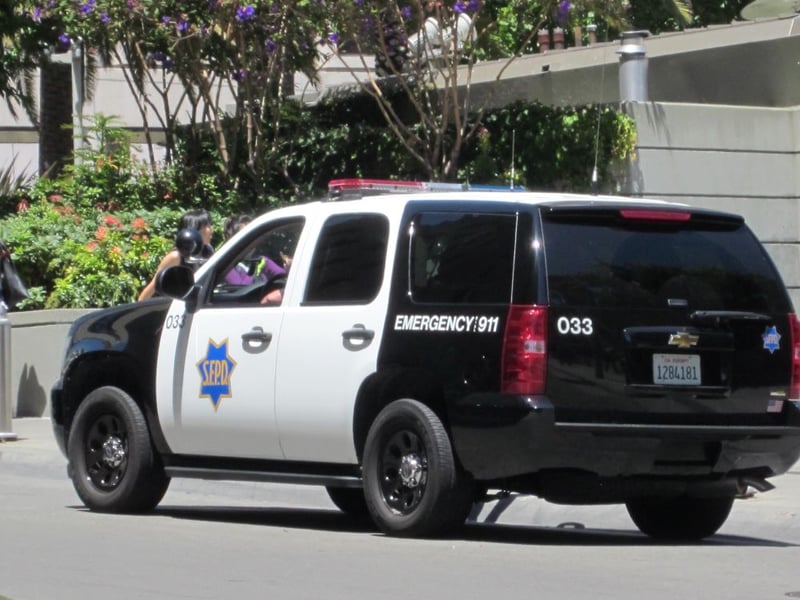
SAN FRANCISCO (CN) — A San Francisco man is suing the city and its police department, claiming the city’s network of hundreds of automated license plate readers is unconstitutional and violates state law.
In a class action filed Sunday in the Northern District of California, plaintiff Michael Moore said San Francisco’s network of nearly 500 automated license plate readers, or ALPRs — fast, computer-controlled cameras that capture photos of every license plate that passes — constitutes “warrantless and unreasonable surveillance,” a violation of the Fourth Amendment.
“Tracking the whole of a person’s public movements over (at least) 30 days is a search,” Moore said in the complaint, adding, “And because defendants have engaged in this surveillance without a warrant — instead letting individual SFPD officers decide for themselves when and how to access an unprecedented catalogue of every person’s movements throughout San Francisco and beyond — its searches are unreasonable. This is exactly the type of police surveillance the Fourth Amendment was adopted to prevent.”
Moore argues that Flock’s cameras can create a “detailed record” of his movements around the city, who he associates with and which routes they travel, which can be accessed by any SPFD officer without a warrant or probable cause.
“Plaintiff routinely drives past some of the many Flock cameras posted at undisclosed locations throughout San Francisco. Images of plaintiff’s car and the associated data about his movements are stored in a database accessible to any SFPD officer, as well as anyone else the SFPD has either knowingly or unwittingly granted access,” he said in the complaint.
“Flock users can leverage this information to follow plaintiff’s movements throughout San Francisco, and even throughout other jurisdictions that let Flock pool their data.”
According to Flock’s SFPD Transparency Portal, the data the cameras collect is owned by SFPD and retained for up to 365 days. The portal also states that the data is only used for law enforcement purposes, is prohibited from being used for other purposes — including immigration enforcement, traffic enforcement or personal use — and that system access requires a “valid reason.”
Moore additionally claims San Francisco’s Flock cameras violate California law prohibiting state or local agencies from sharing automated license plate information to out-of-state agencies, citing a Sept. 8 article by The San Francisco Standard, which reported that out-of-state agencies had access to the city’s Flock system between at least August 2024 and February 2025, with at least 19 searches marked as “related to Immigration and Customs Enforcement.”
“By unlawfully sharing such location information, defendants are enabling out-of-state and federal agencies to track, locate, and potentially prosecute California residents and visitors, including for purposes expressly prohibited by the U.S. Constitution and California law,” Moore said.
Moore added that concerns over Flock cameras tracking people’s moves are “particularly” acute under the Trump administration, “now well-known for exploiting national surveillance to quash political dissent.”
He is asking the court to block the city from operating Flock cameras and order all images and data recorded by the cameras to be deleted. He also seeks to prohibit the city from accessing any Flock images or data without first obtaining a warrant.
A representative for Moore did not immediately respond to a request for comment.
In a statement to Courthouse News, Alex Barrett-Shorter, deputy press secretary for San Francisco City Attorney David Chiu, said that they take privacy “very seriously” and will review the complaint once it is served.
“San Francisco has taken steps to ensure law enforcement agencies outside of California are not able to access SFPD’s Flock Automated License Plate Reader data,” she said.
Barrett-Shorter also referred to the Flock’s SFPD Transparency Portal, which she said “confirms only agencies within California are able to access SFPD’s data.”
A representative for SFPD declined to comment due to open litigation.
 Follow @mhattridge_
Subscribe to our free newsletters
Our weekly newsletter Closing Arguments offers the latest about ongoing trials, major litigation and rulings in courthouses around the U.S. and the world, while the monthly Under the Lights dishes the legal dirt from Hollywood, sports, Big Tech and the arts.