
 Search Articles


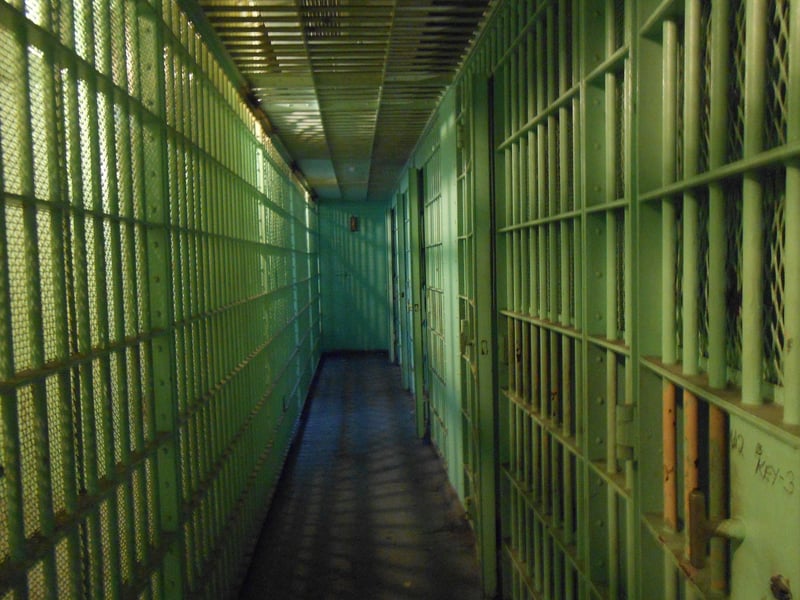
SAN FRANCISCO (CN) —Two San Francisco jail detainees testified Tuesday about being held for years without access to sunlight or any form of exercise during a trial in a class action against the city and county of San Francisco.
In May 2019, pretrial detainees who were housed either at the now-defunct San Francisco Hall of Justice or at a facility in nearby San Bruno sued San Francisco claiming their constitutional rights were violated due to the lack of exposure to natural light. The situation deteriorated further during the Covid-19 pandemic, they claim.
The San Francisco Sheriff’s Department argues security concerns prevent outdoor exercise at both detention facilities. They claim to lack sufficient personnel to supervise inmates at the San Bruno facility during outdoor activities.
Plaintiffs Montrail Brackens and Jose Poot took the stand during the bench trial in front of U.S. Magistrate Judge Sally Kim. They seek to represent the class of prisoners housed at county jails 4 and 5 and want a judge to order daily mandatory out-of-cell times.
Brackens and Poot both claim they suffer from severe psychological distress, obesity, and other health problems because of their lack of access to natural light or exercise.
Poot, testifying through a Spanish interpreter, said he estimates he has only received “20-30 seconds” per year of sunshine on his skin since his incarceration in 2016. He said he only sees the sun when he is bussed to court from jail.
He testified of having memory problems and persistent headaches, and said he sometimes forgets the names of those he is housed with in jail. He doesn’t eat, is always tired, and has lost pleasure in all activities.
“I don’t feel like doing anything,” he told his attorney, Yolanda Huang.
Poot said he is of Mayan descent and identifies as “dark skinned,” but said he is “very pale” compared to the way he used to look. He was diagnosed with a vitamin D deficiency by jail medical staff but said he stopped taking the pills because they caused dizziness. In addition to the psychological symptoms, he said his bones constantly ache. He did not have these symptoms before his incarceration, he told Huang.
During cross-examination, defense attorney Kaitlyn Murphy asked Poot if any medical professional ever told him the vitamin D pills were the cause of his dizziness. Poot replied that he stopped taking them of his own accord.
In addition to the psychological symptoms, Poot said he’s gained about 50 pounds since he was arrested even though he barely eats.
Brackens testified after Poot. He was originally arrested in 2012, and said he has never been allowed outside for any purpose while he has been in custody.
He testified that even though he is 5 feet, 9 inches tall, and he can touch both walls in his cell if he stretches out his arms. He said he shares the cell with another inmate who is 6 feet, 2 inches tall.
Brackens said he gained 60 pounds during his confinement, and that he now has diabetes and blood-pressure problems that he did not have when he was arrested.
Once diagnosed as diabetic, Brackens said jail medical personnel told him to eat a better diet and exercise, but that it was impossible to do so under the conditions of his incarceration. He said he was told to “make it work.”
“I tried to change my diet, but there’s only so many things you can eat in jail. I’d exercise, but there’s no motivation to exercise when you’re in that confined space,” Brackens said. “I tried to fast, but when I fasted I was hospitalized.”
Brackens spent a week in the hospital with diabetic ketoacidosis, a life-threatening problem that occurs when the body starts breaking down fat too quickly and causes the blood to become acidic. He said he needs insulin shots now.
“I was on the verge of dying, basically," Brackens testified.
Also Tuesday, former San Francisco Sheriff Ross Mirkarimi testified as an expert witness regarding procedures of the Sheriff’s Department.
Mirkarimi said there is currently no outdoor exercise space at the San Bruno jail, and that cells do not have access to fresh air.
“People who are locked up, 23 almost 24 hours a day, there is wide evidence that I have read, that there are deleterious effects on the behavioral mental health of an inmate, especially when they get out,” Mirkarimi said.
He said the use of solitary confinement at San Bruno has tripled, in his estimation, since 2014, because of staffing issues. Jails across the country have staffing issues, he said. If staffing falls below a certain level, out-of-cell activities are suspended for inmates.
Defense attorney Sabrina Berdux accused Mirkarimi of being biased against the city because he was suspended and convicted of false imprisonment in an incident involving his wife during his time as sheriff. Mirkarimi replied that he still cares about the city and the past did not bias him.
Berdux then revealed that Mirkarimi was paid a $10,000 lump sum for his testimony by the plaintiffs, as well as a $500 hourly fee.
The bench trial continues tomorrow and into next week. Current Sheriff Paul Miyamoto, a named defendant, is scheduled to testify Aug. 15.
Subscribe to our free newsletters
Our weekly newsletter Closing Arguments offers the latest about ongoing trials, major litigation and rulings in courthouses around the U.S. and the world, while the monthly Under the Lights dishes the legal dirt from Hollywood, sports, Big Tech and the arts.