
 Search Articles


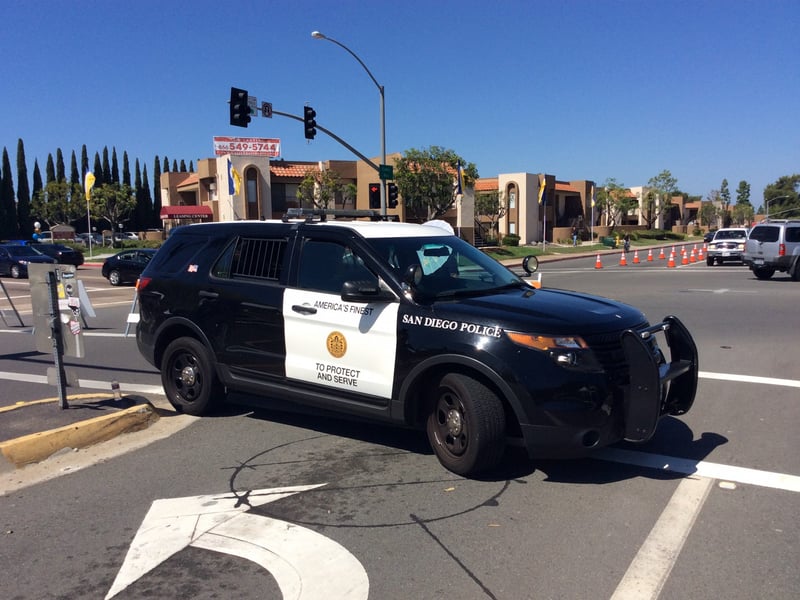
(CN) — A federal judge largely rejected the city of San Diego’s attempt to dismiss a lawsuit by a man who spent eight years in prison before being cleared of conspiracy to commit murder charges and now says police have targeted him since.
U.S. District Judge Anthony Battaglia, found that Nicholas Hoskins sufficiently claimed violations of his Fourth Amendment rights, including unreasonable search and seizure, excessive force and deliberate fabrication of evidence by San Diego Police Department officers.
“Although the court does not take legal conclusions as true, plaintiff provides sufficient factual allegations to state a claim for a violation of his Fourth Amendment right by state actors,” the Barack Obama appointee wrote.
The ruling allows Hoskins to proceed with the bulk of his claims stemming from a May 9, 2024, traffic stop in which he claims officers broke his passenger-side window, forcibly removed him from his vehicle, searched his car without a warrant, and arrested him for resisting arrest — all without reasonable suspicion or probable cause.
“A seizure conducted without a warrant is per se unreasonable under the Fourth Amendment — subject only to a few specifically established and well-delineated exceptions,” Battaglia wrote in his order.
The court dismissed one portion of Hoskins’ lawsuit involving claims based on due process and equal protection violations under California’s Bane Act, which prevents people from interfering with another’s constitutional rights by force or violence.
“Plaintiff’s references to due process and equal protection violate Rule 8 because they are ‘internally confusing,’ making it ‘impossible to determine if plaintiff is basing his claim on an alleged violation of his substantive due process rights, his procedural due process rights, or his equal protective rights,’” the judge wrote.
However, the judge granted Hoskins leave to amend those claims, suggesting he could refile them based on the same Bane Act theories of unreasonable search and seizure, excessive force and fabrication of evidence that the court found sufficient.
Hoskins filed the federal lawsuit in August 2024, claiming San Diego police stopped him four times in 14 months following his release from prison. The May incident occurred when he was driving from a community event to pick up his son from school. Officers said he didn’t come to a complete stop at a stop sign, which Hoskins disputes.
When officers demanded to search his car for weapons without probable cause, Hoskins reportedly told them, “There is nothing dangerous in this car, I am a Black male.” When he requested to speak to a supervisor, two additional officers surrounded his vehicle before one broke his passenger window and arrested him.
“Plaintiff alleges defendant officers wrote reports themselves or helped one another write reports that they knew contained fabrications about Mr. Hoskins and the encounter on May 9,” Battaglia said.
Battaglia found these arguments sufficient to support claims under both federal civil rights law and California’s Bane Act.
For Hoskins’ negligence claim, Battaglia said that “California recognizes that officers have a duty to act reasonably, including using reasonable force, when effectuating detentions and arrests.”
Hoskins’ case has drawn attention partly because of his background. In 2014, he was among 17 people charged with conspiracy to commit murder in connection with gang-related killings in San Diego. Despite no evidence that he committed or aided violence, prosecutors built their case largely on his social media posts, which they claimed he celebrated gang violence.
The California Supreme Court unanimously overturned his conviction in 2022, with Justice Leondra Kruger writing that being “a cheerleader, no matter how enthusiastic, is not a co-conspirator unless the prosecution can prove the cheering was intended to play some role in achieving the object offense.”
Michelle Cynthia Angeles, Hoskins’ attorney, previously said her client “is seeking justice for the violations of his constitutional rights” and wants to “bring transparency to the department’s practices.”
“This ruling reaffirms what we have said all along — Mr. Hoskins’ constitutional rights were violated and he deserves to be heard. The court’s decision allows us to move forward on the most critical claims, which involve deeply troubling conduct by San Diego police officers. We will continue to pursue justice for Mr. Hoskins and hold those responsible accountable,” Angeles, of McKenzie Scott PC, Hoskins’ attorney, said in an email after the ruling.
The court set a deadline of July 24 for Hoskins to file an amended complaint addressing the dismissed portion of his Bane Act claim. The city must respond to the operative complaint by Aug. 7.
The San Diego City Attorney’s Office did not respond to a request for comment.
 Follow @JeremyYurow
Subscribe to our free newsletters
Our weekly newsletter Closing Arguments offers the latest about ongoing trials, major litigation and rulings in courthouses around the U.S. and the world, while the monthly Under the Lights dishes the legal dirt from Hollywood, sports, Big Tech and the arts.