
 Search Articles


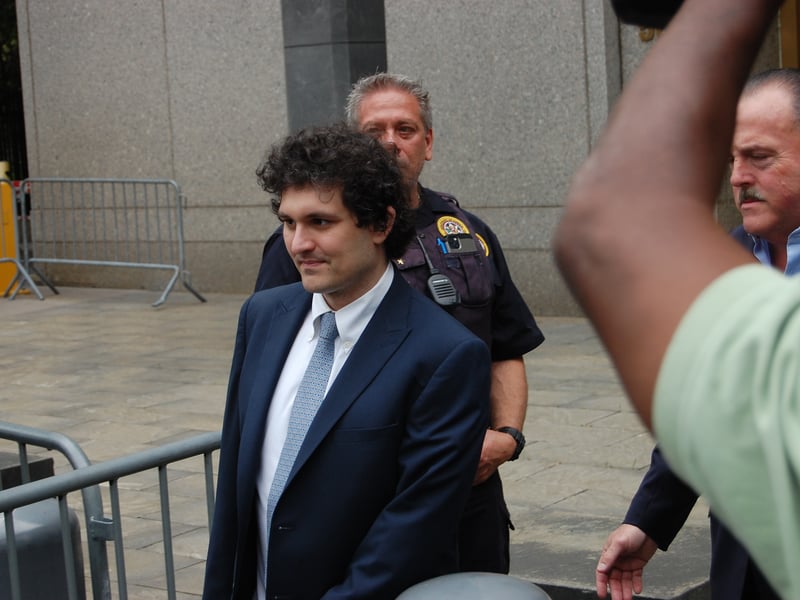
MANHATTAN (CN) — Attorneys for convicted cryptocurrency mogul Sam Bankman-Fried urged a federal appeals court on Tuesday for a redo of the criminal trial that landed him in prison for 25 years and to have a different judge preside over the retrial.
A New York City jury found Bankman-Fried guilty in 2023 of all seven criminal counts, including fraud and conspiracy, at his popular FTX cryptocurrency exchange platform.
On appeal before the Second Circuit Court of Appeals, Bankman-Fried seeks to have his convictions overturned and remanded for a new trial before a different, less prejudicial judge.
“Mr. Bankman-Fried’s trial was fundamentally unfair because the jury only got to hear one side of the story, the prosecution side, which was demonstrably false in a series of evidentiary and procedural rulings,” appellate defense attorney Alexandra Shapiro told a three-judge panel on Tuesday, nearly two years to the day after he was convicted. “The district court deprived Mr. Bankman-Fried of the most basic principle of due process, the ability to rebut the government’s case and present his defense to the jury.”
“The defense was cut off at the knees by the judge’s rulings,” the Shapiro Arato Bach LLP partner said.
Shapiro told the Second Circuit Bankman-Fried was “hamstrung” at trial by U.S. District Judge Lewis Kaplan limiting how much he could present an advice-of-counsel defense.
U.S. Circuit Judge Maria Araújo Kahn quickly interjected, “Now he clearly told the court he was affirmatively not relying on an advice of counsel defense, correct?”
“Yes and no,” Shapiro said. “So, a technical advice of counsel defense that might entitle one to the type of instruction discussed in Scully , yes, but he clearly was relying on the involvement of counsel.”
“I haven’t heard of a quasi-defense of counsel defense,” Kahn said. “You either rely on advice of counsel defense, or in this case, as I understood it, your client was trying to tell the judge that the presence of counsel was something he should talk about, and the court, in my reading of the district court opinion, went through the different types of charges and whether Mr. Bankman-Fried had actually testified that he didn’t ask counsel for advice on decision A and B.”
Shapiro argued it is “very well settled” that a defendant is entitled to present a defense based on the involvement of lawyers, whether or not he is claiming to have specifically relied on their advice.
“It’s evidence of good faith, and he was entitled to present that,” Bankman-Fried’s lawyer said.
U.S. Circuit Judge Barrington Parker questioned how Bankman-Fried’s hiring of attorneys was evidence of good faith.
“The fact that an attorney drafted a certificate of incorporation or drafted an agreement between two of the subsidiaries, help me understand how that is evidence relevant to any of the counts,” the George W. Bush appointee said.
“Are you seriously suggesting to us that if your client had been able to testify about the role that attorneys played in creating these various documents, the not-guilties would have rolled in on this record?” Parker asked later during oral arguments on Tuesday.
Bankman-Fried also argues on appeal that he believed in good faith at the time that his companies were actually solvent when he was making representations to FTX customers and investors.
Kahn rebutted Shapiro that the charged misrepresentations “were not to solvency, but liquidity.”
“So I’m struggling with part of the government’s theory of the case is that the defendant misrepresented to investors that their money was safe … that their money was not being used in the way that it was the government claims — and the jury convicted — was, in fact, used,” the Joe Biden appointee said. “So it wasn’t an issue of solvency, right? It was an issue of liquidity, whether they could get their money if they asked for it.”
Citing the Supreme Court’s ruling inKousisis v. United Statess, in which the high court found the state of Pennsylvania’s lack of an economic loss did not protect the contractors from facing federal fraud charges for their deception, Bankman-Fried argued in anappeal briefthat the district court excluded all defense evidence and argument he “intended to repay his customers, intended to return their funds, or believed that…he could ultimately repay them.”
Bankman-Fried argues he was never afforded the presumption of innocence in his high-profile criminal proceedings.
“He was presumed guilty — before he was even charged. He was presumed guilty by the media. He was presumed guilty by the FTX debtor estate and its lawyers. He was presumed guilty by federal prosecutors eager for quick headlines. And he was presumed guilty by the judge who presided over his trial,” Bankman-Fried’s lawyers wrote.
The U.S. Attorney’s Office for the Southern District of New York asked the Second Circuit to affirm both Bankman-Fried’s judgment of conviction and his forfeiture order.
The government argued on appeal that the $11 billion forfeiture amount “reflected funds Bankman-Fried fraudulently obtained and was not disproportionate to the gravity of Bankman-Fried’s offenses.”
Joined by U.S. Circuit Judge Eunice Lee, the three-judge appeal panel pressed the U.S. government for clarity on exactly how Bankman-Fried’s $11 billion forfeiture order weighs toward FTX customer victims’ losses, once the victims are made whole for their losses, and whether the total forfeiture amount was unconstitutionally excessive.
“This is an important issue to us, so you have to please stop bobbing and weaving on it,” Parker told Department of Justice lawyer Nathan Rehn.
Regarding the size of the forfeiture order, Rehn told the judges the court is required to compare the size of the forfeiture to the size of the defendant’s crime.
“And if you look at the factors that this court has applied, it considers things like, what would be the maximum fine that Congress would have allowed for this conduct, what was the loss to the victims of the crime,” he said. “And how does that compare to the forfeiture money judgment and here, because of the enormity of defendant’s crimes, you do end up with a very large forfeiture award, but that’s calibrated to the enormity of the defendant’s conduct, to the fact that he defrauded so many people of so much money that the forfeiture order reflects that right.”
The three-judge panel did not immediately rule from the bench on Tuesday.
Bankman-Fried, 33, was arrested in the Bahamas in December 2022, a month after the abrupt collapses of FTX, the cryptocurrency exchange platform he opened in 2019, and Alameda Research, the cryptocurrency hedge fund he started in 2017.
At trial, federal prosecutors accused Bankman-Fried of operating a “pyramid of deceit” that defrauded his companies’ customers, investors and lenders.
Prosecutors showed jurors evidence that Bankman-Fried spent billions of dollars of customer money on real estate purchases, straw donations to politicians, celebrity endorsements and publicity deals, in addition to large venture capital investments.
He faced a maximum of 115 years in prison on all counts, but Kaplan ultimately sentenced him in March 2024 to 25 years in prison.
Three former executives from FTX and Alameda — Alameda co-CEO Caroline Ellison, FTX co-founder Gary Wang and former FTX Director of Engineering Nishad Singh — each pleaded guilty to criminal charges and testified at trial as key prosecution witnesses, under cooperation agreements.
 Follow @jruss_jruss
Subscribe to our free newsletters
Our weekly newsletter Closing Arguments offers the latest about ongoing trials, major litigation and rulings in courthouses around the U.S. and the world, while the monthly Under the Lights dishes the legal dirt from Hollywood, sports, Big Tech and the arts.