
 Search Articles


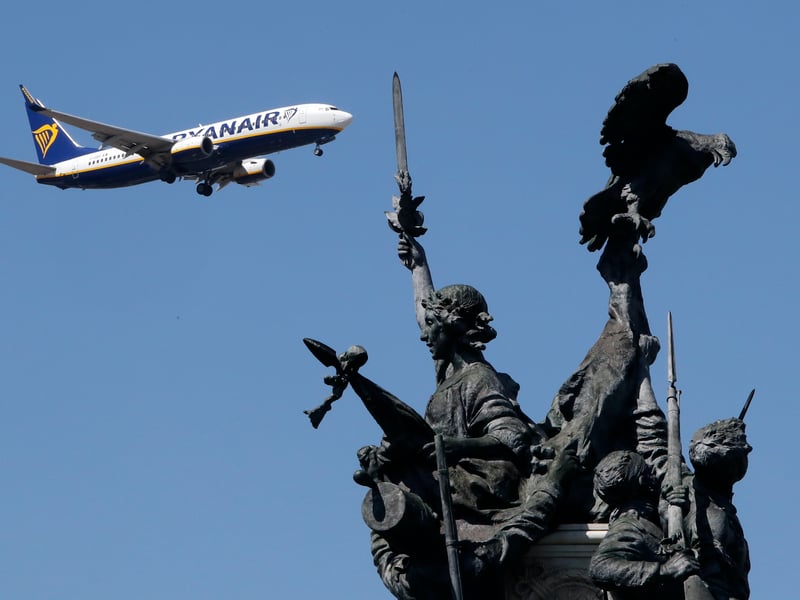
(CN) — Ryanair’s bid to undo Portugal’s Covid-era lifeline for TAP ran out of runway Wednesday, after EU judges backed Brussels’ approval of the bailout that kept the flag carrier in the air.
In its ruling, the General Court of the European Union said the European Commission’s multibillion-euro package struck the right balance between public support and the airline’s own recovery efforts.
The judges agreed the aid was necessary and proportionate under the EU’s restructuring aid guidelines, which are designed to rescue companies in trouble without giving them an unfair edge.
Ryanair had claimed the 2.55-billion-euro ($2.97 billion) bailout broke EU rules, arguing it unfairly shielded TAP from rivals and let Portugal keep control without bringing in enough private money. The low-cost carrier said the deal tilted the playing field at the expense of competition.
But the General Court of the European Union saw it differently. The judges said the Commission had carefully weighed alternative scenarios before signing off on Portugal’s plan, and found no clear error in its conclusion that rescuing TAP was both necessary and appropriate.
They also accepted that TAP’s financial troubles were dramatically worsened by the collapse in air travel, with no sign the losses had been shuffled around inside the group.
Ryanair’s procedural attacks fell flat as well. The court ruled that Brussels had given enough reasoning to back its decision and was not required to disclose confidential financial data to rival airlines.
Crisis aid rules tested in court
At the core of the dispute is the EU’s Temporary Framework, the emergency rulebook rolled out in March 2020 as Europe’s economy went into free fall. It gave governments room to prop up companies crushed by lockdowns and travel bans, allowing everything from state-backed loans to recapitalizations.
For the biggest rescues, the aid had to be temporary, tied to restructuring and structured so shareholders and creditors shared part of the burden.
Major airlines were among the biggest beneficiaries. Germany shored up Lufthansa with a roughly 6-billion-euro recapitalization. France injected about 7 billion euros into Air France, while the Netherlands added several billion more on its side of the group.
In Italy, the government let Alitalia wind down and launched a new state-backed carrier, ITA Airways. Brussels signed off on those measures under pandemic state aid rules, arguing that air transport was too vital to let collapse at the height of the crisis.
Ryanair emerged as the most aggressive challenger of the policy, filing more than 20 lawsuits across Europe. Some paid off, including court rulings that initially annulled Commission approvals for aid to Condor and KLM. But in many other cases, like this one, judges have upheld Brussels’ broad discretion during the pandemic.
In the TAP case, the judges zeroed in on balance. They acknowledged that Portugal’s plan relied heavily on public money, but found that the state had little choice, given that private backers were not in a position to rescue the airline on market terms.
The court also backed the Commission’s decision to require painful trade-offs, including trimming TAP’s fleet and cutting loss-making routes to restore viability.
Ryanair strategy hits limit
Sandra Marco Colino, an associate professor of law at the Chinese University of Hong Kong, said the case fits within Ryanair’s broader campaign against state aid for rival airlines. She noted that while the company has won some of those challenges, this one highlights the limits of that strategy.
“The key questions were whether the aid was necessary and proportionate,” she said, adding that the court accepted the Commission’s detailed review showing that TAP’s rescue met those strict conditions.
Colino said the judgment also signals that Brussels must continue to “conduct a very thorough assessment of the financial aid offered to airlines to ensure that the funds do not distort the level playing field,” while still recognizing the need to keep the sector stable after the pandemic shock.
A European Commission spokesperson said Brussels “takes note of today’s judgment of the General Court that dismisses in full Ryanair’s challenge against the legality of the Commission decision.”
The spokesperson added that the ruling confirmed all of the Commission’s findings, including TAP’s eligibility for aid and the necessity of the measures to safeguard Portugal’s connectivity and economic interests.
Ryanair, meanwhile, criticized the decision, noting that in other Covid-19 state aid cases “the EU General Court ruled that billions of euros in aid received by SAS, Lufthansa, Air France, KLM and a number of Italian airlines were unlawful.”
The airline said the Commission’s competition arm “has still not asked the relevant member states to recover the unlawful aid, nor imposed any measures to remedy the damage to competition” caused by those governments’ support for their national carriers.
With the ruling, Ryanair chalks up another loss in its long-running war on pandemic-era bailouts, while the Commission strengthens its hand in defending crisis aid that kept national carriers flying.
For Portugal, the decision is a relief. TAP’s bailout stabilized its finances during the worst aviation slump in history and paved the way for a partial re-privatization that Lisbon hopes to complete in 2026.
Ryanair can still appeal to the Court of Justice of the European Union within two months, though it rarely succeeds at that stage.
Courthouse News reporter Eunseo Hong is based in the Netherlands.
Subscribe to our free newsletters
Our weekly newsletter Closing Arguments offers the latest about ongoing trials, major litigation and rulings in courthouses around the U.S. and the world, while the monthly Under the Lights dishes the legal dirt from Hollywood, sports, Big Tech and the arts.