
 Search Articles


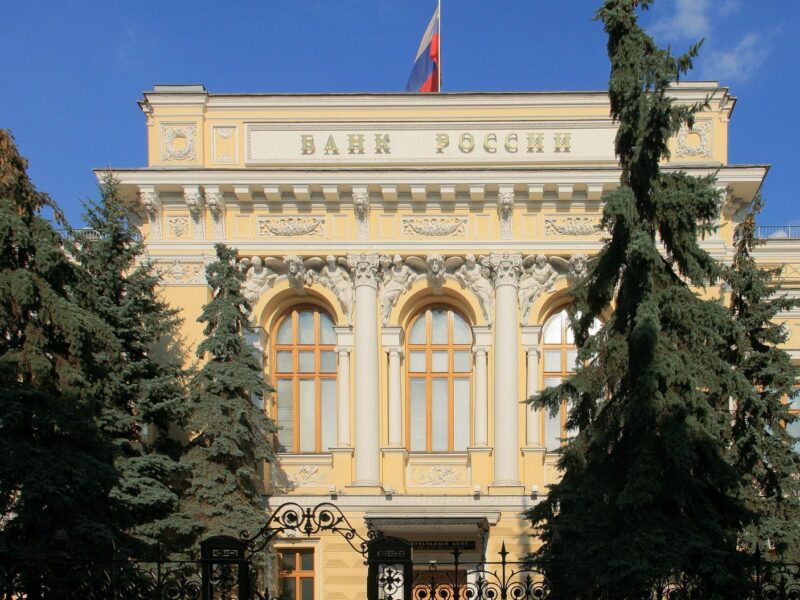
(CN) — Russia’s central bank is suing the European Union over its move last December to indefinitely freeze about $230 billion of Moscow’s reserves as punishment for its invasion of Ukraine.
In a statement on Tuesday, the Bank of Russia said it filed its suit on Friday in the General Court in Luxembourg, a lower court in the EU judicial system.
Russia’s central bank claimed European leaders violated EU law when they voted Dec. 12, 2025, to freeze Moscow’s funds until the war ends and Russia pays reparations to Ukraine.
The EU froze Russia’s sovereign funds, most of which are held in the Belgium-based Euroclear depository, shortly after Russian President Vladimir Putin launched the invasion of Ukraine in February 2022.
Before December’s vote, EU leaders considered giving Russia’s frozen funds to Ukraine as a loan, but then backed down over Belgium’s fears that seizing the money would be deemed unlawful. Instead, the EU agreed on a 90-billion-euro ($105 billion) loan package to Ukraine backed by EU funds.
The Bank of Russia’s suit was not immediately available through the General Court. In its statement, Russia’s central bank said it was challenging the EU’s action to freeze the assets for “an indefinite period” and not release them even “through the enforcement of any court decisions or arbitration awards.”
The central bank said the EU’s decision “violates the basic and inalienable rights to access justice, inviolability of property and the principle of sovereign immunity of states and their central banks.”
Russia also claimed the bloc’s 27 national leaders violated EU law by passing its resolution on the frozen funds with a majority vote, thereby bypassing the EU’s usual requirement for unanimity.
At a briefing on Tuesday, EU spokesman Balazs Ujvari said the bloc acted within the law.
“This claim comes in a context of a growing number of Russian legal challenges concerning our support measures for Ukraine,” he said. “We are fully confident about the legality of this regulation and its compatibility with EU law.”
Besides the General Court challenge, Russia’s central bank sued Euroclear in the Moscow Arbitration Court last December. The bank said Euroclear acted illegally by freezing the assets. It is seeking around $232 billion, a sum it says covers the assets and compensation for lost returns.
A preliminary hearing in Moscow was held in January behind closed doors at the request of the bank.
At the time, Euroclear said it was “fighting more than 100 legal claims in Russia,” according to AFP, the French news agency. Russian private investors, some of whom have also been caught up in the freeze on foreign securities, were reportedly hoping to join the central bank’s case against Euroclear.
Gleb Boyko, a lawyer with the Moscow-based NSP law firm which specializes in sanctions law, said it was difficult to assess the central bank’s chances of success because the issues under review are untested before EU courts.
He added that any ruling from the Moscow Arbitration Court would not be enforceable in the EU due to sanctions imposed on Russia following its 2014 annexation of Crimea.
“The Bank of Russia understands this very well,” he said in an email.
Still, he said Russia’s central bank was looking at other legal options in the EU to unfreeze the funds and that it was also “considering the possibility of applying retaliatory measures in Russia.”
Russia views the freezing of its sovereign funds as breaching a 1989 agreement the Soviet Union made with Belgium and Luxembourg safeguarding investments, Boyko said.
Also, Russia argues its state assets are protected by a principle known as sovereign immunity, which stipulates one country’s property is protected from seizure by another country’s courts. This principle was outlined in a 2004 United Nations treaty, but not enough countries have adopted the law to make it binding.
“Thus, Russia is likely to view any use of Russian sovereign assets as a violation of international law and will consider itself entitled to take countermeasures,” Boyko said.
Courthouse News reporter Cain Burdeau is based in the European Union.
 Follow @cainburdeau
Subscribe to our free newsletters
Our weekly newsletter Closing Arguments offers the latest about ongoing trials, major litigation and rulings in courthouses around the U.S. and the world, while the monthly Under the Lights dishes the legal dirt from Hollywood, sports, Big Tech and the arts.