
 Search Articles


BOSTON (CN) — A government agency that failed to provide running water to a town in Puerto Rico for most of the last eight years may have violated the U.S. Constitution, the First Circuit ruled Friday.
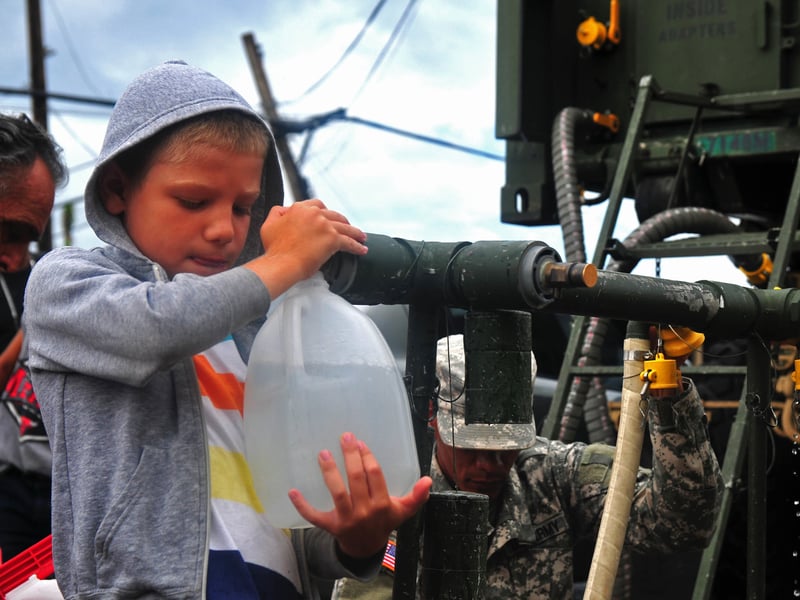
Morovis, a central Puerto Rico town of 28,000, has struggled with chronic water outages despite residents paying regular bills to the Puerto Rico Aqueduct and Sewer Authority, or PRASA. The town has gone weeks without service, including one stretch lasting 42 days.
PRASA has blamed weather, blockages, mechanical failures and power outages. Town officials call those excuses and allege the agency is retaliating because Morovis’ mayor belongs to a different political party from the Puerto Rico government.
The town says it has spent more than $1 million on water tanks and trucks and argues the lack of service violates its constitutional due process rights.
The case appears to be the first of its kind in the country, though the Sixth Circuit in 2019 found a potential constitutional violation in Flint, Michigan’s distribution of contaminated water.
A federal judge in Puerto Rico dismissed Morovis’ suit, ruling the outages didn’t “shock the conscience,” as required for a due process violation. But on appeal, U.S. Circuit Judge Julie Rikelman said PRASA’s alleged deliberate indifference could meet that standard.
“In light of the defendants’ knowledge of the water crisis in Morovis and the obvious and severe consequences to the plaintiffs, their failure to act over several years is enough to support a claim of conduct that is so egregious and outrageous that it may fairly be said to shock the contemporary conscience," Rikelman, a Joe Biden appointee, wrote in a 31-page ruling.
“The plaintiffs alleged that they had no clean, potable water on most days for over four years, despite raising the alarm to the defendants about the water crisis on an almost daily basis.
“According to the plaintiffs, at times, all that PRASA needed to do to restore water service to Morovis was to turn on the pumps and/or power generators at PRASA’s Morovis facilities. And, on at least one occasion, there was no water service because someone had affirmatively turned off the generator and pumps.
“Despite the years-long water crisis, the defendants made no effort to implement any long-term solutions and provided water to the plaintiffs through alternative sources only a few times. Further, [the executive director] failed even to investigate who had turned off the power generator and pumps at the Morovis facilities.”
U.S. Circuit Judge O. Rogeriee Thompson, a Barack Obama appointee, joined the ruling.
The result is that the case will go back to the original judge and the plaintiffs will have a chance to establish the other elements of their due-process claim, including that they had a protected property interest in the water service and that the executive director lacks qualified immunity.
U.S. Circuit Judge David Barron, also an Obama appointee, said the lower-court judge was wrong to reject the lawsuit on the grounds that the plaintiffs had alleged mere negligence as opposed to deliberate indifference. But he said he would send the case back and ask the judge to decide, in the first instance, whether the deliberate indifference was sufficient to shock the conscience.
Subscribe to our free newsletters
Our weekly newsletter Closing Arguments offers the latest about ongoing trials, major litigation and rulings in courthouses around the U.S. and the world, while the monthly Under the Lights dishes the legal dirt from Hollywood, sports, Big Tech and the arts.