
 Search Articles


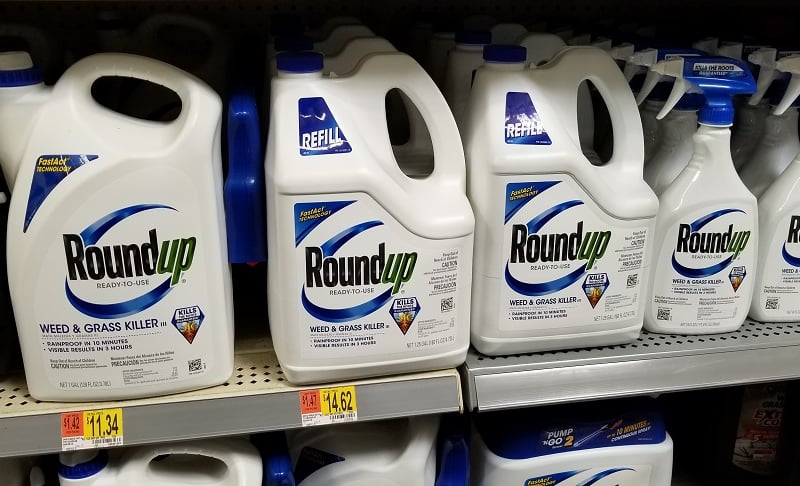
WASHINGTON (CN) — Roundup maker Monsanto filed a Supreme Court appeal Friday to cut off a flood of personal injury lawsuits, asking whether federal regulations based on the Environmental Protection Agency’s science should trump state claims using a cancer research study.
The agriculture biotech corporation’s parent company, Bayer, said over 100,000 people have sought accountability for not warning users about the cancer risks of the active ingredient in its weedkiller.
Glyphosate was labeled a carcinogen by the International Agency for Research on Cancer in 2015 — contradicting findings from the EPA, European Food Safety Authority, European Chemical Agency and regulators in Canada, New Zealand, Japan and Australia, who have all found the chemical safe.
“The litigation industry is spending hundreds of millions of dollars, based on a single outlier report that is now a decade old, in an effort to punish the company for marketing a product without a cancer warning, even though the EPA and every other health regulator worldwide that has assessed the safety of glyphosate, the active ingredient in Roundup, has found that it does not cause cancer,” Bayer said in a press release.
Monsanto asked the justices to review whether federal regulations using the EPA’s findings should preempt state-based failure-to-warn claims, which relied on**** findings from the International Agency for Research on Cancer. The company says the Federal Insecticide, Fungicide, and Rodenticide Act preempts state failure-to-warn claims.
Under federal law, Monsanto can’t alter its label without EPA approval, but the company faces $1.25 million in damages for not doing so.
John Durnell sued Monsanto in 2019 after he developed non-Hodgkin lymphoma from being exposed to Roundup. Durnell filed a slew of claims against the company, but a jury only found Monsanto guilty of one: failure to warn users.
The Third Circuit upheld the lower court ruling and refused to review the appeal en banc.
At the Supreme Court, Monsanto said the question is whether a state can impose a labeling requirement for a pesticide that is different from what the EPA requires for the same pesticide.
Monsanto argued that Durnell’s failure-to-warn claim would be preempted because it was impossible for the company to comply with both state and federal requirements.
“State law effectively tells the manufacturer ‘add this warning,’ while federal law tells it ‘do not,’” Monsanto said. “Because the jury verdict in this case requires Monsanto to include a cancer warning that EPA’s regulations did not require — and in fact affirmatively forbade it from adding — FIFRA preempts respondent’s claim.”
Monsanto is currently scheduled to face 30 trials in 2025 for personal injury suits related to Roundup. In 2026, 50 more trials have already been scheduled.
The company said the stakes of the litigation are extremely high, with thousands of lawsuits pending across the country. Monsanto said these cases could also impact how its products are used in the commercial market.
“The cost of managing this veritable flood of litigation has already forced Monsanto to remove glyphosate from the consumer version of Roundup,” Monsanto wrote. “It threatens Monsanto’s ability to supply the product to farmers who depend on it for their livelihoods. And it undermines the United States’ position as a world leader in agriculture. The stakes for glyphosate alone are therefore enormous.”
 Follow @KelseyReichmann
 Follow @kelseyreichmann.bsky.social
Subscribe to our free newsletters
Our weekly newsletter Closing Arguments offers the latest about ongoing trials, major litigation and rulings in courthouses around the U.S. and the world, while the monthly Under the Lights dishes the legal dirt from Hollywood, sports, Big Tech and the arts.